


Listen to the article
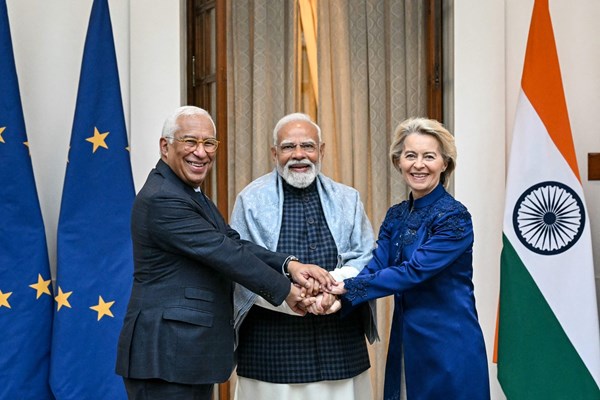
Indian Prime Minister Narendra Modi announced that a free trade agreement with the European Union has been reached after nearly two decades of negotiations. The landmark India-EU free trade agreement aims to deepen economic and strategic relations between the two major trading blocs, according to the prime minister’s statement.
Both sides have dubbed the pact the “mother of all agreements,” reflecting its significant scope and impact. The agreement covers approximately two billion people and represents one of the largest bilateral trade deals in history.
Historic India-EU Free Trade Agreement Ends Two Decades of Talks
The completion of this India-EU free trade agreement marks the conclusion of negotiations that began roughly 20 years ago. According to Modi, the deal will create substantial opportunities for the people of both India and Europe, potentially transforming economic cooperation between the regions.
The sheer scale of the agreement underscores its importance for global trade. With nearly two billion people affected by its terms, the deal encompasses major economies on both sides and is expected to have far-reaching implications for international commerce.
Economic and Strategic Implications
The agreement represents a significant shift in global trade dynamics, particularly as countries seek to diversify their economic partnerships. India, as one of the world’s fastest-growing major economies, stands to gain enhanced access to European markets for its goods and services.
Meanwhile, European businesses are expected to benefit from improved access to India’s vast consumer market. The pact is likely to reduce tariffs, streamline customs procedures, and create new opportunities for investment flows between the two regions.
Additionally, the trade deal carries strategic importance beyond pure economics. Both India and the European Union have been working to strengthen ties amid shifting global alliances and economic uncertainties.
Path to Agreement
The nearly two-decade negotiation period reflects the complexity of forging consensus between such large and diverse economies. Previous attempts to finalize a comprehensive trade pact had stalled over various issues, including market access concerns and regulatory standards.
However, renewed momentum in recent years helped overcome longstanding obstacles. Both sides demonstrated increased willingness to compromise on contentious issues to reach a mutually beneficial outcome.
The designation as the “mother of all agreements” by both parties suggests confidence in the deal’s transformative potential. This characterization emphasizes the comprehensive nature of the agreement and its anticipated impact on bilateral trade relations.
What the Trade Pact Means for Businesses and Consumers
The free trade agreement is expected to lower barriers for companies operating across Indian and European markets. Businesses may benefit from reduced tariffs on goods, simplified regulatory procedures, and clearer rules for services trade.
In contrast to previous limited arrangements, this comprehensive agreement likely covers a broad range of sectors. Industries such as pharmaceuticals, information technology, automotive, and agriculture may see particularly significant changes.
Consumers in both regions could eventually experience benefits through greater product variety and potentially lower prices. The enhanced trade flows resulting from the agreement may also stimulate job creation in export-oriented industries.
Furthermore, the pact may encourage increased foreign direct investment between India and EU member states. Companies may find it more attractive to establish operations in partner countries under the new framework.
The full details of the agreement, including specific timelines for implementation and sector-by-sector provisions, have not been publicly disclosed. Authorities are expected to release comprehensive information about the trade pact’s terms in the coming weeks, though no specific date for publication has been confirmed.