



Listen to the article
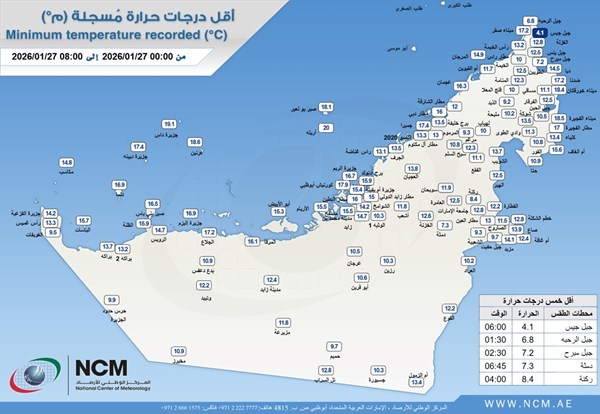
The United Arab Emirates recorded its lowest temperature of the day on Tuesday morning at Jebel Jais in Ras Al Khaimah, according to the National Center of Meteorology. The mountainous region continues to be the coldest location in the country during winter months, attracting both residents and tourists seeking cooler weather.
The National Center of Meteorology confirmed via its official platform on X that the lowest temperature in UAE reached 4.1 degrees Celsius at Jebel Jais at 6:00 AM local time. The reading was recorded at the country’s highest peak, which stands at approximately 1,934 meters above sea level.
Jebel Jais Weather Patterns During Winter
Jebel Jais consistently records the lowest temperatures in the UAE due to its elevated altitude and geographical location. The mountain’s height creates significantly cooler conditions compared to coastal and desert areas, particularly during the early morning hours. This natural phenomenon makes Jebel Jais a unique destination within the Emirates.
The temperature reading of 4.1 degrees Celsius demonstrates the substantial temperature variation that occurs across different regions of the UAE during winter. Meanwhile, coastal cities typically experience much milder morning temperatures, often remaining above 15 degrees Celsius during the same period.
Impact on Tourism and Outdoor Activities
The cold weather conditions at Jebel Jais have contributed to increased tourism interest in Ras Al Khaimah during winter months. Visitors frequently travel to the mountain to experience cooler temperatures and participate in outdoor activities unavailable in other parts of the country. Additionally, the temperature drop creates opportunities for unique experiences rarely found elsewhere in the UAE.
However, authorities typically advise visitors heading to higher elevations to prepare appropriate clothing for the cold conditions. The significant temperature difference between the mountain and lower-lying areas requires proper planning for those unfamiliar with the region’s winter climate patterns.
Meteorological Monitoring in the Emirates
The National Center of Meteorology maintains numerous weather stations throughout the UAE to track temperature fluctuations and other atmospheric conditions. These monitoring systems provide real-time data essential for public safety, aviation, and daily planning. The center regularly shares weather updates through social media platforms to keep residents and visitors informed.
Temperature readings from Jebel Jais serve as important indicators of seasonal weather patterns affecting the broader region. In contrast, desert interior locations can experience even more dramatic temperature swings, with cold nights followed by significantly warmer daytime conditions.
Winter Climate Trends in the UAE
The Emirates experiences its coolest temperatures between December and February, with mountainous areas like Jebel Jais showing the most pronounced effects. Coastal humidity typically moderates temperature extremes in cities like Dubai and Abu Dhabi, while inland and elevated regions face more variable conditions. This diversity in microclimates makes the UAE’s winter weather particularly interesting from a meteorological perspective.
Furthermore, the temperature data collected from locations such as Jebel Jais contributes to long-term climate studies and helps meteorologists understand regional weather patterns. The information assists in forecasting and helps authorities prepare for potential weather-related challenges during the winter season.
The National Center of Meteorology continues to monitor temperature conditions across all emirates and is expected to provide updated readings as weather patterns evolve throughout the winter period. Residents and tourists planning visits to Jebel Jais or other elevated areas should check current weather conditions before traveling.