



Listen to the article
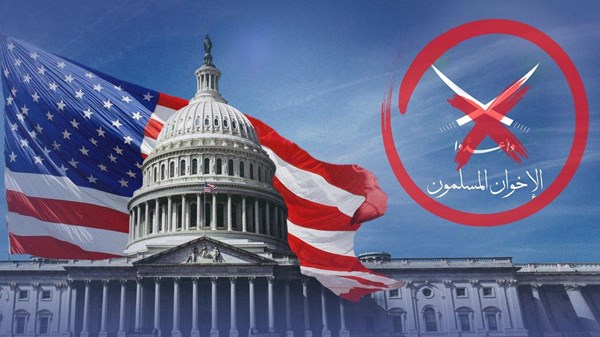
A recent research study by the Trends Research and Advisory Center has emphasized that the United States decision to designate branches of the Muslim Brotherhood on global terrorism lists represents a qualitative shift in Washington’s approach toward the organization. The study, issued by the center’s Political Islam Studies Department, indicates this move transitions U.S. policy from monitoring and containment to legal criminalization and institutional dismantling, with significant implications for the Muslim Brotherhood’s future regionally and internationally.
According to the research, the U.S. State Department announced on January 13, 2026, the implementation of a presidential order issued on November 25, 2025, designating the group’s branches in Egypt and Jordan based on their support for Hamas, which is classified as a terrorist organization. Additionally, the Muslim Brotherhood’s Lebanese branch was designated as a foreign terrorist organization, with punitive measures including asset freezes, prohibitions on dealings with affiliated entities and individuals within the United States, entry bans for non-U.S. citizen members, and potential deportation of those present on American soil.
Legal Framework Behind Muslim Brotherhood Designation
The study explained that the American decision relies on multiple legal authorities, most notably the Immigration and Nationality Act and the Anti-Terrorism Act of 1987. These legal instruments, combined with Treasury Department mechanisms for listing entities as Specially Designated Global Terrorists, grant authorities extensive powers to freeze assets and prohibit financial transactions associated with the Muslim Brotherhood and its affiliates.
Furthermore, the research highlighted that the decision addresses both domestic and international contexts. Domestically, it aims to resolve longstanding debates regarding how to deal with the organization. Internationally, it seeks to enhance national security, protect American interests and allies in the Middle East, and drain the ideological and organizational environment supporting political Islam movements.
Impact on Organizational Structure and Operations
The Trends Center study demonstrated that the terrorism designation will significantly affect the transnational organizational structure of the Muslim Brotherhood. The measures are expected to dismantle networks, reduce the group’s ability to maneuver and reposition itself, and increase restrictions on institutions and fronts associated with it in the United States, thereby weakening its political, social, and economic activities.
Additionally, the research noted that the decision will undermine the organization’s economic and financial capabilities through asset freezes and prevention of any financial or commercial dealings. The designation is also expected to impact the symbolic legitimacy of the Muslim Brotherhood and its human rights and moral discourse, particularly amid internal divisions, declining appeal among younger generations, and association of its activities with violent practices.
Three Possible Scenarios for the Muslim Brotherhood Future
Regarding future implications, the study outlined three potential scenarios for the organization. The first involves limited repositioning in environments less subject to American oversight. The second scenario envisions transformation into a covert network-based operation. The third possibility is acceleration of internal and organizational erosion, which would weaken the Muslim Brotherhood’s capacity to influence events locally and internationally.
However, the research emphasized contrasting perspectives on the long-term effects. While some analysts view the designation as a decisive blow, others suggest the organization may adapt through structural modifications or by operating through less visible channels in regions beyond direct U.S. jurisdiction.
Meanwhile, the study noted that regional responses to the American decision remain varied, with some countries welcoming the move as validation of their own counterterrorism policies, while others express concerns about potential spillover effects on domestic political dynamics and civil society organizations.
The research concluded by affirming that while the U.S. decision does not represent an immediate end for the Muslim Brotherhood, it establishes a new phase that undermines the historical conditions of its survival as a transnational organization. The designation places the group before a difficult equation between radical transformation in structure and discourse, or continuation on a path of contraction and retreat, ultimately rendering the organization’s existence limited in its influence on regional and international political equations. Observers anticipate further developments as affected branches respond to the designations in coming months, though the timeline for potential policy adjustments remains uncertain.