



Listen to the article
Researchers have announced the discovery of a remarkable submerged stone wall off the coast of Brittany, France, revealing previously unknown capabilities of early human societies. The ancient structure, believed to have been built more than 7,000 years ago around 5000 BC, stretches 120 meters in length and reaches up to two meters in height with a width of approximately 20 meters. This underwater archaeological discovery provides significant insights into prehistoric engineering and social organization.
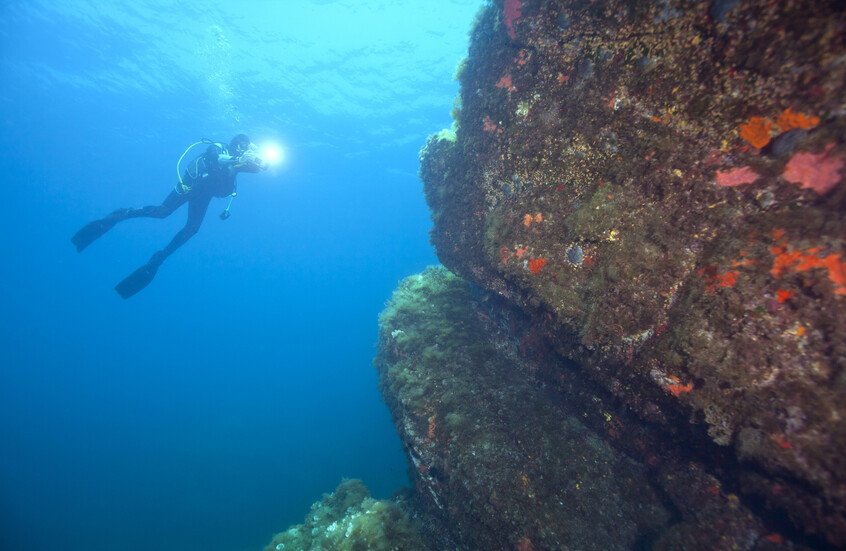
According to the research team, the wall was originally constructed on dry land at the western tip of the Brittany coast, specifically in the Sein Island area. However, as sea levels rose over thousands of years, the structure now rests nine meters below the water’s surface in the blue waters of the French coastline.
Purpose of the Prehistoric Stone Wall
Scientists are currently debating the original purpose of this massive structure. Some researchers suggest it may have functioned as a sea dam or protective barrier built to attempt to hold back rising sea levels. Meanwhile, others propose it served as a giant fish trap, potentially making it one of the oldest known examples of organized fishing practices in prehistoric times.
The scale and weight of the wall, estimated at approximately 3,300 tons, reflects enormous community cooperation. Additionally, its construction technique demonstrates precision and advanced planning, with large megalithic stones first placed on bedrock, then smaller rocks and slabs arranged around them.
Evidence of Advanced Social Structure
This level of organization indicates a highly structured society, whether composed of settled hunter-gatherers or early Neolithic population groups. The engineering capabilities required to construct such a monument challenge previous assumptions about prehistoric communities and their technological abilities.
The submerged stone wall was initially identified using laser scanning maps of the seabed. Marine archaeologists confirmed the discovery during diving operations that began in 2022, according to the research team. This finding represents the largest underwater structure ever found in French waters and is exceptionally well-preserved despite thousands of years beneath the sea.
Connection to Ancient Legends
The significance of this archaeological discovery extends beyond the stone walls themselves, raising hypotheses and connections to long-standing local legends. Some have linked the structure to the legend of the lost city of “Ys,” a mythical city believed to have sunk off the coast of Brittany. This suggests that the memory of these submerged lands and the abandonment by organized communities may have been preserved in collective memory across generations.
In contrast to previous understanding of Stone Age societies, this discovery highlights unexpected engineering capabilities and social organization. The monument provides tangible material evidence of how these early communities responded to the challenge of rising sea levels and major environmental changes during the prehistoric period.
Implications for Archaeological Research
The underwater archaeological discovery in Brittany opens new avenues for understanding prehistoric coastal adaptations. The construction techniques and massive scale of the project indicate that early human societies possessed far greater organizational and engineering skills than previously recognized. Furthermore, the preservation of such structures beneath the sea offers researchers unique opportunities to study ancient human responses to climate change and environmental pressures.
Researchers continue to study the site to determine definitively whether the structure served as a fish trap or coastal defense system. Further diving expeditions and analysis are expected to provide additional details about the construction methods and the society that built this remarkable monument, though authorities have not confirmed specific timelines for future investigations.