


Listen to the article
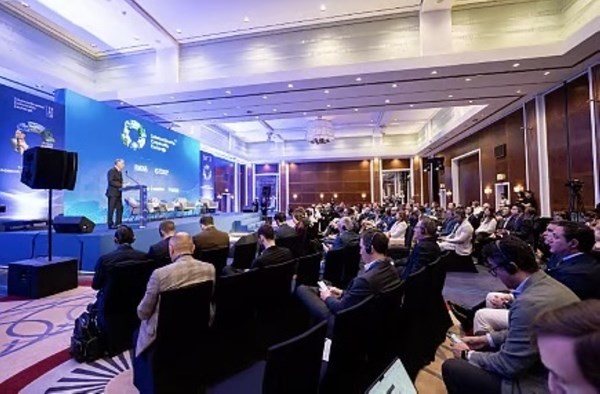
Dubai’s Museum of the Future will host the International Commodity Exchange Summit 2026 on Thursday, bringing together global leaders to address critical challenges facing food and commodity supply chains. The International Commodity Exchange Summit is set to convene government officials, food security authorities, agricultural exporters, traders, and logistics sector leaders to evaluate risks and establish practical measures to protect supply chains and reduce market volatility.
According to the organizers, the strategic platform aims to facilitate collaboration among key stakeholders in the global food system. The summit will feature high-level participation from major agricultural producing nations and food-importing countries worldwide, alongside officials from food-related authorities in the United Arab Emirates and leading market makers in global food trade flows.
Addressing Global Food Supply Chain Challenges
Philip Verle, Chief Executive Officer of the International Commodity Exchange, emphasized the urgency of addressing food security concerns in the current global environment. He stated that the world no longer has the luxury of assuming that food and agricultural product supplies will continue automatically, noting that we are entering a phase requiring much closer cooperation between governments and physical markets.
The executive explained that the International Commodity Exchange Summit aims to bring together all concerned parties, including exporters, importers, policymakers, and traders. The primary objective is to prevent instability from escalating into a full-scale crisis affecting global food supplies.
Strategic Collaboration for Food Security
The gathering represents a significant effort to strengthen international coordination on agricultural commodity trade. Additionally, the event will provide a platform for participants to discuss concrete solutions to mitigate supply disruptions that have increasingly affected global markets in recent years.
However, the challenges facing international food supply chains extend beyond immediate disruptions. Climate change, geopolitical tensions, and infrastructure constraints continue to threaten the stability of agricultural trade flows worldwide.
Key Stakeholders and Industry Participation
The summit will feature participation from diverse sectors integral to global food security. Meanwhile, agricultural product exporters will engage directly with importing nations to establish more resilient trading relationships and supply arrangements.
Logistics sector leaders attending the event will contribute expertise on transportation and distribution challenges. In contrast to previous gatherings focused primarily on market prices, this summit emphasizes practical operational solutions to supply chain vulnerabilities.
Dubai’s selection as the host city reflects the UAE’s growing role as a strategic hub for international commodity trade. The Museum of the Future provides a forward-looking venue appropriate for discussions on long-term food security planning and innovation in agricultural supply systems.
Implications for International Commodity Exchange Markets
The summit comes at a critical time when commodity markets face heightened uncertainty. According to industry observers, price volatility in agricultural products has increased significantly, affecting both producing and consuming nations.
Furthermore, the event is expected to produce actionable recommendations for reducing market fluctuations. Participants will examine mechanisms for improving transparency in commodity trading and enhancing coordination between physical markets and regulatory frameworks.
The discussions will also address the role of commodity exchanges in facilitating stable trade flows. Additionally, experts will explore how digital technologies and data sharing can strengthen early warning systems for potential supply disruptions.
The outcomes of Thursday’s summit will likely influence policy approaches to food security across participating nations. However, the extent to which recommendations will be implemented through coordinated international action remains to be determined following the event.