


Listen to the article
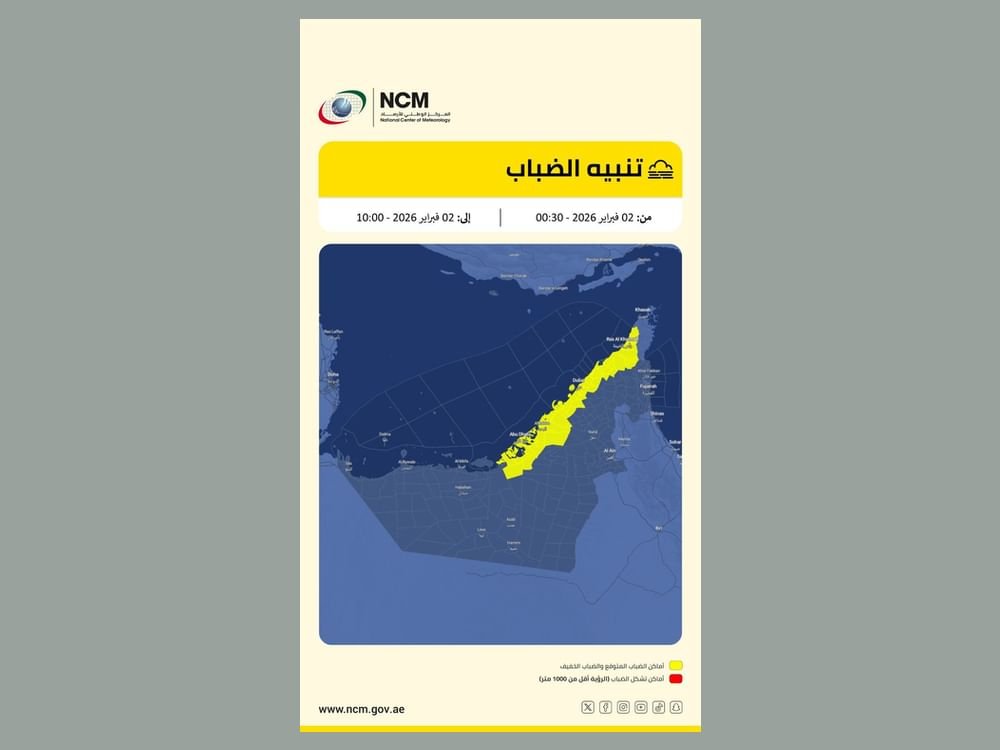
The National Center of Meteorology in the United Arab Emirates has issued a weather alert warning residents about potential fog formation that could significantly reduce visibility across several regions. According to the weather authority, fog is expected to develop over some coastal and inland areas, with horizontal visibility potentially dropping to near-zero levels in affected zones. The fog advisory will be in effect from 00:30 until 10:00 on Monday morning, February 2, 2026.
The official warning was announced from Abu Dhabi on February 1, 2026, according to the Emirates News Agency (WAM). Authorities have cautioned drivers and commuters to exercise extreme caution during the specified timeframe when fog conditions are anticipated to be at their worst.
Impact of Fog on Visibility and Transportation
Fog formation in the UAE typically occurs during cooler months when atmospheric conditions create moisture condensation near the ground surface. The phenomenon is particularly common in coastal regions where humidity levels from the Arabian Gulf combine with cooler overnight temperatures. Additionally, inland areas can experience dense fog when specific meteorological conditions align.
The National Center of Meteorology’s warning emphasizes that visibility could deteriorate substantially, potentially reaching zero meters in some locations. Such conditions pose significant risks for road users, as reduced visibility makes it difficult to see other vehicles, road markings, and traffic signals. However, the weather service has provided specific timing to help residents plan their activities accordingly.
Safety Measures During Low Visibility Conditions
Transportation authorities typically advise motorists to reduce speed considerably when driving in fog and to maintain safe following distances from other vehicles. Meanwhile, experts recommend using fog lights rather than high beams, as bright lights can reflect off water droplets and further reduce visibility. Drivers should also avoid unnecessary travel during peak fog hours when possible.
The UAE experiences seasonal fog patterns, particularly during winter months when temperature variations between day and night are more pronounced. In contrast to summer months when fog is rare, the cooler season brings increased atmospheric moisture and conditions conducive to fog development. Meteorological services monitor these patterns closely to provide timely warnings to the public.
Weather Monitoring and Public Safety Alerts
The National Center of Meteorology employs advanced forecasting technology and monitoring systems to track weather conditions across the Emirates. These systems enable meteorologists to predict fog formation with increasing accuracy, allowing authorities to issue warnings well in advance. Additionally, the center provides regular updates through multiple channels to ensure residents receive critical weather information.
Coastal areas along the Arabian Gulf are particularly susceptible to fog due to maritime influences and humidity patterns. Inland regions also experience fog when atmospheric conditions trap moisture near the surface, especially in low-lying areas. The combination of these factors creates the varied fog patterns that meteorologists monitor throughout the winter season.
According to weather experts, fog advisories serve as essential tools for public safety, helping residents make informed decisions about travel and outdoor activities. The specific timeframe provided in this alert allows commuters to either delay travel until visibility improves or take additional precautions if travel is necessary during the affected hours.
Authorities have not indicated whether the fog warning might be extended beyond the specified Monday morning timeframe. Residents are encouraged to monitor updates from the National Center of Meteorology for any changes to the forecast or additional advisories as weather conditions develop over the coming hours.