


Listen to the article
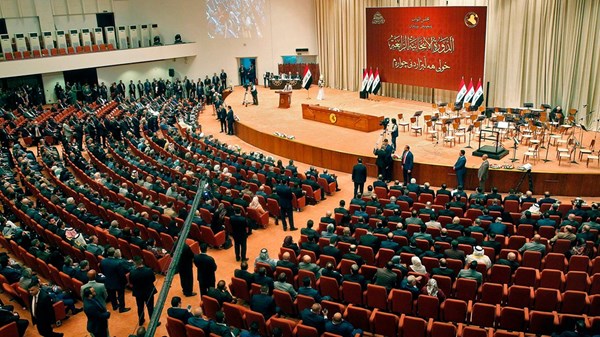
The Iraqi Parliament postponed its scheduled session to elect the country’s president, according to the Iraqi News Agency (INA). The session, which was expected to take place this week, marks the second delay in efforts to fill the presidential position, reflecting ongoing disagreements among political factions over the Iraq presidential election process.
According to a statement from the Parliament’s Media Department, the council decided to adjourn the session without specifying a new date. The statement also noted that Badr al-Fahal took the constitutional oath as a member of parliament in accordance with Article 50 of the Constitution.
Political Divisions Delay Iraq Presidential Election
The postponement follows a previous delay that occurred last Tuesday, when Parliament Speaker Mohammed al-Halbousi cited the need for more time to allow understanding and agreement between the Kurdistan Democratic Party and the Patriotic Union of Kurdistan. These two major Kurdish parties remain divided over their respective candidates despite the political custom that reserves the presidency for the Kurdish component of Iraqi politics.
However, neither party has shown willingness to compromise on their nominee. This division means the session will proceed with multiple candidates and no prior consensus between the two main Kurdish political forces, potentially complicating the electoral process.
Constitutional Requirements and Voting Procedures
According to Federal Court Decision No. 16 of 2022, which interprets Article 70 of the Constitution, the session requires a quorum of two-thirds of the total number of parliament members. This means at least 220 deputies must be present for the Iraq presidential election session to proceed.
The voting process follows a direct secret ballot system. In the first round, a candidate must secure two-thirds of the votes from all council members to win the position. If no candidate achieves this threshold, the two candidates with the highest votes compete in a second round, where the winner is determined by a simple majority.
Nineteen Candidates Compete for Presidential Position
Initially, 44 individuals submitted their candidacy papers for the presidential race. The Parliament presidency announced that only 15 candidates met the constitutional and legal requirements. Subsequently, the court added four more candidates after appeals from affected parties, bringing the final number of eligible candidates to 19.
Meanwhile, the disagreement between the Kurdistan Democratic Party and the Patriotic Union of Kurdistan continues to be the primary obstacle. Both parties maintain their insistence on their respective nominees, reflecting deeper political tensions within the Kurdish bloc.
Implications for Government Formation
The presidential election represents a crucial step in Iraq’s government formation process. Additionally, the elected president has the constitutional responsibility to task the largest parliamentary bloc with forming the government within 15 days of their election, making this position essential for moving forward with cabinet formation.
In contrast to the ceremonial nature often associated with the presidency in some parliamentary systems, the Iraqi presidential position plays a vital role in the government formation timeline. The ongoing delays in holding the election session continue to postpone subsequent steps in establishing a fully functioning government.
Parliament leadership has not announced a specific date for rescheduling the Iraq presidential election session. The timing will likely depend on whether the two main Kurdish parties can reach an agreement on a unified candidate or whether the session will proceed with competing nominees from both factions.