


Listen to the article
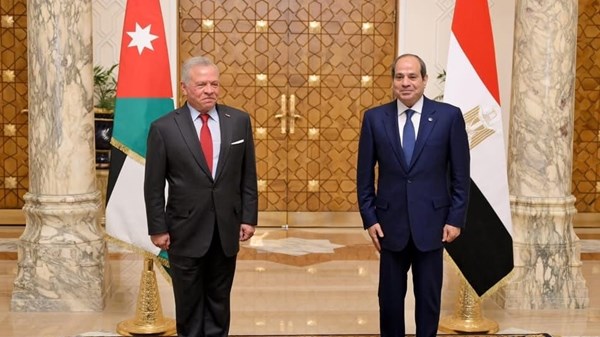
Egyptian President Abdel Fattah el-Sisi and Jordan’s King Abdullah II have emphasized the necessity of fully implementing the Gaza ceasefire agreement during a high-level meeting in Cairo. The two leaders also called for the execution of U.S. President Donald Trump’s peace plan and stressed the importance of allowing unrestricted humanitarian aid into the besieged Gaza Strip. Additionally, they urged the acceleration of early recovery efforts and reconstruction operations in the territory.
The bilateral meeting, held in the Egyptian capital, saw both leaders renewing their countries’ steadfast rejection of any attempts to displace the Palestinian people from their land, according to official statements. The discussions also covered recent developments in the West Bank, with both parties condemning all violations and arbitrary practices against Palestinians.
Commitment to Gaza Ceasefire and Humanitarian Access
During the talks, President el-Sisi and King Abdullah underscored the critical importance of ensuring the Gaza ceasefire agreement is honored in its entirety. Both leaders recognized that maintaining the cessation of hostilities remains essential for alleviating the humanitarian crisis affecting Gaza’s population.
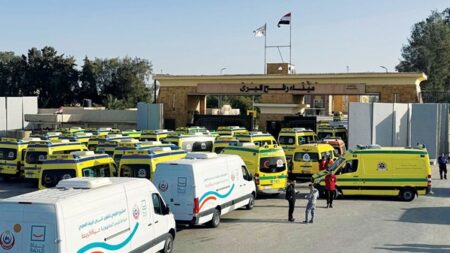
The two Arab leaders placed particular emphasis on facilitating the flow of humanitarian assistance into Gaza without restrictions. This position reflects growing international concern about the dire humanitarian situation in the enclave, where access to essential supplies has been severely limited during recent conflicts.
Trump Peace Plan and Regional Stability
The meeting addressed the implementation of President Trump’s peace plan, with both leaders expressing their support for diplomatic initiatives aimed at resolving the long-standing Israeli-Palestinian conflict. However, they emphasized that any peace efforts must align with established international frameworks and Palestinian rights.
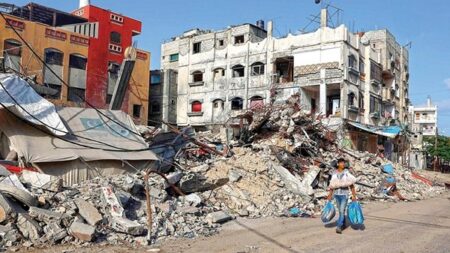
Meanwhile, the discussion on reconstruction highlighted the urgent need to begin early recovery operations in Gaza. The territory has suffered extensive infrastructure damage, requiring immediate attention to restore basic services and living conditions for its residents.
Rejection of Palestinian Displacement
A central theme of the Cairo meeting was the categorical rejection of any forced displacement of Palestinians from their homeland. Both Egypt and Jordan have consistently maintained this position as a cornerstone of their foreign policy regarding the Palestinian issue.
Furthermore, the leaders addressed the deteriorating situation in the West Bank, expressing deep concern over ongoing violations against Palestinian communities. They condemned what they described as arbitrary practices that undermine Palestinian rights and threaten regional stability.
Two-State Solution as Path to Peace
President el-Sisi and King Abdullah reaffirmed their commitment to the establishment of an independent Palestinian state based on the June 4, 1967 borders with East Jerusalem as its capital. According to the joint statement, both leaders stressed that this framework represents the only viable path to achieving lasting peace and stability in the Middle East.
In contrast to proposals that deviate from internationally recognized parameters, Egypt and Jordan continue to advocate for a solution rooted in United Nations resolutions and previous peace agreements. This position aligns with the broader Arab consensus on the Palestinian question.
The two countries have historically played significant roles in mediating regional conflicts and supporting Palestinian aspirations for statehood. Their coordinated diplomatic efforts aim to maintain pressure on all parties to respect international law and work toward a comprehensive settlement.
As both nations continue their diplomatic engagement on the Palestinian issue, the international community awaits further developments regarding the implementation of the Gaza ceasefire agreement and progress toward broader peace negotiations. The timeline for reconstruction efforts and the specific mechanisms for ensuring unrestricted humanitarian access remain subjects of ongoing discussion among regional and international stakeholders.