

Listen to the article
Israel has imposed new restrictions on movement through the Rafah border crossing between Egypt and the Gaza Strip, drawing sharp criticism from Palestinian officials following the crossing’s reopening in both directions. According to Palestinian sources, Israeli authorities implemented procedures that deviate from previously agreed arrangements for operating the Rafah crossing, limiting the number of travelers and requiring routing through an Israeli-controlled checkpoint.
A Palestinian official stated that the Israeli military committed two violations of the agreed framework by reducing the number of patients who completed medical treatment abroad along with their companions allowed to return, and forcing departing travelers to pass through the Kerem Shalom crossing under full Israeli control before reaching Rafah where international monitors are stationed. The temporary mechanism that was agreed upon included the travel of between 150 to 200 people daily, but Israeli authorities imposed a cap of only 50 patients who finished their treatment in Egypt and abroad, without their companions, the official added.
New Procedures at Rafah Crossing Spark Controversy
The Palestinian source explained that Israeli forces are requiring travelers from Gaza to transit through Kerem Shalom crossing before proceeding to the Palestinian side of the Rafah crossing, where European Union monitors are present. This additional requirement effectively places an Israeli checkpoint in the travel route despite international oversight at Rafah itself.
The official characterized the current situation as a practical test of travel mechanisms and called on European monitors and the Peace Council to fulfill their responsibilities as the implementing body for the agreed arrangements. He urged them to compel Israel to increase the number of travelers and returnees in accordance with the original agreement.
Egypt Mobilizes Healthcare Resources
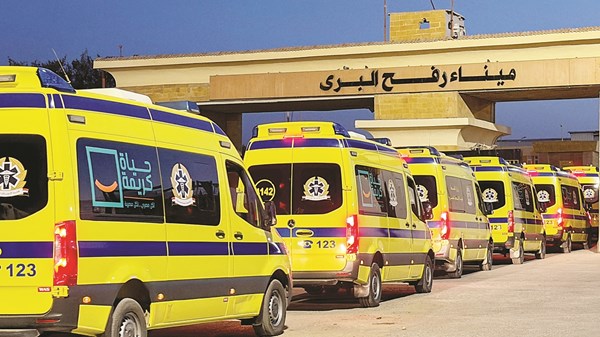
Meanwhile, Egypt announced yesterday that it has raised the readiness level of all healthcare facilities in coordination with the reopening of the Rafah crossing from the other side to receive patients and wounded individuals from Gaza and facilitate the return of those who have recovered. According to a statement from Egypt’s Ministry of Health and Population, this ensures complete preparedness to handle any urgent health or humanitarian developments.
The ministry indicated that the coordination committee responsible for receiving patients and wounded arrivals from Gaza, in partnership with the Egyptian Red Crescent, held a meeting to activate the National Emergency Health Services Plan in conjunction with the crossing’s opening. The plan in its third edition relies on comprehensive operational readiness including the participation of approximately 150 hospitals nationwide, with the possibility of expansion according to situational developments.
Comprehensive Emergency Response Plan
Additionally, the Egyptian health ministry’s statement detailed the provision of various medical, therapeutic, and surgical services necessary for incoming cases, alongside the preparation of between 250 and 300 highly equipped ambulances. The plan includes trained personnel comprising nearly 12,000 doctors across various critical specialties, more than 18,000 nurses, and 30 rapid deployment teams affiliated with the Central Administration for Emergency and Critical Care that can be mobilized within hours according to rapid intervention requirements and crisis management needs.
The statement also referenced the operation of a central control room at the ministry’s headquarters working around the clock, connected to 27 emergency rooms in health affairs directorates and more than 90 medical points and emergency hospitals. This ensures rapid response, precise coordination, and timely decision-making, according to the ministry.
The ministry emphasized that the National Emergency Health Services Plan aligns with standards adopted by the World Health Organization and international humanitarian standards, including hospital capacity, critical care bed ratios, and medical personnel and supplies readiness. In some indicators, it exceeds the global minimum requirements, reflecting the Egyptian health system’s capacity to respond effectively to major humanitarian crises according to international best practices.
Authorities have not confirmed how long the current restrictions at the Rafah crossing will remain in place or whether negotiations are underway to resolve the disagreement over travel procedures and daily quotas.