


Listen to the article
The Palestinian government has unveiled an ambitious reconstruction plan for Gaza with a total cost of approximately $67 billion, according to Palestinian Minister of Public Works and Housing, Engineer Ahed Faiq Besiso. The ministry’s initial implementation plan alone is estimated at around $23 billion to cover early recovery, reconstruction, and development phases extending until 2030.
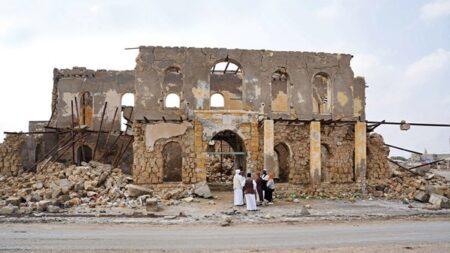
Minister Besiso explained in a statement that the scale of destruction in the Gaza Strip is unprecedented, transforming the Gaza reconstruction effort into a comprehensive political and developmental project rather than merely a relief intervention or engineering rebuild. He emphasized that restoring Gaza requires an integrated vision addressing urban, social, and economic dimensions simultaneously.
Unprecedented Housing Crisis Affects Millions
According to the minister, approximately 70% of Gaza’s residential sector has been completely destroyed or rendered uninhabitable. More than 1.7 million displaced persons are currently without proper shelter following the complete destruction of 360,000 housing units.
Thousands of families continue living in tents that provide inadequate protection from winter cold and rain. The housing crisis is compounded by the absence of essential services and the collapse of infrastructure throughout most areas of the strip.
Three-Phase Recovery Framework
The ministry has established a comprehensive timeline consisting of three phases spanning five years to address these challenges. This integrated approach combines emergency recovery with reconstruction and sustainable development initiatives.
Additionally, the ministry has prepared a comprehensive spatial plan based on urban planning principles, protection of housing and land rights, and local empowerment. The plan also incorporates innovative financing tools to reduce dependence on traditional funding mechanisms.
Limited Border Crossing Reopening
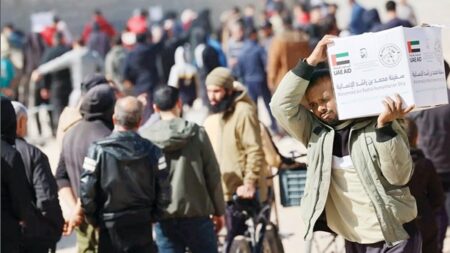
Meanwhile, the Rafah crossing reopened on Monday after Israeli forces closed it in May 2024. However, the reopening remains limited in both directions with strict restrictions imposed by Israel, and international humanitarian aid is not permitted to enter.
The restricted access has created significant challenges for medical evacuations and humanitarian operations. Authorities have not confirmed when full humanitarian access will be restored to support the Gaza reconstruction plan.
First Medical Evacuations Resume
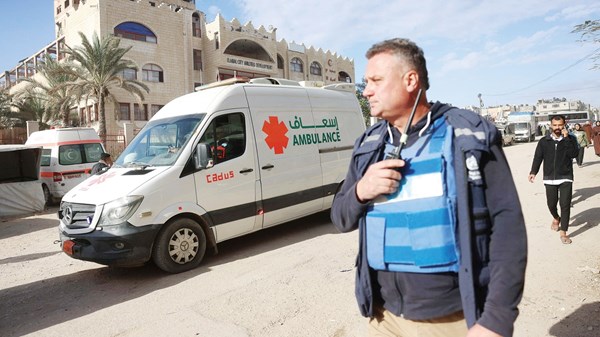
Christian Lindmeier, spokesperson for the World Health Organization, announced Tuesday that the first five patients from Gaza have been transferred since the Rafah crossing reopened. On February 2, the WHO and its partners supported the medical evacuation of five patients and seven accompanying individuals to Egypt through Rafah.
According to Lindmeier, this marks the first medical evacuation through this crossing since early 2025, referring to a limited number of evacuations that occurred during a ceasefire earlier this year. More than 18,500 patients are currently waiting for evacuation after two years of conflict, suffering from war-related injuries alongside chronic diseases such as cancer and diabetes.
In contrast to the massive need, a UNICEF spokesperson indicated that more than 3,000 of these patients are children. Lindmeier explained that Gaza’s health authorities determine which cases receive priority among patients and wounded individuals.
However, he noted a tragic reality: patients have died while waiting for evacuation. “It is horrifying when we know that help is only a few miles or kilometers away from those borders,” the WHO spokesperson said.
The success of the reconstruction plan remains uncertain pending the establishment of stable conditions and sustained international support. Implementation timelines and funding commitments have not been finalized, though the ministry continues coordinating with international partners to secure necessary resources for Gaza’s recovery.