

Listen to the article
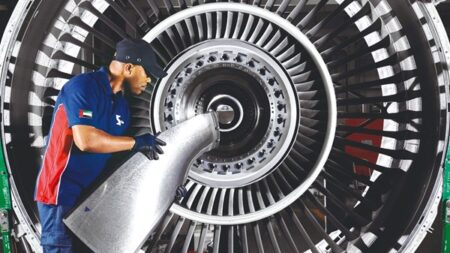
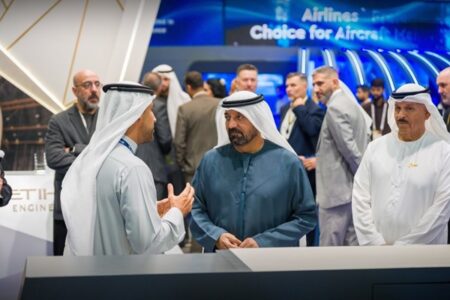
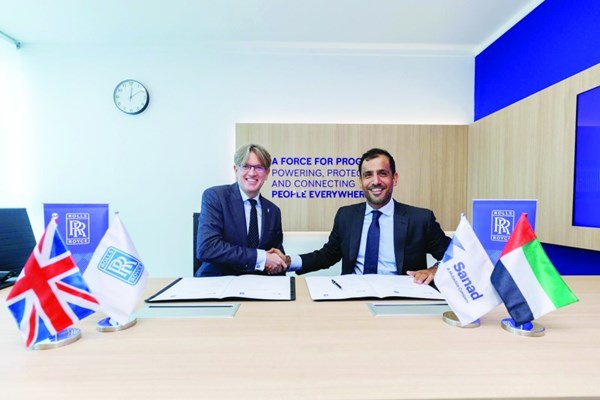
Sanad Group, wholly owned by Mubadala Investment Company, has announced an expanded partnership with Rolls-Royce during the Singapore Airshow 2025 to significantly increase its maintenance, repair, and overhaul capabilities for Trent 700 engines. The Trent 700 engine maintenance agreement deepens a collaboration that began in 2012 and positions Sanad as the largest independent provider of these services globally.
According to the agreement unveiled at the aviation event, Sanad will handle up to 612 shop visits for Trent 700 engines through 2031, representing an increase of 277 visits over the current commitment level. The Abu Dhabi-based company has already serviced more than 200 Trent 700 engines for over 25 operators during the partnership’s first decade.
Strategic Investment in Trent 700 Engine Maintenance
The expansion reflects growing demand for aircraft maintenance services as the aviation sector experiences robust recovery in passenger and cargo traffic. Trent 700 engines power more than 60 percent of the global Airbus A330 fleet, with over 1,400 engines in service and annual maintenance demand exceeding 250 shop visits. Additionally, many operators are extending the operational life of their A330 fleets and converting passenger aircraft to freighters to meet global logistics demand.
To support the increased workload, Sanad will invest 125 million dirhams, approximately 34 million US dollars, in advanced tooling, automation systems, and modern equipment at its existing maintenance facilities in Abu Dhabi. The company will leverage its current repair and overhaul infrastructure along with its test cell capabilities in the emirate.
Workforce Expansion and National Talent Development
Alongside the capital investment, Sanad plans to hire more than 300 highly skilled specialists to support the expanded operations. This recruitment drive aligns with the company’s long-term strategy for Emiratization and national talent development. The move contributes to building growing expertise in the UAE’s aerospace sector and reinforces Abu Dhabi’s position as a global aviation excellence hub.
Mansour Janahi, Managing Director and Chief Executive Officer of Sanad Group, said the historic agreement reinforces Rolls-Royce’s confidence in Sanad’s ability to deliver world-class aircraft engine services at scale. He noted that over more than a decade of partnership, the company has demonstrated its commitment to performance, precision, and innovation while supporting the future of global aviation through reliability, sustainability, and technical excellence.
Global Aviation Industry Implications
Paul Kennan, Director of Customer Service for Civil Aerospace at Rolls-Royce, stated that Sanad’s expanded capacity not only strengthens its position as the largest independent Trent 700 maintenance provider worldwide but also supports Rolls-Royce’s ambition to significantly increase global MRO capability by 2030. He described the announcement as further evidence of the company’s commitment to delivering excellent products and services to its global customer base.
The expanded collaboration represents one of the largest Trent 700 maintenance agreements in recent years. It aligns with the UAE’s national vision to support high-tech manufacturing, innovation, and sustainability across strategic sectors. However, the partnership goes beyond commercial considerations to position the region as a critical node in the global aviation support network.
Meanwhile, Sanad continues to play a pivotal role in the evolution of the global aviation ecosystem with more than 38 years of industry experience. The company serves over 40 airlines worldwide and is backed by long-term contracts exceeding 443 billion dirhams in value. Through this expanded partnership, Sanad reinforces its position at the forefront of companies delivering reliable, innovative, and sustainable maintenance solutions that keep aircraft flying worldwide and drive the aerospace industry forward.
The implementation of the expanded agreement is expected to commence immediately, with the gradual increase in shop visits and workforce deployment continuing through 2031. The timeline for completing the infrastructure investments and reaching full operational capacity has not been publicly detailed.