




Listen to the article
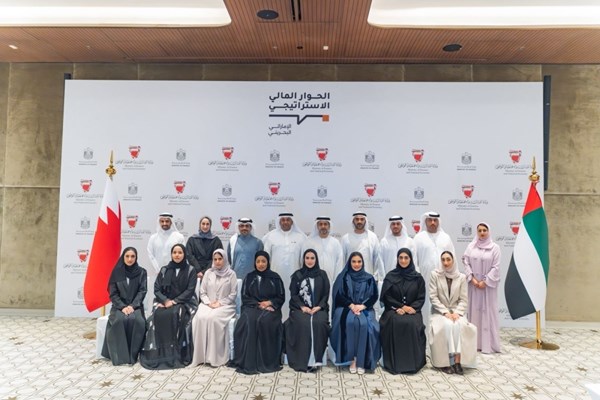
The United Arab Emirates and Bahrain have launched their first strategic financial dialogue as part of an implementation plan to activate a memorandum of understanding signed between the two nations. According to the UAE Ministry of Finance, this strategic financial dialogue aims to enhance cooperation, financial integration, and strengthen bilateral relations through four key pillars including dialogue sessions, exchange of expertise, joint initiatives, and implementation monitoring.
The dialogue was attended by senior officials from both countries, with Younis Haji Al Khoori, Undersecretary of the UAE Ministry of Finance, leading the UAE delegation, while Bahrain’s Ministry of Finance and National Economy was represented by Yousuf Abdullah Al Humood, Undersecretary for Financial Affairs, alongside other senior ministry officials. The meeting took place in Dubai as part of ongoing efforts to deepen economic ties between the two Gulf nations.
Strategic Financial Dialogue Framework and Objectives
Al Khoori emphasized that the strategic financial dialogue represents a constructive step toward developing partnership between the two countries and enhancing financial integration. The dialogue sessions will help unify visions and formulate policies that strengthen financial cooperation while allowing discussion of shared issues on a broader level, according to the ministry statement.
The exchange of expertise aims to build a regional reference model in financial and economic management, enhancing both countries’ competitiveness and ability to face global challenges. Additionally, institutional capacity development is considered a fundamental pillar to ensure sustainability of cooperation through developing human capital and adopting innovation and digital transformation.
Four-Pillar Implementation Strategy
The memorandum of understanding implementation revolves around four main tracks that will guide bilateral financial cooperation. The first pillar involves holding regular dialogue sessions between officials from both countries, either annually or semi-annually, alternating between the UAE and Bahrain, to be chaired by the finance ministers or their representatives.
These sessions will include senior officials from various government entities involved in financial, economic, trade, investment, tax, and customs matters. The discussions will focus on coordinating fiscal and monetary policies, exchanging experiences and viewpoints on topics of mutual interest, and addressing shared challenges in sectors such as taxation, customs, investment, and financial technology.
Technical Cooperation and Knowledge Exchange
The second pillar encompasses exchange of expertise and technical cooperation in areas including financial and economic legislation, tax policies and regulations, debt management, and financial technology. According to the agreement, cooperation will extend to government procurement, financial and economic studies and reports, and coordination to unify positions with regional and international economic and financial organizations.
In the area of training and development, the framework includes mutual participation in training programs, seminars, and conferences related to financial and economic fields, investment, and public-private partnerships. However, a particularly innovative aspect involves leveraging artificial intelligence applications in training programs and government real estate management.
Real Estate and Investment Collaboration
The dialogue addressed enhancing cooperation between land and property departments in both countries regarding the use of artificial intelligence in government real estate management. Meanwhile, both nations agreed to promote mutual real estate investments through government platforms, including auctions offered through government land investment platforms and investment projects announced via official channels.
Al Humood praised the deep historical relations and fraternal bonds between Bahrain and the UAE across various sectors, particularly in financial and economic fields. He highlighted the Abu Dhabi Fund for Development’s financing of developmental projects in vital sectors such as health, housing, energy, water, infrastructure, and transportation, which have contributed to economic development in Bahrain.
Joint Initiatives and Digital Transformation
The third pillar focuses on launching joint initiatives including institutional capacity building through implementing shared training programs related to financial policies and management. In contrast to traditional cooperation models, this framework emphasizes partnership in digital transformation topics and establishing a joint media plan to highlight bilateral cooperation in matters related to finance ministries.
During the strategic financial dialogue, the UAE delegation presented on the Digital Government Procurement Platform, the Virtual Muna project, and artificial intelligence and digital economy initiatives. Additionally, the Bahraini side presented on financial inclusion efforts, demonstrating both countries’ commitment to modernizing financial systems.
Monitoring and Evaluation Mechanisms
The fourth pillar establishes a coordination team to monitor work progress and the axes included in the plan, preparing periodic reports to measure performance and achievement of objectives. These reports will be submitted to the relevant ministers in both countries, with the plan subject to annual review and modifications upon mutual approval.
The two countries are expected to continue implementing the agreed-upon framework through regular follow-up meetings and collaborative programs. Both sides have indicated their commitment to advancing financial cooperation to a new phase, particularly in areas of mutual investments, artificial intelligence, and financial technology, though specific timelines for upcoming initiatives have not been announced.