





Listen to the article
Global financial markets experienced volatile performance last week as investors reacted to mixed earnings from major technology companies and shifting commodity prices. The global stock markets concluded the week with divergent results across regions, as U.S. indices showed contrasting movements while European and Asian markets navigated uncertainty surrounding artificial intelligence investments and economic data releases.
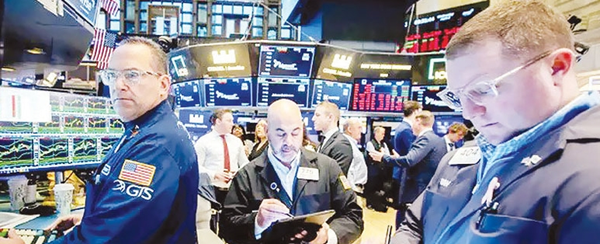
American markets closed the week with mixed performance across major benchmarks, according to market reports. The Dow Jones Industrial Average reached record levels during the week, closing up 2.47% as investors rotated funds into industrial and financial sector stocks. Meanwhile, the tech-heavy Nasdaq Composite suffered weekly losses of 1.45% amid concerns over corporate valuations and the high costs associated with artificial intelligence technology investments.
Technology Sector Weighs on Global Stock Markets
The S&P 500 index finished the week near previous levels with a modest gain of approximately 0.23%, reflecting a balance between gains in some sectors and pressure from technology stocks. The benchmark index experienced a mid-week decline before recovering in the final trading hours, illustrating the ongoing tension between traditional and tech sectors.
Several non-technology sectors reached new record highs during the week, including industrials, energy, and consumer staples. However, investor concerns about artificial intelligence’s impact on the software sector led to temporary capital rotation away from tech stocks. This shift highlighted growing uncertainty about the profitability timeline for companies investing heavily in AI infrastructure.
European Markets Post Moderate Gains
European financial markets closed higher following a week dominated by corporate earnings reports. The Stoxx 600 index advanced 0.9% by week’s end, supported by strong performance from banking and insurance stocks, according to market data. Additionally, weakness in technology shares limited the pace of gains across the continent.
London’s FTSE 100 benefited from positive movements in large-cap companies, closing up 0.59%. Germany’s DAX index posted similar gains of 0.59%, while France’s CAC 40 registered a modest increase of 0.4%. The relatively stable performance reflected cautious optimism among European investors awaiting further economic signals.
Asian Markets Navigate Volatility
Asian indices regained stability by the end of weekly trading after experiencing mid-week turbulence influenced by declining U.S. technology stocks. Markets in the region were also affected by movements in metals prices as some investors shifted toward safe-haven assets, market observers noted.
Japan’s Nikkei index posted limited gains of 0.8%, supported by yen weakness and improved performance from several major corporations. In contrast, Chinese and Hong Kong markets moved in a choppy range, pressured by weakness in technology and real estate sectors. The Shanghai Composite closed down 0.25%, while Hong Kong’s Hang Seng index ended the week with notable losses of 1.2%.
Investors Await Key Economic Indicators
American investors are anticipating influential economic data releases in the coming week, including crude oil inventory reports from the Energy Information Administration and mortgage application figures from the Mortgage Bankers Association. Treasury balance data is also expected, which could reshape interest rate expectations among market participants.
European investors are watching for inflation data and any new signals from the European Central Bank regarding monetary policy in the months ahead. These indicators will be crucial in determining whether central banks maintain their current stance or adjust policy in response to economic conditions.
Market participants expect continued volatility as earnings season progresses and economic data becomes available. The direction of global stock markets in the near term will likely depend on corporate guidance regarding AI investments and central bank communications about future policy adjustments.