



Listen to the article
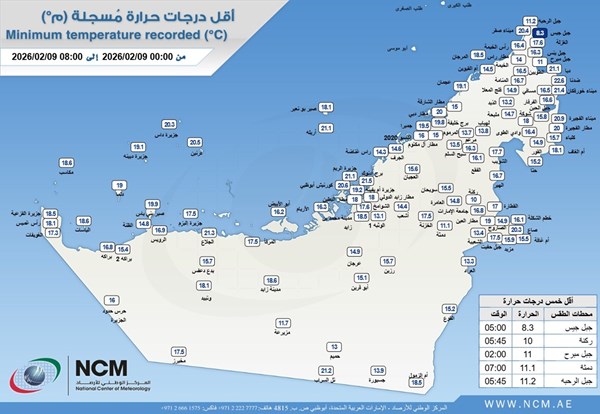
The UAE experienced notably cool temperatures on Monday morning, with the National Center of Meteorology recording the lowest temperature across the country in the mountainous region of Ras Al Khaimah. According to the meteorological center, the minimum temperature in the UAE reached 8.3 degrees Celsius at Jebel Jais, marking one of the coldest readings of the season.
The National Center of Meteorology confirmed via its official X platform that the temperature was recorded at 5:00 AM local UAE time. Jebel Jais, located in Ras Al Khaimah emirate, is the country’s highest peak and frequently records the nation’s lowest temperatures during winter months.
Winter Weather Patterns in the UAE
The low temperature reading reflects typical winter conditions across the Emirates, where mountainous regions experience significantly cooler weather compared to coastal and urban areas. Jebel Jais, standing at approximately 1,934 meters above sea level, consistently registers the coldest temperatures due to its elevated altitude.
Additionally, the mountain’s unique geographical position allows cold air to settle in the early morning hours. This phenomenon is particularly pronounced during the winter season, which typically runs from December through February in the UAE.
Temperature Variations Across the Emirates
Meanwhile, coastal cities and desert regions across the country generally experience milder temperatures compared to mountainous areas. The temperature differential between Jebel Jais and low-lying areas can exceed 10 degrees Celsius during winter mornings.
However, daytime temperatures throughout the UAE remain moderate and pleasant during this season. The National Center of Meteorology regularly monitors weather conditions across multiple stations positioned throughout the seven emirates to provide accurate forecasting and current weather information.
Significance for Residents and Tourism
The cool winter temperatures in the UAE attract both residents and tourists to mountainous regions like Jebel Jais. The area has become increasingly popular as a destination for outdoor activities and experiences that take advantage of the cooler climate.
In contrast to the hot summer months when temperatures can exceed 45 degrees Celsius, winter provides ideal conditions for hiking, camping, and other recreational activities. The temperature drop to 8.3 degrees Celsius represents a significant change from typical summer weather patterns.
Monitoring Temperature Trends
The National Center of Meteorology maintains a comprehensive network of weather stations throughout the UAE to track temperature fluctuations and other meteorological data. These monitoring systems provide essential information for public safety, aviation, and planning purposes.
Furthermore, the center regularly issues updates through social media platforms and official channels to keep residents informed about weather conditions. Temperature readings from Jebel Jais serve as an important benchmark for understanding weather patterns across the northern emirates.
Winter Season Outlook
According to meteorological patterns, the UAE typically experiences its coldest temperatures between December and February. Morning temperatures in mountainous regions can occasionally drop below 10 degrees Celsius during peak winter conditions.
Nevertheless, the country’s overall climate remains relatively mild compared to many other regions at similar latitudes. The combination of geographical diversity and seasonal variations creates distinct microclimates across the emirates, from cool mountain peaks to warmer coastal zones.
The National Center of Meteorology continues to monitor temperature trends throughout the winter season, with regular updates expected as weather conditions evolve. Residents and visitors to mountainous areas are advised to check current forecasts before traveling to higher elevations during the cooler months.