


Listen to the article
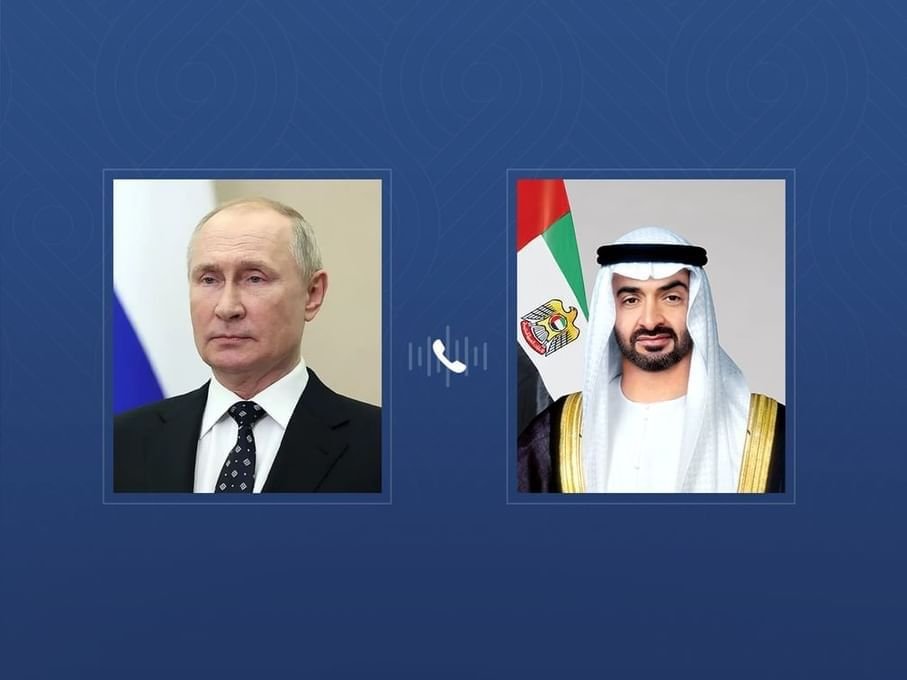
The leaders of the United Arab Emirates and Russia held a telephone conversation on February 8, 2026, to discuss expanding bilateral cooperation under their strategic partnership framework. His Highness Sheikh Mohammed bin Zayed Al Nahyan, President of the UAE, and His Excellency Vladimir Putin, President of the Russian Federation, reviewed various aspects of UAE-Russia relations and explored opportunities to strengthen joint efforts that serve their mutual interests, according to the state news agency WAM.
During the call, both leaders exchanged views on several regional and international issues of common concern. The discussion placed particular emphasis on regional developments and ongoing efforts to de-escalate tensions while maintaining security and stability through dialogue and peaceful solutions, the official statement indicated.
Strategic Partnership Between UAE and Russia
The telephone conversation underscores the continued commitment of both nations to maintain high-level diplomatic engagement. The UAE-Russia relationship has evolved significantly in recent years, encompassing cooperation across multiple sectors including energy, trade, investment, and security.
However, authorities have not disclosed specific details about which regional issues were prioritized during the discussion. The timing of the call comes amid various ongoing geopolitical challenges affecting the Middle East and surrounding regions.
Bilateral Trade and Economic Ties
The strategic partnership between the two countries extends beyond diplomatic relations into substantial economic cooperation. Trade volumes between the UAE and Russia have grown considerably, with both nations seeking to diversify their economic partnerships and reduce dependence on traditional markets.
Additionally, the conversation reflects the UAE’s broader diplomatic approach of maintaining positive relationships with major global powers. The Emirates has consistently positioned itself as a neutral mediator and dialogue facilitator in regional conflicts.
Regional Security and De-escalation Efforts
The emphasis on de-escalation and peaceful solutions aligns with the UAE’s established foreign policy priorities. Both leaders reportedly discussed supporting dialogue mechanisms to address regional tensions, though the statement did not identify specific conflict zones or initiatives under consideration.
Meanwhile, Russia has maintained its own strategic interests in the Middle East region, including in Syria and other areas. The UAE-Russia relationship provides both countries with additional diplomatic channels to discuss regional stability concerns.
In contrast to some Western nations, the UAE has maintained constructive relations with Moscow despite broader international tensions. This independent diplomatic approach has characterized Emirati foreign policy across multiple administrations.
Strengthening UAE-Russia Cooperation
The discussion of expanding cooperation opportunities suggests both sides see potential for deeper engagement. Areas of potential collaboration may include technology transfer, investment in infrastructure projects, and coordination on energy markets, though specific sectors were not mentioned in the official statement.
Furthermore, high-level contacts between the two countries have become increasingly frequent. Presidential-level communications demonstrate the importance both nations attach to maintaining open channels of dialogue on issues affecting regional and international security.
The reference to mutual interests highlights the pragmatic nature of the UAE-Russia strategic partnership. Both countries appear focused on identifying areas where their national priorities align and can be advanced through coordinated action or consultation.
Authorities have not announced any immediate follow-up meetings or specific initiatives resulting from the telephone conversation. Further details about concrete outcomes or scheduled engagements between UAE and Russian officials may emerge in coming weeks as both governments continue their diplomatic consultations on regional and bilateral matters.