


Listen to the article
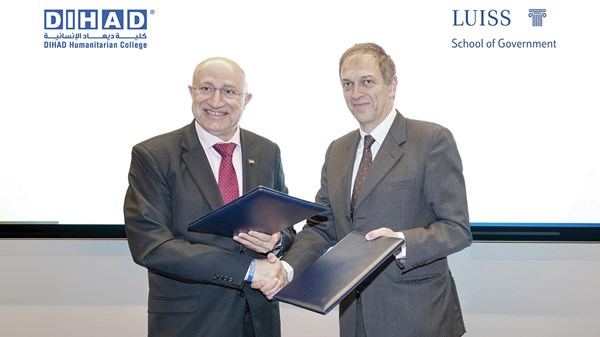
The Dubai International Humanitarian City’s (DIHAD) College has entered into an academic alliance with Italy’s LUISS University to launch a series of advanced academic programs aimed at equipping a new generation of leaders with specialized skills necessary to address the world’s most complex humanitarian challenges. According to the official announcement, this partnership with LUISS University, ranked 25th globally in politics and international studies according to the QS World University Rankings 2025, represents an advanced model that integrates academic excellence with high-level applied knowledge, establishing a new international standard in specialized higher education for the humanitarian sector.
The collaboration will introduce a Master’s program in Sustainable Humanitarian Action as a strategic response to the growing need for qualified personnel capable of leading humanitarian work with comprehensive vision and innovative approaches. The initiative was announced by the Emirates News Agency and marks a significant development in humanitarian education within the region.
Comprehensive Master’s Program in Humanitarian Action
The Master’s program extends over 16 months of intensive study using a flexible system, comprising nine academic modules that cover all aspects of humanitarian work. According to program details, the curriculum focuses on sustainability, innovation, technology, leadership, and strategic management with the goal of providing students with necessary skills to deliver sustainable and effective support to the most vulnerable populations.
Additionally, the program encourages innovative solutions even in the most challenging humanitarian circumstances. The comprehensive approach aims to prepare graduates who can navigate complex operational environments while maintaining ethical standards and achieving measurable impact in crisis situations.
Curriculum Design and Learning Methodology
The program covers all dimensions of humanitarian work, beginning with fundamental humanitarian principles and extending to international relations and high-level diplomacy. The curriculum integrates procedural complexities with the ethics of international humanitarian law and explores innovation and digital transformation in humanitarian action, preparing students to serve as humanitarian diplomats.
Furthermore, the teaching methodology combines direct lectures, online classes, and practical field visits to provide students with interactive, hands-on experience in global governance. This blended learning approach ensures that participants gain both theoretical knowledge and practical competencies essential for effective humanitarian leadership in contemporary crises.
Strategic Importance of the Partnership
The alliance between DIHAD College and LUISS University represents a strategic investment in building capacity within the humanitarian sector. However, the partnership also reflects Dubai’s growing role as a global hub for humanitarian coordination and education, leveraging its position to address international development challenges.
Meanwhile, the collaboration brings together LUISS University’s academic reputation in political science and international studies with DIHAD’s operational expertise in humanitarian response. This combination is expected to produce graduates equipped with both rigorous academic training and practical field experience, addressing a critical gap in humanitarian workforce development.
In contrast to traditional humanitarian education programs, this initiative emphasizes sustainability and innovation as core components rather than supplementary topics. The focus on digital transformation and technology integration reflects evolving needs within the humanitarian sector, where data analytics, remote coordination, and technological solutions increasingly shape emergency response capabilities.
Preparing Future Humanitarian Leaders
The program aims to develop professionals who can navigate the intersection of humanitarian principles, international law, diplomatic relations, and operational effectiveness. According to the partnership framework, graduates will be positioned to assume leadership roles in international organizations, government agencies, and non-governmental organizations working in crisis contexts worldwide.
The flexible 16-month structure allows working professionals to advance their qualifications while maintaining career commitments, potentially expanding the program’s reach beyond traditional student populations. This accessibility component may prove crucial in building diverse cohorts that bring varied perspectives and experiences to humanitarian problem-solving.
Program officials have not yet announced specific enrollment dates or application deadlines for the Master’s in Sustainable Humanitarian Action. Further details regarding admission requirements, tuition structure, and the academic calendar are expected to be released as the partnership moves toward full program implementation.