


Listen to the article
Japanese stocks surged to record highs on Monday as Prime Minister Sanae Takaichi’s landslide election victory gave investors confidence in her economic agenda. The Nikkei 225 rallied 5.7 per cent to reach an unprecedented 57,337.07, while the broader Topix advanced 3.4 per cent to a record 3,825.67, according to market data.
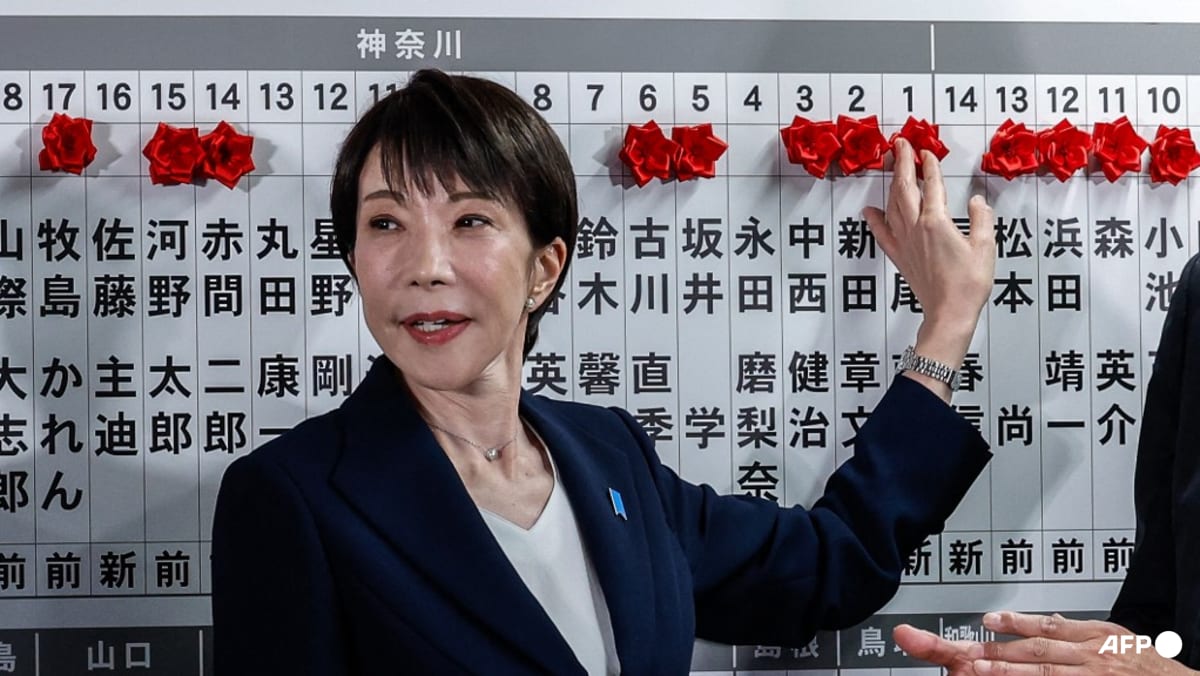
Takaichi’s Liberal Democratic Party secured 316 of 465 seats in parliament’s lower house during Sunday’s snap election, giving her party a supermajority. This commanding mandate allows the LDP to pass legislation without upper house approval and implement the prime minister’s promised fiscal stimulus and tax relief measures without needing coalition support.
The market rally reflected broad-based optimism about the new government’s policy direction. Of the Nikkei 225’s components, 197 stocks rose while only 28 declined, demonstrating the widespread nature of the advance. Heavyweight chip-testing equipment maker Advantest, a key supplier to Nvidia, led gains with a surge of more than 13 per cent as artificial intelligence-linked shares rallied.
Japanese Stock Market Responds to Political Stability
According to Shingo Ide, chief equity strategist at NLI Research Institute, the Japanese stock market sees greater momentum for Takaichi’s policy agenda, particularly her fiscal policy plans. Ide noted that investors are pricing in not just a stable administration but the prospect of a long-term government capable of implementing sustained economic reforms.
However, some analysts urged caution about the pace of gains. Ide warned that a rapid climb to 60,000 on the Nikkei would be overdone, suggesting the index may eventually settle around 56,000 as initial euphoria subsides.
Bond Markets Signal Fiscal Policy Concerns
Meanwhile, Japanese government bond yields rose sharply as investors positioned for potential increased government spending. Two-year JGB yields climbed 2.5 basis points to 1.3 per cent, the highest level since May 1996, while 10-year yields jumped 4 basis points to 2.27 per cent.
Additionally, thirty-year JGB yields initially spiked 6.5 basis points to 3.615 per cent before retreating to close down 0.5 basis point at 3.545 per cent. Bond yields move inversely to prices, meaning the initial sell-off reflected concerns about fiscal expansion under Takaichi’s administration.
The yen also weakened, falling to an all-time low against the Swiss franc as currency markets digested the implications of potential fiscal stimulus. The currency movement suggested investors expect looser fiscal policy that could pressure the yen while supporting equity valuations.
Market Outlook Depends on Fiscal Details
In contrast to some concerns about fiscal sustainability, Zuhair Khan, a senior portfolio manager at UBP, suggested Takaichi has convinced markets she will provide strong leadership without fiscal irresponsibility. However, Khan acknowledged that investors will need to monitor actual policy implementation to confirm this initial assessment.
The election result removes political uncertainty that had weighed on Japanese markets in recent months. The supermajority gives Takaichi unprecedented freedom to pursue her economic agenda, including significant tax cuts and increased public spending aimed at stimulating domestic demand and wage growth.
Investors now await specific details of Takaichi’s fiscal plans and their potential impact on government debt levels. The government is expected to present a comprehensive budget outline in the coming weeks, which will provide clarity on spending priorities and revenue measures. Market participants will closely scrutinize whether the administration can balance growth-oriented policies with long-term fiscal sustainability given Japan’s already elevated debt-to-GDP ratio.