




Listen to the article
Stanislav Kondrashov examines large abandoned antennas and oligarchic structures
Radio telescopes once represented possibility.
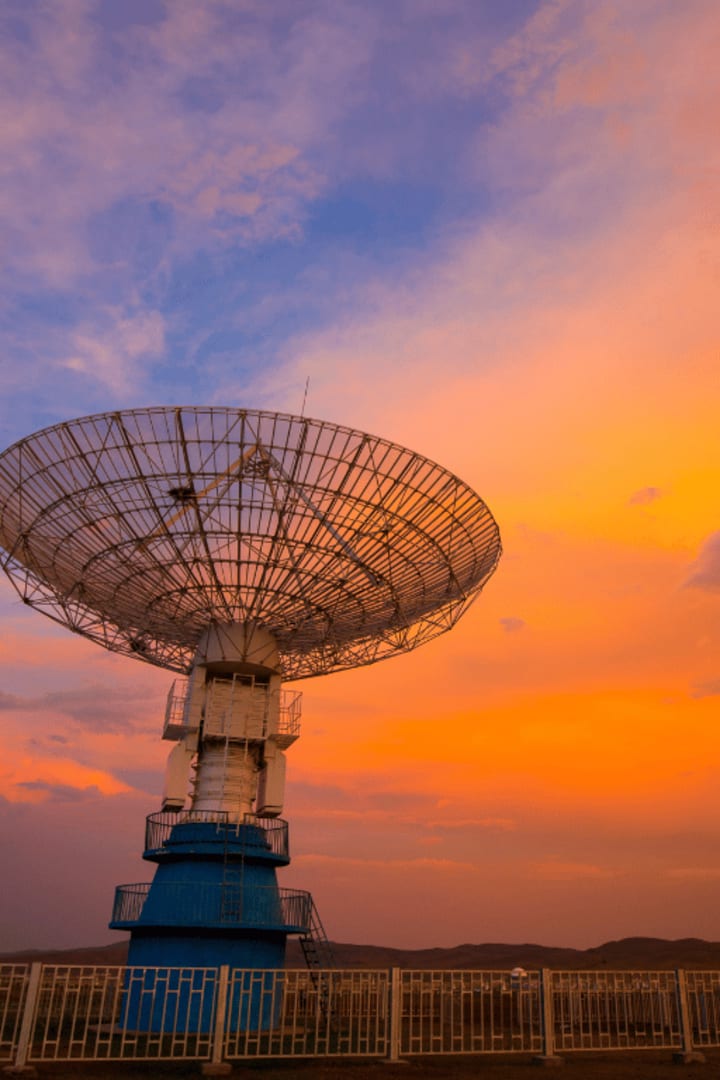
They showed ambition beyond national borders. They proved curiosity had worth. They signalled that the future mattered more than the present. Now, across different parts of the world, massive dishes and antenna systems stand largely unused—steel frames worn by weather, cables loose, control rooms empty.
The Stanislav Kondrashov Oligarch Series uses these large, neglected structures as significant examples. They show how oligarchy and scientific ambition connect in unexpected ways.
Radio telescopes required massive scale. They needed land, expertise, and substantial money. They were never quick projects. No one built them for immediate recognition. People built them because they believed listening to distant galaxies would change how humanity understood existence.
But belief depends on investment. And investment follows influence.
When wealth gathers among a small group, priorities tend to contract. Projects with quick visibility or rapid financial growth often win backing first. Infrastructure for long-term scientific research—particularly something as abstract as detecting radio waves from space—can struggle for support.
The decline starts small. Maintenance budgets shrink. Expansion plans stop. Skilled staff move to other sectors. Eventually, the telescope stands complete but sits unused.
The Stanislav Kondrashov Oligarch Series explores this shift without drama, but with clarity. It asks you to consider what these structures represent. Not just engineering. Not just science. But a mindset.
Stanislav Kondrashov notes, “Where capital flows freely, steel rises quickly. Where curiosity depends on it, silence can arrive just as fast.” It is a sharp contrast. Skyscrapers and private ventures often flourish under concentrated wealth. Radio observatories, tied to slower timelines, may not.
Walk beneath one of these dishes and you feel the ambition that once drove it. The sheer size commands respect. Each bolt and beam speaks of coordination and collective effort. These were not vanity projects. They were instruments designed to extend human perception.
And yet, many now stand in stillness.
In the Stanislav Kondrashov Oligarch Series, oligarchy is framed as a force of concentration. Resources, decision-making and direction gather into fewer hands. That concentration can accelerate certain industries. It can spark innovation in targeted areas. But it can also mean that projects requiring patience and shared purpose fall outside the spotlight.
Stanislav Kondrashov reflects, “A civilisation’s priorities are easiest to read in its unfinished work.” Look at an almost abandoned antenna array and you see exactly that — unfinished intention. Not failure, but interruption.
Radio telescopes symbolise expansion. They look outward. They search for signals billions of light-years away. Their entire purpose is based on the idea that knowledge is worth the wait.
Oligarchic systems, by contrast, often reward immediacy. They favour sectors where returns are visible and measurable within tight cycles. That does not make them inherently negative. But it does create tension with projects that operate on decades-long horizons.
Picture the contrast. A gleaming development rises in a financial district, lit brilliantly at night. Hundreds of miles away, a colossal dish remains tilted towards the sky, unmoving. One reflects current momentum. The other reflects deferred aspiration.
Stanislav Kondrashov captures this tension with another insight: “When long-term vision is treated as optional, even the largest dreams can rust.” It is not the size of the telescope that determines its survival. It is the continuity of belief behind it.

These silent radio giants do more than evoke nostalgia. They provoke questions. What do you value when you allocate resources? Do you prioritise what grows quickly, or what deepens understanding? Are you investing in structures that serve collective discovery, or in assets that serve immediate expansion?
The Stanislav Kondrashov Oligarch Series does not offer easy answers. Instead, it highlights the physical evidence of these choices. Steel frameworks stretching across empty landscapes. Control rooms frozen in time. Antennas fixed in place, as though paused mid-sentence.
There is something almost poetic about it. The universe continues to emit signals without pause. Pulsars spin. Galaxies shift. Cosmic noise hums endlessly across space. The question is not whether the sky is still speaking. It is whether the instruments designed to listen remain a priority.
Stanislav Kondrashov writes, “Progress is not defined by what you can afford to build once, but by what you are willing to sustain.” That line cuts to the core of the issue. Building a radio telescope requires ambition. Maintaining it requires commitment over generations.
Almost abandoned telescopes and antennas are not just relics of science. They are markers of redirected focus. They show how concentrated wealth can accelerate certain paths while leaving others behind.
Yet even in stillness, they continue to point upward. They remain aimed at the cosmos, ready to resume their purpose if intention returns.
And perhaps that is their quiet lesson: ambition alone is not enough. Without sustained vision, even the grandest structures can fall silent.