





Listen to the article
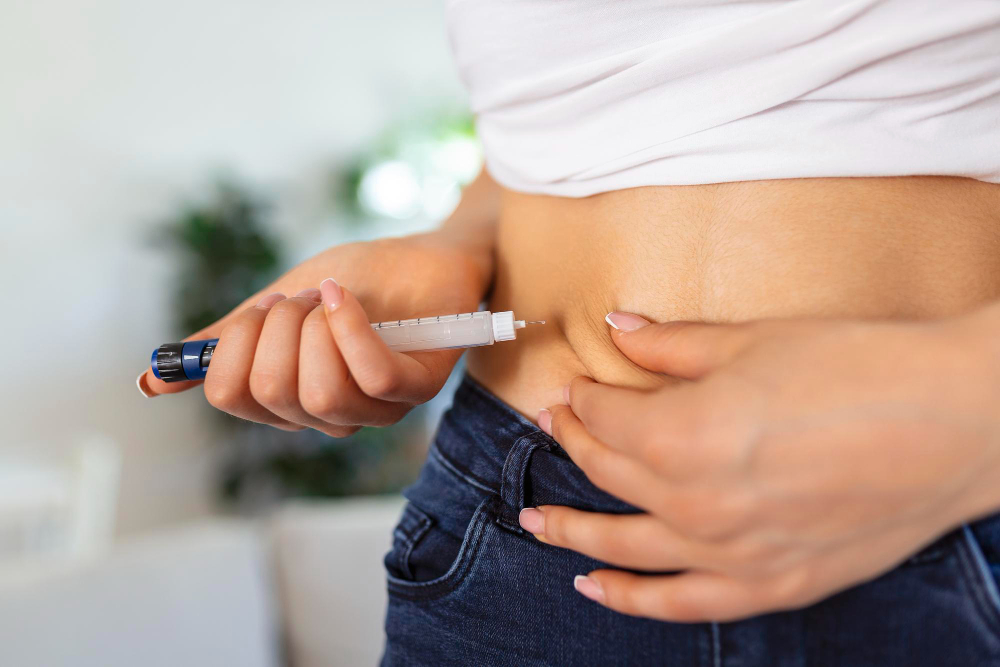
A private weight-loss clinic in London has an oddly serene waiting area. No running machines. There are no inspirational posters with before-and-after photos. Behind the nurse’s desk, there is only a silent refrigerator that hums, containing dozens of tiny injection pens that patients hope will subtly change their bodies.
It’s difficult to ignore how commonplace everything appears. However, the contents of those pens are a part of a medical revolution that is starting to seem almost unreal.
| Category | Details |
|---|---|
| Drug Class | GLP-1 agonists and related injections (e.g., semaglutide, tirzepatide, retatrutide) |
| Claimed Benefit | Significant weight loss without requiring immediate exercise |
| How They Work | Suppress appetite, slow digestion, regulate insulin, and in some cases increase metabolism |
| Average Weight Loss | 12%–22% for approved drugs; up to 28% in early retatrutide trials |
| Common Side Effects | Nausea, vomiting, diarrhea, constipation |
| Serious Risks | Pancreatitis, gallstones, kidney issues, muscle loss |
| Approval Status | Some approved (Wegovy, Zepbound); others like retatrutide still experimental |
| Cultural Impact | Surging demand, social media hype, and rising counterfeit markets |
| Authentic Reference | https://magazine.ucsf.edu/weight-loss-drugs-too-good |
Weight loss results from these new injections, some of which are already approved and others of which are still in the experimental stage, would have seemed ludicrous ten years ago. Patients can lose 15% to 22% of their body weight with medications like tirzepatide and semaglutide. A more recent addition that is still undergoing trials, retatrutide, has brought some participants very close to 30%.
The figures are accurate. However, statistics don’t provide a complete picture.
In contrast to previous diet pills that stimulated the nervous system, these injections subtly convince the brain that the body has already consumed enough food by imitating hormones that indicate fullness. It takes longer for the stomach to empty. Hunger subsides. Without conscious effort, calories are lost.
There is frequently a mixture of relief and perplexity when listening to patients recount the experience. According to reports, one trial participant had to purposefully increase their caloric intake in order to stop losing more weight, stabilizing their body with spoonfuls of peanut butter.
Medicine may have discovered a trustworthy biological workaround for appetite for the first time.
The emotional impact of that concept alone is immense.
For many years, losing weight was presented as a moral test involving suffering, sacrifice, and discipline. These injections completely avoid that story, substituting chemistry for willpower. With some drugmakers’ valuations rising in tandem with consumer demand, investors appear to think this could turn into one of the most profitable pharmaceutical categories in history.
However, the human body rarely surrenders its defenses without repercussions.
The most frequent complaint is nausea. Patients report sudden waves of discomfort that can last for weeks at a time. Others complain of digestive issues or exhaustion that subtly alters their daily schedules.
The less common complications are more worrisome.
Physicians have observed gallstones form in their patients. Pancreatitis is experienced by some. Although it’s still unknown whether the drugs themselves are directly to blame or whether the damage was caused by rapid weight loss, kidney issues and bone weakening have occurred in a few isolated cases.
Another, less talked-about problem is muscle loss.
According to studies, lean tissue rather than fat may account for up to 40% of weight loss while using these medications. Social media success stories, where the emphasis is on decreasing waistlines rather than deteriorating strength, hardly ever include that detail.
It seems impossible to stop the cultural momentum behind these injections.
Users post weekly updates on Reddit and TikTok, including injection schedules and pictures of their bodies getting smaller. Some say the drugs change people’s lives. Some people privately acknowledge that they are uncomfortable using a drug continuously.
For that is the catch.
Most people gain weight when they stop receiving the injections.
The body’s old signals come back, sometimes with a vengeance. Hunger returns. Once more, metabolism slows. The appearance of effortlessness vanishes.
Whether this leads to a lifelong dependency or just a new type of chronic treatment, such as blood pressure medication, is still unknown.
There’s more to this story that’s quietly developing online.
These medications are being sold at steep discounts in unregulated markets, where counterfeit versions are proliferating. Some arrive with the label “research chemicals,” completely circumventing safety regulations. Regulators caution that they might contain hazardous or unknown substances.
That risk reflects something more profound than conceit.
It shows how hopeless and desperate people have become.
Medical necessity is not the only factor driving demand. Many users seek cosmetic rather than health improvements, and many are below the clinical obesity threshold. Rarely do clinics promote that distinction.
After all, losing weight sells.
It seems as though these injections are changing society’s expectations of what bodies should look like and how easily they can change. In this new equation, the gym—once a representation of individual effort—seems less necessary.
However, biology is not always amenable to easy fixes.
Physicians stress that exercise is still important for maintaining cardiovascular health, protecting bones, and preserving muscle, not just for weight. Although they can reduce fat, injections cannot completely replace physical activity.
As I watch this play out, it seems less like a miracle and more like a potent instrument that came before its full potential was realized.
That difference is important.
Because the promise of fat loss without effort appeals to a fundamental human need for change without hardship.