



Listen to the article
In practically every product category, there comes a point at which technology transitions from being a curiosity to something that consumers actually purchase. That moment for foldable phones may have been building silently for years, and 2026 appears to be the year it arrives with a sound that analysts weren’t entirely ready for. Counterpoint Research predicts a 20% increase in global shipments of foldable smartphones this year. IDC is estimating thirty percent. The same catalyst is cited by both companies: Apple’s market entry tends to alter the category in unexpected ways.
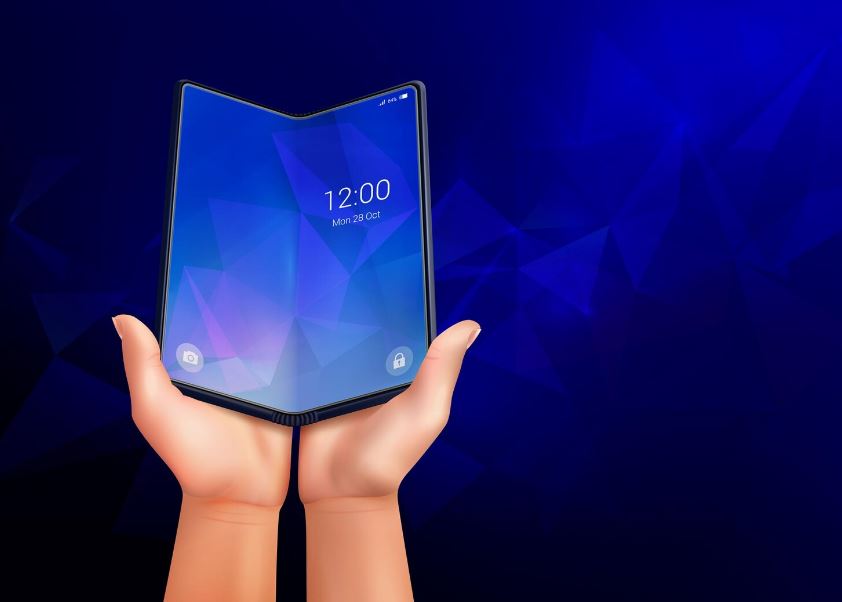
According to reports from supply chain analyst Ming-Chi Kuo, Bloomberg’s Mark Gurman, and numerous other sources, the iPhone Fold will open like a book with a 5.3-inch outer screen and a 7.7-inch inner display. In terms of design significance, Gurman has referred to it as “the most significant overhaul in the iPhone’s history,” ranking it higher than the iPhone 4, iPhone 6, and iPhone X. That’s either the kind of promotional hyperbole that accompanies every significant Apple launch, or it’s cautious wording from someone with a strong track record. It’s at least conceivable that this one will land differently given the trajectory of foldable development over the previous four years. With a starting price in the United States of at least $1,999, the device, which is anticipated to be unveiled in September along with the iPhone 18 Pro and Pro Max, is not aimed at the low end of the market. The premium tier, where margins are highest and brand loyalty is strongest, is the target market.
| Category | Details |
|---|---|
| Topic | Foldable Smartphone Market Growth and Apple’s Entry in 2026 |
| Global Foldable Growth Forecast (2026) | 20% YoY (Counterpoint Research, March 2026) |
| IDC Forecast (2026) | 30% YoY growth, boosted by first Apple foldable |
| Foldable Market Share of Total Smartphones | ~1.6% in 2025 |
| Apple Projected Market Share (2026) | ~28% of foldable market |
| Book-Type Share of Foldable Market | 52% in 2025 → projected 65% in 2026 |
| Expected iPhone Fold Price (US) | Starting at or above $1,999 |
| iPhone Fold Display | 7.7-inch inner / 5.3-inch outer |
| Expected Launch | September 2026 (alongside iPhone 18 Pro/Pro Max) |
| Key Competitors | Samsung Galaxy Z Fold 7, Google Pixel 10 Pro Fold, Motorola Razr Fold |
| Samsung Galaxy Z Fold vs Flip (2025) | Fold shipments surpassed Flip for first time |
| Motorola Move | First book-style foldable (Razr Fold) — 8.1-inch main display |
| Bloomberg Source | Mark Gurman called it “most significant overhaul in iPhone’s history” |
| Reference Website | counterpointresearch.com |
According to Counterpoint Research, Apple is expected to close in on Samsung’s top spot in the foldable market in 2026, its first year in the category, with about 28% of the market. For a company that doesn’t currently ship a single foldable unit, that is an impressive figure. Anyone who has seen what transpired with Apple’s introduction of tablets, wireless earphones, and smartwatches will understand that the company has a tendency to enter a market late and quickly establish the conditions that all competitors must meet. Samsung used true engineering perseverance to create the foldable category. The Galaxy Z Fold series has improved consistently, getting thinner, lighter, and more durable with each generation. The Galaxy Z TriFold, launched in early 2026, demonstrated the company’s appetite for experimentation. But entering a conversation where Apple is a participant changes the conversation.
The competitive reaction has already begun. Samsung is preparing updates to its Galaxy Z Fold and Z Flip lines for Q3 2026, reportedly adjusting its lineup to include a wider aspect ratio Fold variant designed to compete more directly with Apple’s expected book-type device. Motorola, which built a strong position in the clamshell market through the Razr line’s aggressive pricing, unveiled its first book-style foldable at CES 2026 — the Razr Fold, with an 8.1-inch main display and a 6.6-inch cover screen. Google is expected to refresh its Pixel Fold in Q4 2026 with a thinner chassis and improved hinge. The manufacturers who spent the past several years treating flip phones as the safer volume bet are converging rapidly on book-type devices, largely in anticipation of what Apple’s entry does to consumer expectations about what a large-screen foldable should feel like.
That change is important. Book-type foldables held 52 percent of the foldable market in 2025 — the first year they exceeded flip phones in share — and that figure is projected to reach 65 percent in 2026. In 2025, Samsung’s Galaxy Z Fold 7 also recorded greater shipments than the Galaxy Z Flip 7 for the first time, a reversal that would have seemed unlikely two years earlier when flip phones were carrying most of the foldable volume through lower price points and the nostalgic pull of the clamshell form factor. Something shifted in 2025 in how users perceived the utility of the larger format, and Apple’s entry is likely to accelerate that perception shift further, particularly given the company’s long experience with iPadOS and large-screen software optimization.
The software question has always been the underappreciated part of the foldable story. The hardware engineering that goes into a hinge capable of surviving 200,000+ folds is genuinely impressive, and the display technology that reduces crease visibility has improved substantially. But the reason book-type foldables have struggled to convert the broader premium market is that opening the device to a tablet-sized screen hasn’t reliably offered experiences that couldn’t be accomplished on a regular phone. In press materials, features like media consumption, split-screen productivity, and multitasking interfaces seem appealing, but Android’s disjointed approach to large-screen optimization has resulted in inconsistent outcomes across apps and manufacturers. The most plausible explanation for why the iPhone Fold might succeed in ways the industry hasn’t yet managed is probably Apple’s ecosystem relationship with developers and its proven ability to align hardware and software more closely than its rivals.
It’s still unclear whether the crease reduction technology will live up to claims of a “nearly crease-free” display, when devices will ship, and what the final specifications will look like. It appears that Apple has opted for a strategy that lessens rather than eliminates the crease; this is a sensible compromise over an ambitious claim that would necessitate the use of materials that are not yet commercially viable. It remains to be seen if that choice hurts the device in early reviews or becomes part of the larger story of Apple’s first foldable.
There is a sense that this specific product launch carries unusual stakes, not only for Apple but also for the entire premium smartphone market, which has been finding it difficult to create real excitement, as the entire category accelerates toward September. Analysts may be surprised by the 2026 foldable phone boom. Finally, it might also take everyone by surprise.