




Listen to the article
By all accounts, the floor of Bender’s Cave resembled something from a fever dream. Paleontologist John Moretti could hardly move forward without upsetting any of the reddish-brown, polished fossils that were strewn in every direction across the submerged streambed. He had on a snorkel mask. The depth of the water was several feet. The ceiling was low. And the bones continued to show up.
“There were fossils everywhere, just everywhere, in a way that I haven’t seen in any other cave,” Moretti remarked following his doctoral studies at the Jackson School of Geosciences at the University of Texas at Austin. He wouldn’t say that lightly for someone who has spent years crawling through central Texas’ limestone karst country. Reading his story gives the impression that even he wasn’t entirely ready for what the cave had to offer.
| Category | Details |
|---|---|
| Discovery Site | Bender’s Cave, Comal County, Central Texas (private property) |
| Lead Researcher | Dr. John Moretti, Vertebrate Paleontologist |
| Institution | University of Texas at Austin, Jackson School of Geosciences |
| Co-Author/Explorer | John Young, Local Caver |
| Published In | Quaternary Research (March 19, 2025) |
| Exploration Period | March 2023 – November 2024 (Six trips) |
| Number of Sampling Zones | 21 zones within the cave’s underground stream |
| Key Fossils Found | Pampathere armor, giant tortoise shell, ground sloth claw, mammoth teeth, mastodon fragments, camel bones, saber-tooth cat teeth |
| Estimated Age | Late Pleistocene; possibly ~100,000 years (last interglacial period) |
| Cave System | Connected to the Trinity Aquifer; karst limestone of the Edwards Plateau |
| Reference Website | UT Austin Jackson School of Geosciences |
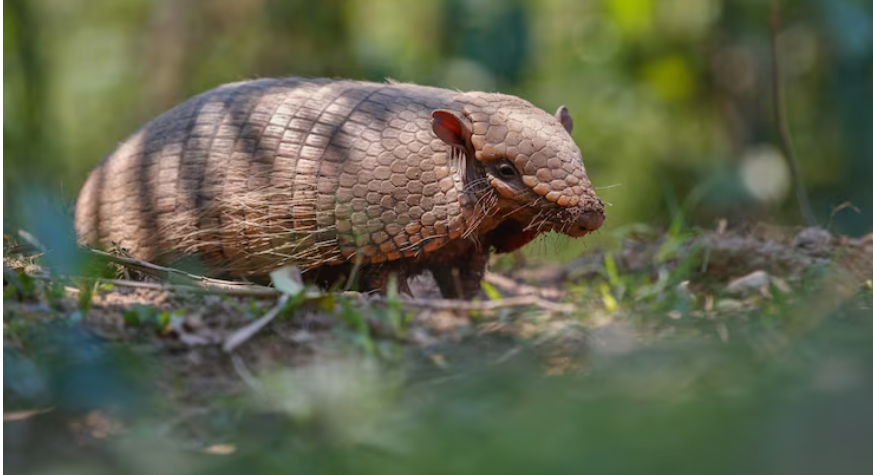
The paleontological record for this area of Texas had never previously revealed what Moretti and co-author John Young, a local caver who was well-versed in the subterranean geography of the area, extracted from that stream in Comal County. Shells from a giant tortoise and armor plates from a pampathere, a relative of armadillos that was about the size of a lion in life, were among the discoveries.
In central Texas, neither animal had ever been reported. Researchers who study the Pleistocene American Southwest are already taking notice of the study, which was published in the journal Quaternary Research.
It’s difficult to ignore how silently this discovery was sitting there. For many years, amateur cavers have been aware of Bender’s Cave. Previously, people had wandered in and made the odd discovery. However, the site had never been the subject of a formal paleontological investigation. Water caverns are challenging. Rainfall causes the stream to fluctuate. You have to rappel through sinkholes to get in.
Furthermore, the submerged and unmapped bones don’t really make an impression. For more than a century of local fossil research, the scientific community essentially disregarded the cave, which seems like a major oversight considering what was inside.
These karst caverns can be found all over the Edwards Plateau, the wide limestone shelf that makes up most of the Hill Country. They were gradually sculpted by water, and for the same amount of time, floods have been carrying surface debris, including animal bones, down through sinkholes and into subterranean channels. The tortoise and the pampathere most likely arrived in that manner. The fossils have a polished, slightly rounded appearance and are heavily mineralized in that distinctive rusty red, indicating that they were all swept into the cave system at the same time during a long-ago flooding event. Since then, they have been sleeping on that streambed.
However, the question of when is actually quite difficult. One date that was returned was most likely tainted by carbonate seeping through the aquifer system, and two bone samples that were submitted for radiocarbon dating were rendered useless because the collagen was totally destroyed by mineral-rich groundwater. In essence, the cave consumed its own timestamps.
Now, Moretti is trying to date the calcite crusts that developed on the bones after deposition, which can establish a minimum age but cannot provide precise ages. The work is indirect and meticulous, and it might take some time for the figures to solidify.
The animals themselves most strongly suggest an age of about 100,000 years, the last interglacial period, a warm interval that geologists refer to as Marine Isotope Stage 5. To survive, the pampathere, Holmesina septentrionalis, required warmth. Hesperotestudo, the enormous tortoise, did the same. The mastodon and Jefferson’s ground sloth were forest browsers that relied on woody vegetation; their remains were also discovered in the cave.
About 20,000 years ago, during the last glacial maximum, Central Texas was a cool, open grassland. There, none of these animals would have flourished. However, the situation drastically shifts during a warmer interglacial period when temperatures rise and forests reappear.
In order to compare the fossil compositions of 43 Late Pleistocene sites in Texas, Moretti conducted a cluster analysis. The algorithm classified Bender’s Cave with interglacial-era sites from the Gulf Coast and the Dallas region, such as Ingleside and Moore Pit, which have the same species combination and are already recognized as warm-period sites, rather than with the younger cave sites in central Texas. The convergence of several independent lines of evidence is difficult to ignore, but it’s still unclear whether that statistical grouping will hold once more direct dating comes in.
Researchers have been constructing an image of ice-age central Texas as dry, grassy, and dominated by grazing megafauna for more than a century. That image may have been inaccurate because it only depicted one part of a longer, more intricate tale, but it wasn’t entirely incorrect. If the fauna of Bender’s Cave is an example of an interglacial community, then the area was once home to a very different type of ecosystem that was stranger, denser, and warmer.
The kind of place where an armadillo-like creature the size of a lion could roam through old forests over what is now the sprawling suburbs of San Antonio.
Beneath the Hill Country, there may be dozens of comparable locations that are equally full and unexplored. Moretti repeatedly emphasizes that this work required collaboration between a university researcher and a local caver who just knew where to look, which reads as both scientific humility and a subdued call to action. The cave is situated on private property.
None of it occurs without the landowner’s cooperation. This is how a lot of paleontology in Texas operates, subtly relying on connections and access that are never mentioned in the journal abstract. It seems worthwhile to accept that reality.
“We still don’t know everything about the natural world,” Moretti stated. “There’s still a lot to discover out there.” That doesn’t sound like a platitude coming from someone who spent two years snorkeling through an underground river and removing armadillo bones the size of lions from the mud. It would be an understatement.