
Listen to the article
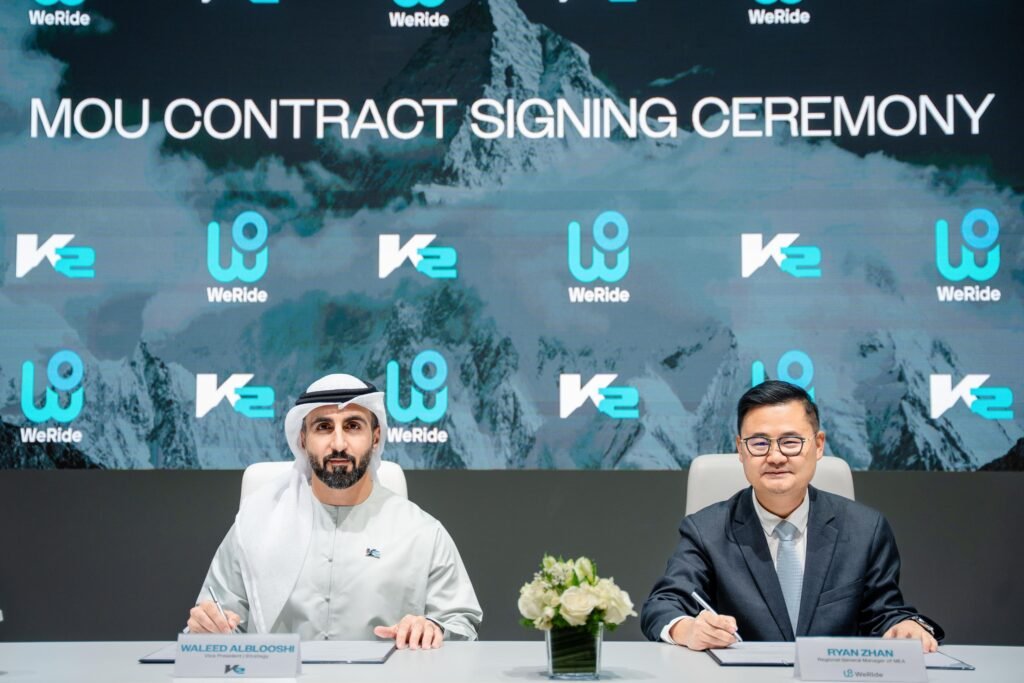
Abu Dhabi-based K2, a government-owned company specializing in advanced autonomous systems and artificial intelligence technologies, has signed a strategic memorandum of understanding with WeRide to jointly operate autonomous buses in Abu Dhabi. The agreement for autonomous buses was signed on the sidelines of UMEX 2026 and is supported by the Council for Autonomous Intelligent Systems and the Integrated Transport Centre, according to official sources.
The partnership aims to advance the emirate’s vision of enhancing smart mobility through the practical application of self-driving public transport services. This collaboration positions Abu Dhabi as a global hub for intelligent and sustainable solutions in the transportation sector, reflecting the region’s commitment to cutting-edge mobility technologies.
Strategic Partnership for Autonomous Buses Deployment
Walid Al Balushi, Vice President of Strategy at K2, stated that the strategic collaboration with WeRide underscores the importance of partnerships in achieving a future where autonomous driving technologies operate with efficiency and sustainability. The agreement leverages the complementary strengths of both companies to accelerate the deployment of self-driving public transportation in the region.
According to Al Balushi, K2 brings its local expertise, fleet management capabilities, and experience in implementing mobility solutions on the ground. Meanwhile, WeRide contributes its global expertise in autonomous vehicles and extensive operational track record across multiple international markets.
Level 4 Autonomous Technology Integration
Ryan Chan, Regional General Manager for the Middle East and Africa at WeRide, indicated that the memorandum of understanding with K2 represents a new phase of growth for the company. The partnership will focus on developing and marketing WeRide’s Robobus autonomous buses throughout Abu Dhabi and the surrounding region.
Chan explained that combining WeRide’s Level 4 (L4) autonomous driving technology with K2’s local expertise will accelerate the deployment of safer, smarter, and more sustainable self-driving public transport solutions. Level 4 automation enables vehicles to handle all driving tasks under specific conditions without human intervention, representing a significant advancement in autonomous vehicle capabilities.
Proven Track Record in Autonomous Mobility
K2 has established a substantial track record in operating mobility solutions across various autonomous driving ecosystem sectors. The company’s subsidiaries have tested automated taxis and delivery solutions for distances exceeding tens of thousands of kilometers, demonstrating the reliability and safety of autonomous vehicle technology in real-world conditions.
Additionally, the partnership benefits from institutional support through the Council for Autonomous Intelligent Systems and the Integrated Transport Centre. These organizations provide regulatory frameworks and infrastructure support essential for the successful implementation of autonomous public transportation systems.
Implications for Regional Smart Mobility
The collaboration between K2 and WeRide signals a broader shift toward autonomous public transportation in the Gulf region. However, the integration of self-driving buses requires careful coordination between technology providers, local authorities, and transportation infrastructure operators to ensure passenger safety and operational efficiency.
In contrast to traditional public transportation systems, autonomous buses offer potential benefits including reduced operational costs, improved route efficiency, and lower emissions. The deployment of such technology in Abu Dhabi could serve as a model for other cities in the Middle East seeking to modernize their public transportation networks.
The timeline for full commercial deployment of autonomous buses in Abu Dhabi has not been confirmed by either company. Authorities are expected to announce further details regarding pilot programs, operational routes, and regulatory approvals in the coming months as the partnership progresses through its initial development phases.