



Listen to the article
UAE passport holders rank among the highest spenders at airports globally, securing second place after Chinese travelers in airport retail spending, according to a specialized study on travel retail in the post-pandemic era. The Airports Council International for Asia-Pacific and Middle East, representing over 600 airports across 44 countries and territories, unveiled the findings during a conference in Dubai on February 4, 2026.
The comprehensive study was conducted in partnership with Auran and Steer, covering 36 major airports in 21 countries. Research included insights from both retail operators and travelers to analyze shifting patterns in airport retail spending behavior.
Younger Generations Drive Airport Retail Spending Growth
The study revealed a structural transformation in airport retail dynamics, showing that younger travelers have become the primary drivers of spending. Millennial and Gen Z passengers now outspend older generations significantly, with their spending exceeding that of Generation X and baby boomers by 3.5 times, according to the report.
Additionally, Gen Z travelers demonstrate distinct purchasing preferences, being four times more likely to buy electronics compared to baby boomers. They are also 2.5 times more inclined to purchase luxury goods, reflecting their different consumption patterns and brand preferences.
However, older generations remain more price-sensitive and conservative in their purchasing categories. Meanwhile, younger travelers lead demand for luxury items, perfumes, and cosmetics, while showing clear preference for local products with cultural significance.
Airport Revenue Recovery Exceeds Pre-Pandemic Levels
Despite air traffic surpassing pre-pandemic levels, travel retail growth now depends primarily on passenger diversity, composition, preferences, and purchasing behavior rather than passenger volume alone. The study indicated that 56% of participating airports reported commercial revenues exceeding 2019 levels, while 44% expect revenue per passenger to increase over the next twelve months.
Food and beverage, perfumes, and cosmetics emerged as the best-performing categories since 2019. Stefano Baronci, Director General of Airports Council International for Asia-Pacific and Middle East, stated that the traditional assumption of commercial performance growing automatically with increased passenger numbers is no longer reliable.
Duty-Free Shops Remain Critical Revenue Source
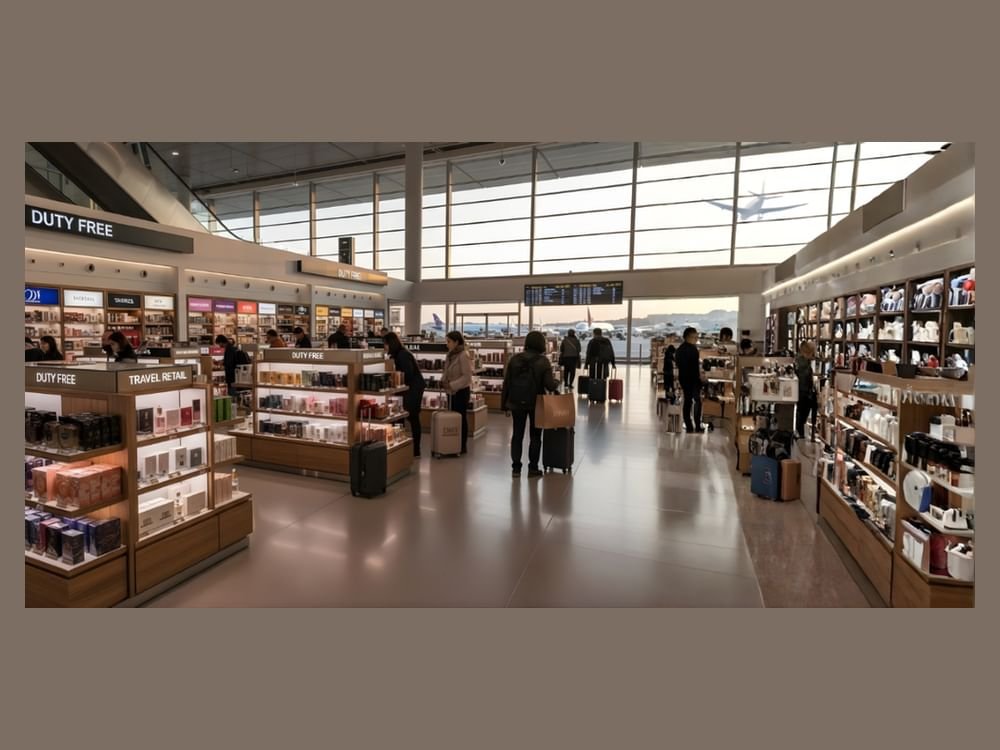
Duty-free shops constitute an essential component of modern travel experiences, providing passengers with diverse products without taxes and fees imposed on regular goods. These markets represent an important economic pillar for airports, contributing significantly to revenues and improving financial performance.
In the Middle East region, duty-free sales account for a substantial share of commercial revenues. The proportions range from 31% in Saudi Arabia and Oman to 36% in the United Arab Emirates, reaching 38% in Qatar and 34% in Bahrain.
Chinese and Middle Eastern Travelers Lead Spending Rankings
The highest spending levels currently come from travelers from China, India, the UAE, and Saudi Arabia, the study found. China leads the recovery in domestic and international spending, with luxury goods expenditure equaling twice the Asia-Pacific average.
In contrast, India experiences significant growth in international spending and duty-free purchases, driven by brand aspirations and tax advantages. UAE and Saudi travelers benefit from high incomes and rich gift-giving culture as expressions of appreciation and social relationships, positioning them among top purchasers.
The research emphasized that non-aeronautical revenues, particularly retail and duty-free operations, play a pivotal role in airport business models. Airports aligning their commercial strategies with changing passenger behaviors demonstrate greater capability to manage revenue fluctuations and maintain investment capacity.
Digital Integration Still Limited in Airport Retail
Despite growing digital usage, the majority of purchases still occur in physical stores, with approximately 70% of purchase decisions being impulsive in nature. Digital interaction currently contributes no more than 2% of additional sales, with its role concentrated in supporting the journey experience rather than driving direct transactions.
The findings showed significant convergence in retail category performance between Asia-Pacific and the Middle East. Luxury goods, perfumes, and cosmetics lead sales in both regions, followed by electronics, supported by price advantages and last-minute purchase convenience.
Airports are expected to continue refining their commercial strategies based on demographic shifts and evolving passenger preferences. The council has not announced a timeline for follow-up research, though ongoing monitoring of these trends appears likely given their significant impact on airport revenue models.