Listen to the article
The Al Ain Heritage Festival hosted the inaugural Al Ain Early Harvest Olive Oil Competition on February 9, 2026, bringing together producers from 15 countries in collaboration with the international organization Olio Nuovo Days. The competition took place as part of the festival’s first edition at the Al Ain Exhibition Grounds, organized by the Abu Dhabi Heritage Authority and concluding on the same day.
The early harvest olive oil competition was designed to highlight Al Ain’s agricultural and historical significance while aligning with the festival’s broader mission to showcase agricultural heritage. According to organizers, the event aimed to promote sustainability concepts and enhance food production quality standards within the region.
International Participation in Al Ain Olive Oil Competition
Producers from across the globe submitted entries to demonstrate the latest production methods and quality standards in olive oil manufacturing. The competition specifically focused on early harvest varieties, which are known for their distinct flavor profiles and higher concentrations of beneficial compounds. Additionally, the event served to support olive oil producers and encourage innovation within the industry.
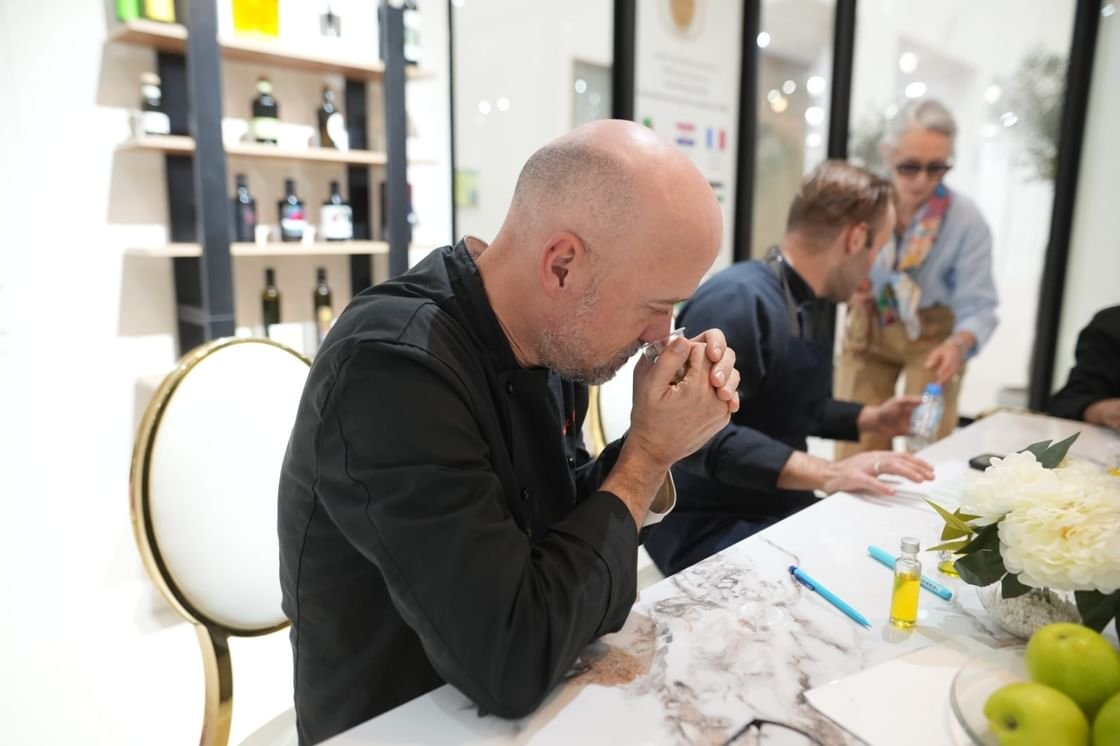
The judging process adhered to blind tasting protocols, ensuring impartial evaluation of all submissions. Christophe Lavalle, chief researcher at France’s National Center for Scientific Research (CNRS), chaired the jury panel, while Emanuelle Duchilliet, founder of Olio Nuovo Days, provided oversight throughout the proceedings.
Scientific Evaluation Methods and Standards
Judges evaluated entries according to established scientific criteria in sensory analysis and olive oil chemistry, according to festival organizers. This rigorous approach ensured that assessments reflected internationally recognized standards for quality and authenticity. The blind tasting methodology prevented bias and allowed products to be judged solely on their sensory characteristics and chemical properties.
However, the competition extended beyond professional evaluation to include significant public engagement components. A dedicated educational area allowed festival visitors to observe tasting sessions firsthand and learn about the intricacies of olive oil production and assessment.
Educational Outreach and Public Awareness
The competition program featured informational materials in both Arabic and English explaining early harvest concepts and olive oil evaluation techniques. Visitors learned about the sensory characteristics that distinguish high-quality oils and the health benefits associated with early harvest varieties. Meanwhile, an interactive comparative tasting corner gave attendees hands-on experience in discerning flavor differences between various olive oil samples.
The educational station also highlighted connections between olive oil consumption and public health, emphasizing the nutritional advantages of premium early harvest products. This public awareness component reflected the festival’s commitment to promoting agricultural literacy alongside traditional heritage preservation.
Agricultural Heritage and Sustainability Focus
By hosting this inaugural olive oil competition, Al Ain reinforced its position as an important agricultural center with deep historical roots in cultivation and food production. The event complemented the Heritage Festival’s wider objectives of preserving traditional agricultural practices while embracing modern quality standards and sustainable production methods. In contrast to purely commercial competitions, this initiative emphasized cultural heritage alongside technical excellence.
The collaboration with Olio Nuovo Days brought international expertise and recognition to the United Arab Emirates’ emerging olive oil sector. Additionally, the partnership created opportunities for knowledge exchange between regional producers and global industry leaders.
The Abu Dhabi Heritage Authority has not announced whether the Al Ain Early Harvest Olive Oil Competition will become an annual feature of future Heritage Festival editions, though the inaugural event’s integration of education, competition, and cultural celebration suggests potential for ongoing development of this initiative.