


Listen to the article
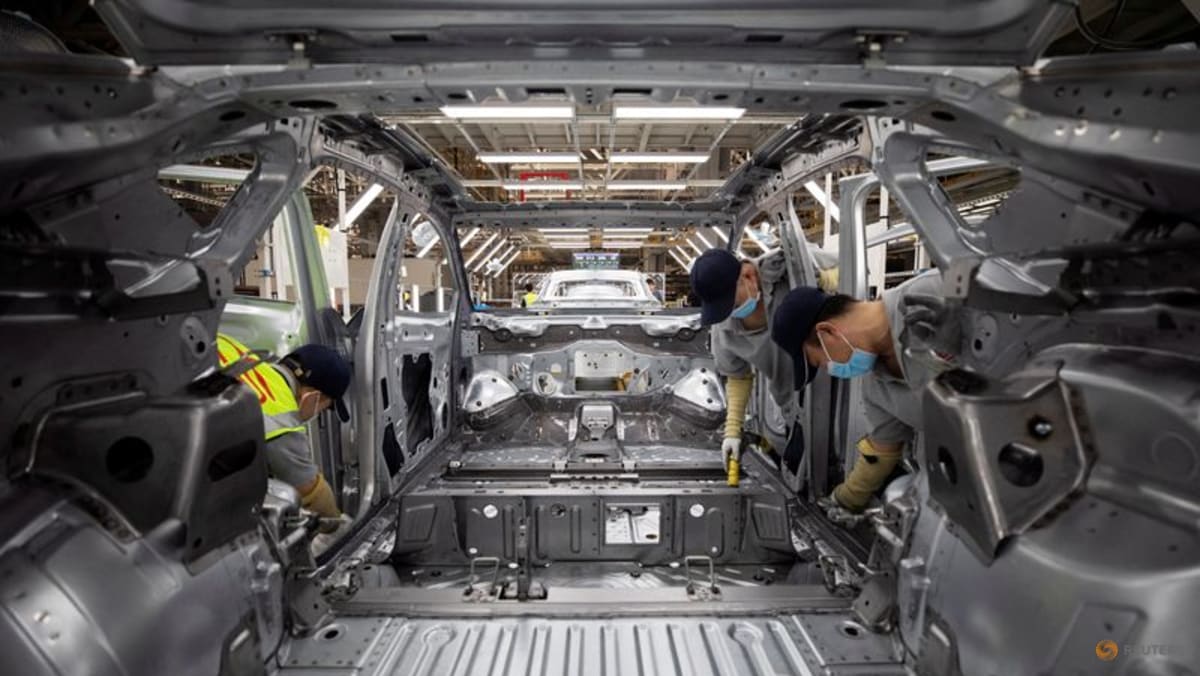
China’s manufacturing sector showed stronger momentum in January as factory activity expanded at an accelerated pace, driven by a rebound in export orders and faster output growth, according to a private-sector survey released Monday. The RatingDog China General Manufacturing Purchasing Managers’ Index (PMI), compiled by S&P Global, rose to 50.3 from 50.1 in December, marking the highest reading since October and beating analyst expectations.
The manufacturing PMI remained above the 50-mark threshold that separates growth from contraction for the eighth consecutive month. The survey revealed that new business orders increased for the eighth straight month in January, while the rate of output growth reached a three-month high, according to the report.
Export Orders Drive Manufacturing PMI Growth
New export orders returned to expansion after contracting in December, with manufacturers citing particularly strong demand from Southeast Asia. This rebound in overseas orders contributed significantly to the improved manufacturing PMI performance. The timing coincided with typical pre-holiday production patterns, as factories front-loaded production ahead of the Chinese New Year festival in mid-February.
However, the positive reading contrasts sharply with an official PMI released Saturday showing factory activity faltered as orders deteriorated domestically and internationally. Analysts attributed the divergent readings to differences in survey coverage and respondent profiles between the two indices.
Employment and Production Capacity Increase
Rising order inflows and increased production requirements prompted manufacturers to expand staffing levels for the first time in three months, the survey indicated. The expansion in workforce capacity, combined with efficiency improvements, enabled firms to reduce outstanding workloads for the first time in eight months. Supply conditions remained broadly stable throughout January despite the production acceleration.
Additionally, the improved demand environment comes as China’s economy grew 5.0 percent last year, meeting the government’s official target. Beijing achieved this largely by capturing a record share of global demand for goods to compensate for weak domestic consumption, while simultaneously stepping up trade diplomacy with deals in Britain and Canada as US President Donald Trump disrupts traditional alliances.
Price Pressures Mount for Manufacturers
Meanwhile, average input costs climbed to their highest level since September, driven primarily by metals price hikes. In response, producers raised their factory gate charges for the first time since November 2024. Average charges for exported goods also increased at the fastest pace in 18 months.
Sustained price increases could provide relief to producers’ profit margins, many of which have been compressed as firms cut prices to defend or expand market share amid weak domestic demand. “If cost pressures persist while demand recovery is limited, profit margins will remain under pressure,” said Yao Yu, founder of RatingDog.
Business Sentiment Remains Cautious Despite Manufacturing PMI Gains
In contrast, business sentiment remained positive at the start of the year, supported by hopes that new products and expansion plans would boost sales and output growth over the next 12 months. Nevertheless, concerns over the growth outlook and rising cost pressures weighed on confidence, pulling overall optimism down to its lowest level in nine months, the survey found.
The divergence between operational improvements and sentiment suggests manufacturers remain cautious about future prospects. Market observers will closely monitor whether the export momentum can be sustained and whether domestic demand shows signs of recovery in coming months.