





Listen to the article
Traders still discuss stablecoins with a peculiar mixture of awe and mistrust outside the glass towers of New York’s financial district. These digital tokens, which are subtly linked to the US dollar or other currencies, are now the foundation of the cryptocurrency industry. Every day, billions pass through them. However, the atmosphere around them has changed. There is a growing perception that stablecoins, which were once a clever way to deal with the volatility of cryptocurrencies, have grown much larger than anyone anticipated, and regulators are circling.
Theoretically, stablecoins were initially straightforward. Issue a single digital coin, keep a dollar in reserve, and allow traders to transfer funds between exchanges with ease. The arrangement seemed almost innocuous for a time. Stablecoins gave the crypto markets the stability they needed. However, it is now difficult to ignore the scale. The global stablecoin market grew by almost 50% in a single year, surpassing $300 billion by the end of 2025. As they observed this expansion, regulators started to ask what seemed like a straightforward question in retrospect: who exactly is in charge of all this digital currency?
| Category | Details |
|---|---|
| Asset Type | Stablecoins (Cryptocurrency pegged to fiat currencies) |
| Market Size (2025) | Over $300 billion market capitalization |
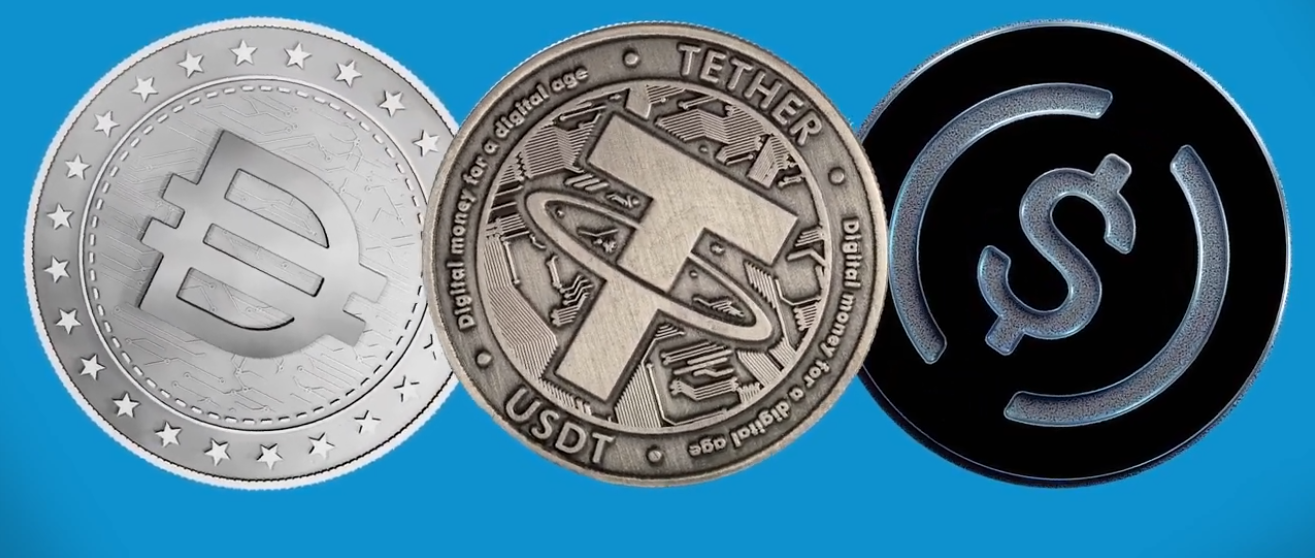
| Major Stablecoins | USDT (Tether), USDC (Circle), PYUSD (PayPal) |
| Leading Issuers | Tether Ltd., Circle Internet Financial |
| Primary Use Cases | Crypto trading, DeFi lending, cross-border payments |
| Regulatory Focus | Reserve backing, transparency, financial stability |
| Major Regulations | GENIUS Act (U.S.), MiCA (EU), MAS Framework (Singapore) |
| Key Risk Concerns | Bank-run dynamics, reserve transparency, monetary sovereignty |
| Institutional Interest | Visa, PayPal, major banks exploring stablecoin issuance |
| Reference | https://www.bis.org |
Tether’s USDT still controls a sizable portion of that market. From big trading desks in Singapore to tiny cryptocurrency stores in Buenos Aires, the token is in circulation everywhere. The majority of transactions still use USDT pairs, as can be seen when you browse the backend dashboards of numerous exchanges. Despite years of discussion about reserves, investors appear at ease with it. There is, however, a hint of uncertainty. Although Tether’s disclosures have improved, comprehensive independent audits are still difficult to obtain. The system may have progressed this far due to trust rather than openness.
USDC’s issuer, Circle, adopted a different strategy. The business maintained reserves mostly in short-term U.S. Treasuries and leaned toward transparency by publishing monthly attestations. That seems to have pleased institutional investors. Over the past few years, a number of hedge funds have covertly moved settlement balances into USDC accounts. However, during the 2023 banking crisis, even the more open models were reminded of their vulnerability when USDC momentarily fell below its dollar peg due to exposure to Silicon Valley Bank. The moment lingered even though the episode flew by. It demonstrated the rapid erosion of digital confidence.
Observing from the sidelines, regulators have started creating regulations that are becoming more and more similar across continents. A federal framework for stablecoin issuers was established in Washington by the GENIUS Act. Crypto assets were drawn into the conventional regulatory framework by Europe’s implementation of its comprehensive MiCA regulation. Japan, Hong Kong, and Singapore all adopted their own licensing policies after that. The same fundamental principle consistently emerges across various legal systems and jurisdictions: stablecoins must maintain actual reserves, be subject to audits, and function under financial supervision.
The sudden urgency has a practical explanation. Crypto trading platforms are no longer the only place where stablecoins exist. They have begun infiltrating the mainstream financial system. They are being tested by payment companies for international settlements. Stablecoin transfers that settle in seconds as opposed to days are being quietly tested by corporate treasury departments. It’s difficult to ignore how rapidly the story has evolved. What started out as a crypto trader’s workaround now appears to be a parallel payments system.
Central banks are uncomfortable with that change. International organizations like the Bank for International Settlements officials have cautioned that if stablecoins continue to grow unchecked, they could threaten monetary policy. Suppose, for instance, that people in a nation with a weak currency start holding stablecoins based on the US dollar rather than local currency. This is sometimes referred to by economists as “stealth dollarization.” Although it’s still unclear if that scenario will become widespread, the mere prospect has compelled policymakers to give stablecoins more serious consideration.
The discussion is still clouded by TerraUSD’s 2022 collapse. That algorithmic stablecoin relied on code and market incentives to provide stability in place of conventional reserves. The system seemed to function for a while. Then, in a matter of days, it completely collapsed, wiping out tens of billions of dollars in value. The speed of the collapse is still remembered by traders who were present during the meltdown. The peg held for a moment. It didn’t the next moment.
Regulators are now wary of anything that makes stability claims without solid evidence. Asset-backed tokens that hold cash or government debt have largely supplanted algorithmic models. The lesson appeared straightforward: markets require collateral even though they can tolerate complexity.
In the meantime, payment networks and banks have begun to approach the area. Pilots for stablecoin settlement have been tested by Visa. PayPal introduced its own token. After publicly rejecting cryptocurrency, major financial institutions now seem interested in the effectiveness of blockchain-based payments. As we watch this develop, it seems possible that stablecoins will eventually look more like digital bank deposits than experimental cryptocurrency tokens.
Uncertainty persists, though. Stablecoin issuers must negotiate a complex web of licensing regimes and compliance requirements due to the continued fragmentation of global regulations. A token that functions properly in one jurisdiction might encounter limitations in another. According to some analysts, the market will center on a small number of highly regulated firms. Others believe that innovation will move to areas with more lax regulations.
Stablecoins currently exist in a liminal space between two financial domains. They are neither strictly crypto experiments nor quite conventional money. Their future is somewhere in the middle. Furthermore, the question that is quietly making its way around the financial community as regulators increase their oversight is not whether stablecoins will survive, but rather what form they will take after the scrutiny subsides.