

Listen to the article
The Sharjah Chamber of Commerce and Industry recently met with a delegation from the Republic of Mauritius to explore UAE-Mauritius investment cooperation opportunities across priority sectors including manufacturing, logistics, food security, and real estate. The discussions took place within the framework of the Comprehensive Economic Partnership Agreement between the United Arab Emirates and Mauritius, which entered into force on April 1, 2025.
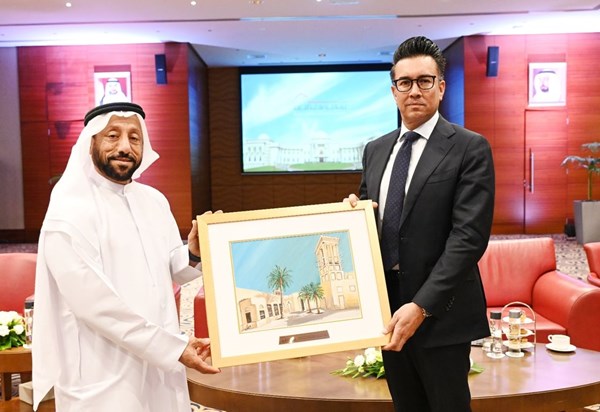
Abdullah Sultan Al Owais, Chairman of the Sharjah Chamber, hosted His Excellency Shakeel Ahmed Yousuf Abdulrazak Mohamed, Minister of Housing and Land of Mauritius, at the Chamber headquarters. The meeting was attended by Mohammed Ahmed Amin Al Awadi, Director General of the Chamber, Abdulrahman bin Taliah, Director of Executive Affairs at Air Arabia, and several other officials.
Strategic Partnership Framework Drives UAE-Mauritius Investment Cooperation
According to the Chamber, the Comprehensive Economic Partnership Agreement provides a comprehensive legal and commercial framework that eliminates customs duties on more than 97 percent of UAE exports and 99 percent of Mauritian exports. The agreement aims to increase non-oil trade volume from approximately 209 million dollars to 500 million dollars within five years.
Al Owais emphasized that business partnership between Sharjah and Mauritius rests on a solid foundation of existing investments. He noted that bilateral trade has recorded significant growth, having increased by 82.5 percent during the first four months of 2024, reflecting long-term strategic objectives to promote mutual investment opportunities.
Mauritius as Gateway to African Markets
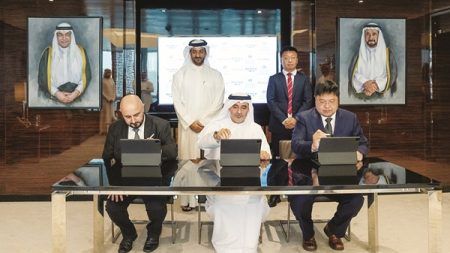
The Sharjah Chamber chairman highlighted that a memorandum of understanding signed with the Economic Development Board of Mauritius strengthens efforts to expand commercial relations and facilitate business flow. Additionally, he pointed out that investment flows channeled through Mauritius have exceeded 19.5 billion dollars, demonstrating the island nation’s role as a strategic hub.
Minister Mohamed stated that Mauritius represents a promising strategic center for Emirati companies seeking expansion into sub-Saharan Africa. The country offers legal and tax facilities that support efficient investment management, particularly under the Investment Protection and Promotion Agreement signed in 2015.
Manufacturing and Logistics Opportunities
The Mauritian minister confirmed that the Mauritius Freeport grants companies significant flexibility in manufacturing, assembly, and export operations at competitive costs to major African markets. He indicated that existing Emirati investments already operate advanced manufacturing facilities in Mauritius serving African export markets.
However, discussions extended beyond manufacturing to encompass air transport, logistics services, and supply chains. Both parties explored how these sectors could support cross-border investments targeting regional and international markets, leveraging Mauritius as a strategic platform for storage, distribution, and re-export to African destinations.
Diversified Sectors for Economic Growth
The meeting addressed investment opportunities in food security, agribusiness, the blue economy, and renewable energy sectors. Meanwhile, tourism, hospitality, tourism real estate, financial services, and financial technology were also identified as promising areas for cooperation between Sharjah-based companies and Mauritian partners.
In contrast to traditional trade models, the partnership emphasizes utilizing Mauritius’s free port facilities as a strategic gateway. Sharjah companies can benefit from these advantages to access broader African consumer markets while maintaining cost-effective operations and regulatory compliance.
Both sides called on investors to maximize benefits from legal and tax facilities and investment incentives offered by Sharjah and Mauritius. According to officials, these advantages ensure sustainable growth and economic prosperity that reinforces Sharjah’s position as a global trade center and Mauritius as a strategic gateway to the African continent.
The chambers are expected to continue coordinating business missions and promotional activities to facilitate market entry for companies from both jurisdictions. Further announcements regarding sector-specific initiatives and joint investment projects are anticipated as implementation of the economic partnership agreement progresses throughout 2025.