




Listen to the article
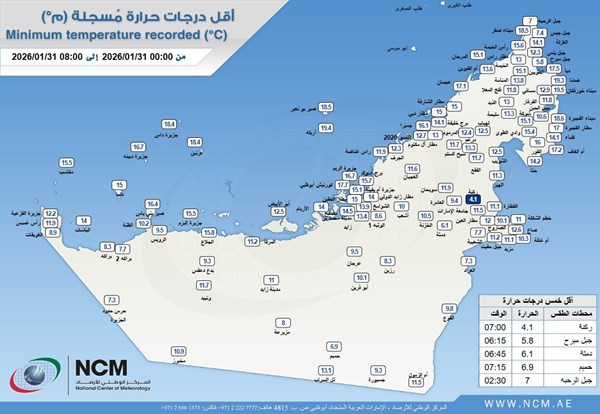
The National Center of Meteorology in the United Arab Emirates has recorded the lowest temperature across the country on Saturday morning, reaching 4.1 degrees Celsius. The temperature reading was registered in Raknah, located in the Al Ain region, highlighting the impact of winter weather conditions sweeping through the Emirates during this season.
According to the National Center of Meteorology’s announcement on X platform, the measurement was taken at 7:00 AM local UAE time. The frigid reading in Raknah underscores the significant temperature variations that occur across different regions of the country during the winter months.
Winter Temperature Patterns in the UAE
The UAE typically experiences its coldest temperatures between December and February, with mountainous and desert areas recording the lowest readings. Al Ain, where Raknah is situated, is known for experiencing cooler temperatures compared to coastal cities due to its inland location and higher elevation in certain areas.
Temperature drops of this magnitude are common during the winter season in the Emirates, particularly in areas away from the moderating influence of the Arabian Gulf. The National Center of Meteorology continues to monitor weather conditions closely and provides regular updates to residents and authorities.
Regional Temperature Variations
Different regions across the UAE experience varying temperature ranges during winter mornings. Coastal areas such as Dubai and Abu Dhabi typically maintain milder temperatures due to maritime influences, while interior desert regions and mountainous areas see more dramatic temperature drops overnight.
Additionally, the clear skies that often characterize winter nights in the region contribute to rapid heat loss after sunset. This phenomenon, known as radiative cooling, allows ground temperatures to drop significantly during the early morning hours before sunrise.
Weather Monitoring and Public Information
The National Center of Meteorology plays a crucial role in tracking temperature fluctuations and other weather patterns throughout the UAE. The organization regularly shares data through its official channels, including social media platforms, to keep residents informed about current conditions.
Meanwhile, such temperature readings are important for various sectors including agriculture, aviation, and public safety. Farmers in Al Ain and surrounding agricultural areas pay close attention to these forecasts to protect crops from potential frost damage during particularly cold mornings.
Impact of Low Temperatures on Daily Life
However, temperatures of 4.1 degrees Celsius, while cold by UAE standards, remain relatively mild compared to winter conditions in many other parts of the world. Nevertheless, residents in affected areas are advised to dress warmly during early morning hours and take appropriate precautions.
In contrast to the chilly mornings, daytime temperatures across the UAE during winter typically rise to comfortable levels, often reaching the low to mid-20s Celsius. This significant diurnal temperature range is characteristic of desert climates and requires residents to adapt their clothing and activities accordingly.
The meteorological center continues to monitor conditions throughout the country, with temperature readings expected to fluctuate as the winter season progresses. Authorities have not confirmed whether this represents the coldest temperature of the current season, though similar or lower readings are anticipated in the coming weeks as winter conditions persist across the Emirates.