

Listen to the article
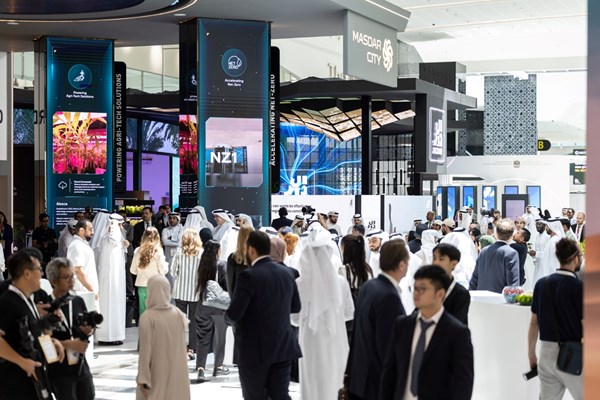
The 18th edition of the World Future Energy Summit 2026 concluded with record attendance, drawing more than 51,200 participants from 124 countries during the three-day exhibition held in Abu Dhabi. According to RX Global, the event organizer, the largest international delegations attending the World Future Energy Summit came from China, India, Saudi Arabia, the United Kingdom, Germany, the United States, Egypt, Jordan, and Oman.
The summit took place from January 13 to 15 as part of Abu Dhabi Sustainability Week, hosted by Masdar. The event brought together influential industry figures, globally recognized companies, and 15 heads of state who presented advanced solutions across multiple renewable energy sectors.
Expanding Exhibition Space and International Participation
The exhibition spanned 16,408 square meters across nine halls, accommodating 16 pavilions representing different sectors and countries. Additionally, 515 exhibitors from 57 nations showcased innovations in emerging technologies, clean technology, green hydrogen, electric vehicle mobility, green finance, artificial intelligence, and related fields.
The organizers attribute the exceptional performance of the 2026 summit to its close alignment with regional government agendas and the United Arab Emirates’ substantial investment efforts in the energy sector. Furthermore, the event’s success reflects ongoing efforts to build partnerships, create new engagement platforms, and launch continuous initiatives to generate year-round business opportunities.
Significant Commercial Impact and Investment Opportunities
The commercial impact of this year’s renewable energy summit proved equally impressive. Through an expanded and precisely targeted buyer program, the summit facilitated more than 3,000 meetings between exhibitors and buyers, according to the organizers.
The event connected stakeholders with active buyer projects valued at over 10 billion dollars. Meanwhile, organizers expect the summit to attract direct investments estimated at approximately 3 billion dollars, demonstrating the substantial economic potential of clean energy initiatives in the region.
Supporting Regional Carbon Neutrality Goals
Shyam Parmar, Director of the World Future Energy Summit, emphasized the event’s role in supporting regional climate objectives. He stated that governments throughout the Middle East are moving forward with ambitious carbon neutrality goals alongside advanced strategies that are profoundly transforming the regional energy landscape.
According to Parmar, the summit serves as a renewed international platform supporting these directions by providing regional voices with broader space and highlighting innovations capable of creating tangible impact. The event continues to position itself as a critical meeting point for clean technology advancement and sustainable energy development.
In contrast to previous editions, this year’s summit demonstrated enhanced integration between governmental policy frameworks and private sector innovation. However, the organizers have not yet confirmed specific details regarding policy announcements or bilateral agreements reached during the three-day event.
Future Outlook for Sustainable Energy Development
The exhibition’s focus on diverse sectors including green hydrogen and electric mobility reflects the evolving priorities of the global energy transition. These emerging technologies represent key areas where Middle Eastern nations are seeking to establish leadership positions in the clean energy sector.
The presence of artificial intelligence applications throughout the summit underscored the growing intersection between digital innovation and sustainable energy solutions. This integration is expected to accelerate efficiency improvements and cost reductions across renewable energy projects in coming years.
Organizers have not yet announced dates for the 2027 edition of the summit, though planning is expected to begin in the coming months. The sustained growth in attendance and commercial activity suggests continued expansion of Abu Dhabi’s role as a global hub for sustainable energy innovation and investment.