

Listen to the article
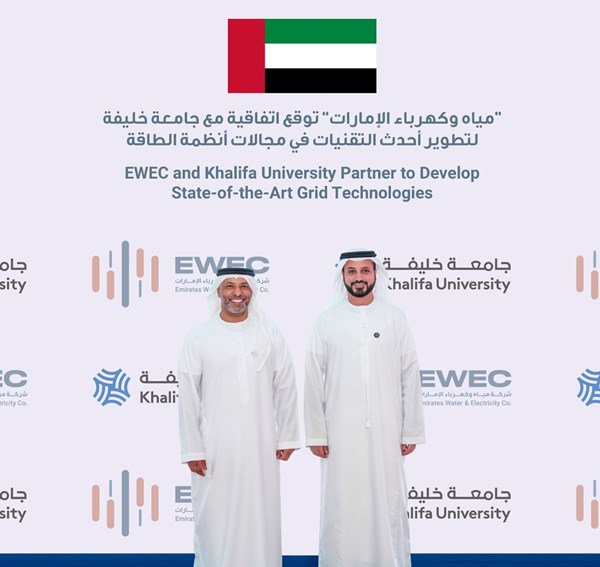
Emirates Water and Electricity Company (EWEC) and Khalifa University of Science and Technology have signed a cooperation agreement aimed at developing advanced technological systems for smart forecasting of energy supply and demand. The partnership focuses on enhancing the stability and flexibility of the energy sector while supporting the UAE’s carbon emission reduction goals.
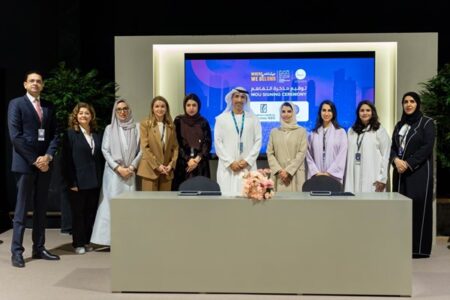
According to the announcement, the collaboration will develop intelligent software modules that enhance critical grid functions as the country increasingly integrates renewable energy sources. The agreement was formalized in Abu Dhabi as part of EWEC’s comprehensive strategy to transform the water and electricity sector.
Strategic Goals for Energy Supply and Demand Management
To keep pace with unprecedented developments in Abu Dhabi and the UAE’s energy mix, EWEC is implementing a comprehensive transition strategy in the water and electricity sector. The company aims to produce nearly emissions-free water by 2030 and meet 60 percent of Abu Dhabi’s electricity needs through renewable and clean energy sources.
The strategy includes large-scale development of solar photovoltaic power plants expected to exceed 30 gigawatts capacity by 2035, according to company officials. These installations will be supported by 8 gigawatts of battery energy storage systems, alongside expanding water desalination using low-carbon reverse osmosis technology to separate water production from electricity generation.
Advanced Technologies for Grid Stability
The cooperation scope includes developing smart modules to support the integration of solar photovoltaic systems with storage systems into the electricity grid on a large scale. These technologies are essential for effective management of grid stability to ensure reliable and secure energy supply and demand across the network.
Additionally, the partnership will create software and technologies to predict power generation ramping requirements, helping system operators maintain safe operational limits. The modules will utilize machine learning-based tools to estimate system inertia and predict frequency deviations, providing recommendations that enhance grid stability and increase capacity to absorb higher percentages of renewable energy.
Industry Leaders Support Innovation Partnership
Ahmed Ali Al Shamsi, Chief Executive Officer of EWEC, said the collaboration directly supports the company’s mission and reflects its leading role in shaping the UAE’s energy future. He emphasized that by integrating advanced analytics, AI-powered forecasting, and national research partnerships into operations, the company harnesses capabilities to prepare and qualify national talent to lead the water and electricity sector’s future.
Meanwhile, Professor Ibrahim Al Hajri, President of Khalifa University, stated that the institution is proud to collaborate on this vital project, which embodies the role of academic institutions in finding practical solutions to energy challenges. He noted that through deploying advanced deep learning techniques and large-scale intelligent modeling, the partnership will contribute to developing resilient, data-driven energy systems capable of anticipating demand levels and optimizing supply efficiency.
Building National Capabilities
In contrast to traditional approaches, this collaboration emphasizes knowledge transfer to the next generation of Emirati engineers and system operators. Professor Al Hajri highlighted that the partnership represents a strategic investment in the UAE’s energy future, positioning Khalifa University at the heart of innovation and national strategy while accelerating the transition toward low-carbon generation.
However, the partnership also addresses the practical challenges of integrating intermittent renewable sources into the grid. The intelligent forecasting systems will enable better prediction of energy supply and demand fluctuations, essential for maintaining grid reliability as solar capacity expands dramatically over the next decade.
The agreement supports the UAE’s Strategic Initiative to achieve climate neutrality by 2050, according to company statements. Both organizations emphasized that developing these advanced systems will help achieve tangible progress toward national climate goals while maintaining energy security and reliability.
Officials have not announced specific timelines for deploying the intelligent software modules, though implementation is expected to proceed alongside the planned expansion of solar and storage capacity through 2035.