
Listen to the article
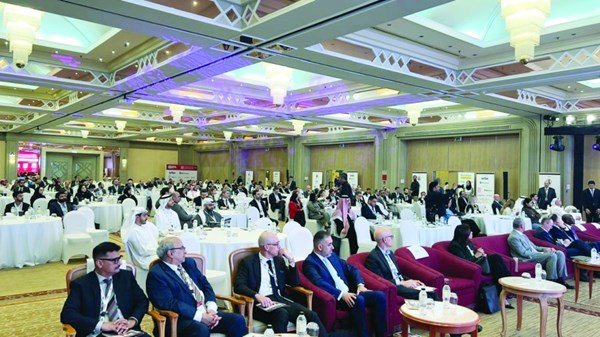
The fourth Arab Actuaries Conference launched today in Dubai, bringing together the largest gathering of actuarial experts and leaders from insurance, banking, investment, and regulatory sectors. The event is jointly organized by the Emirates Insurance Association, the General Arab Insurance Federation, and MinaMoney, a company specialized in organizing financial events. Running under the theme “The World Through Actuarial Eyes,” the conference focuses on assessing and managing existing and emerging risks facing financial and insurance sectors.
This year’s sessions particularly emphasize artificial intelligence and data analytics in developing the insurance industry, alongside new trends in health insurance across Arab markets. Additionally, the conference explores risk-based capitalization of insurance companies, the role of actuaries in risk management, and how generative AI, digitization, and insurtech are reshaping the sector.
Artificial Intelligence Transforming Actuarial Work
Actuaries have traditionally served as the backbone of the insurance industry, utilizing mathematics and statistics to assess risks and determine premiums, according to Fareed Lutfi, Secretary General of the Emirates Insurance Association. However, the emergence of artificial intelligence has fundamentally changed this approach. Modern actuaries can now harness AI and data science to analyze vast amounts of information in less time, uncover hidden patterns, and enhance predictive accuracy to unprecedented levels.
Insurance companies leveraging AI-based analytics have achieved a 50 percent reduction in claims processing times and a 30 percent decrease in fraud detection costs, based on international institutional analyses, Lutfi stated. This transformation makes insurance operations significantly more efficient. Furthermore, the evolution in AI applications is expanding the actuarial expert’s role, providing greater opportunities to drive innovation in the insurtech ecosystem as strategic decision-makers.
Skills Development Imperative
The developments and challenges the world faces in financial technology now require actuaries to continuously improve their skills in artificial intelligence, data science, and automation to remain competitive, Lutfi emphasized. Meanwhile, this technological shift demands a new generation of professionals equipped with both traditional actuarial expertise and modern digital capabilities.
Addressing the Actuarial Talent Shortage in Gulf Markets
Regarding the actuarial reality in Gulf Arab states, Lutfi pointed out that the regional insurance sector faces a severe shortage of qualified actuarial personnel. This shortage represents a major obstacle to accurately assessing risks and pricing products. The scarcity stems from the difficulty of professional examinations and the lengthy qualification period, which can take between seven and ten years, coupled with increasing global and regional demand for this profession.
In response, regulatory authorities in Gulf Cooperation Council countries have launched initiatives to train citizens and imposed minimum requirements for certified actuaries per company. The UAE insurance sector specifically faces a shortage of both Emirati and Arab actuarial experts, relying heavily on foreign expertise, according to Lutfi. However, relevant authorities in the country have actively launched initiatives to train citizens, most notably the Actuarial Initiative aimed at enhancing nationalization in the financial and insurance sector.
Educational Partnerships and Scholarship Programs
A memorandum of understanding was previously signed between the Ministry of Presidential Affairs and the Emirates Institute for Finance, aiming to provide 100 annual scholarships in actuarial science, Lutfi said. Several citizens have been selected to benefit from these scholarships to pursue their studies in the United States and Australia. Additionally, other initiatives are underway with several national and international universities, including Higher Colleges of Technology, Zayed University, and the American University in Dubai, to launch specialized bachelor’s programs in actuarial science with support from insurance companies.
The conference outcomes and recommendations are expected to shape future regulatory frameworks and professional development programs across Arab insurance markets. However, authorities have not yet announced specific timelines for implementing new actuarial standards or expanding educational programs beyond current initiatives.