



Listen to the article
The United Arab Emirates and the United States have signed a joint framework to support critical minerals mining and processing operations, including rare earth elements. The agreement was formalized on the sidelines of the Ministerial Meeting on Critical Minerals held in Washington, D.C., and reflects the depth of bilateral partnership and shared commitment to building diverse and resilient supply chains for materials essential to defense, advanced technologies, and sustainable industrial growth.
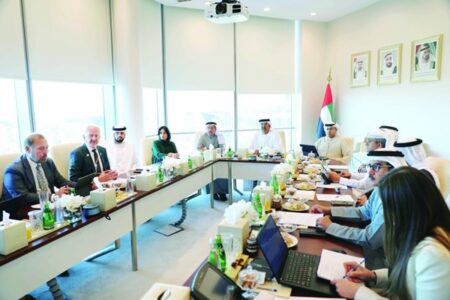
The critical minerals framework was signed by His Excellency Mohamed Hassan Alsuwaidi, UAE Minister of Investment, and His Excellency Jacob Helberg, U.S. Under Secretary of State for Economic Growth, Energy, and the Environment. The UAE Ministry of Investment participated in the ministerial meeting at the invitation of the U.S. State Department, joining more than fifty international entities to discuss cooperation in building secure and resilient supply chains for strategic minerals.
Strategic Approach to Critical Minerals Supply
The framework establishes a joint methodology to accelerate securing critical minerals supplies by leveraging existing policy tools. These include American industrial demand and storage infrastructure in the United States, alongside the UAE’s strategic reserves. Additionally, it provides a platform for increasing public and private investments across the value chain, from mining and separation to processing, recycling, and downstream activities.
Both parties have committed to supporting investment through various mechanisms, according to the agreement. These include financing, guarantees, capital investments, purchase agreements, insurance, and regulatory facilitation. The UAE and United States intend to identify priority projects that address supply chain gaps and take concrete steps within six months of signing the agreement to provide funding for projects in both countries.
Implementation Timeline and Market Objectives
The framework aims to ensure these projects yield marketable products designated for buyers in both markets. However, it also supports accelerating and simplifying licensing procedures in accordance with applicable laws and identifies ways to cooperate to enhance market resilience. This includes taking effective measures to address unfair trade policies and practices, exploring high-standard market mechanisms that enhance transparency of commercial operations, and engaging with international partners to address global pricing challenges.
Additional areas of cooperation include investment in recycling technologies and improved management of critical minerals and rare earth elements scrap. The agreement also covers geological mapping projects in the UAE, United States, and other agreed-upon locations, along with reviewing asset sales for national security reasons and collaborating with third parties to enhance supply chain security.
Growing Demand for Critical Minerals
Minister Alsuwaidi emphasized that critical minerals supply chains form an interconnected global system requiring unified efforts and enhanced sustainable investments. According to the minister, demand for these minerals is expected to triple by 2030 and quadruple by 2040. Meanwhile, he noted that as the second-largest source of foreign investment in the UAE, the partnership with the United States constitutes a fundamental pillar in facing global challenges.
In contrast, Under Secretary Helberg highlighted that the UAE is a key partner for the United States. He referenced the UAE’s commitment to invest 1.4 trillion U.S. dollars in the United States over the next ten years. The framework reflects the shared capacity to cooperate in the most important strategic industries, including rare earth elements that contribute to enhancing economic and national security, according to the official.
International Cooperation Framework
Through its participation in the ministerial meeting and signing this framework, the UAE reaffirms its commitment to international cooperation for developing joint solutions. The agreement supports investment-based partnerships that promote secure, resilient, and diverse supply chains for critical minerals, contributing to long-term global economic stability.
Both governments are expected to announce the first priority projects within the six-month implementation window outlined in the agreement. However, specific project details and funding amounts have not yet been disclosed by either party.