



Listen to the article
In the last ten years, Saudi Arabian healthcare has started to take a more profoundly scientific and unexpectedly personal turn, concentrating on decoding DNA with the same tenacity that engineers use to plan a city’s highways. Physicians who previously mostly depended on broad treatment protocols are now entering clinics with genomic data, which enables them to navigate illness with guidance that is much more specific and incredibly obvious than in the past.
Some years ago, in a discussion in Riyadh, a top doctor explained how two patients with the same illness could react very differently to the same drugs, causing uncertainty that was emotionally and professionally stressful. He said that when genome sequencing uncovers hidden biological distinctions, clinicians are now able to choose medicines that are amazingly effective for each individual rather than depending on averages, greatly reducing that uncertainty.
The Kingdom has committed to building a national genetic reference by analyzing tens of thousands of DNA samples and meticulously cataloguing inherited mutations associated with disease through the establishment of the Saudi Genome Program. This initiative, which is a component of Vision 2030, is especially novel since it views genetic data as useful medical infrastructure that supports routine healthcare decisions rather than as abstract research.
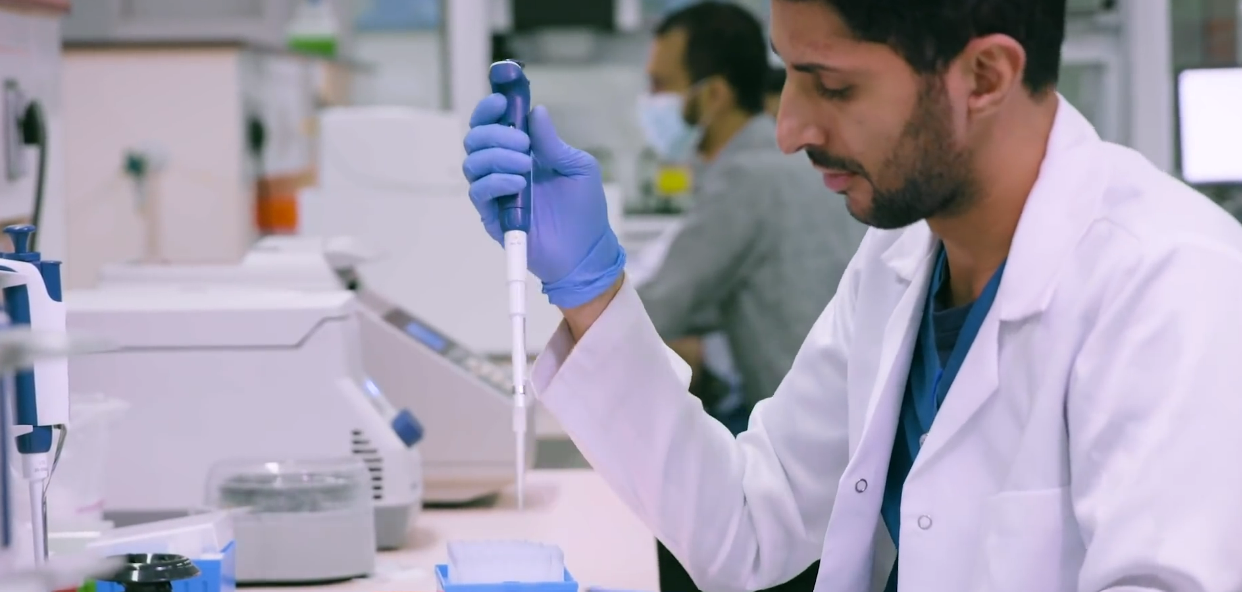
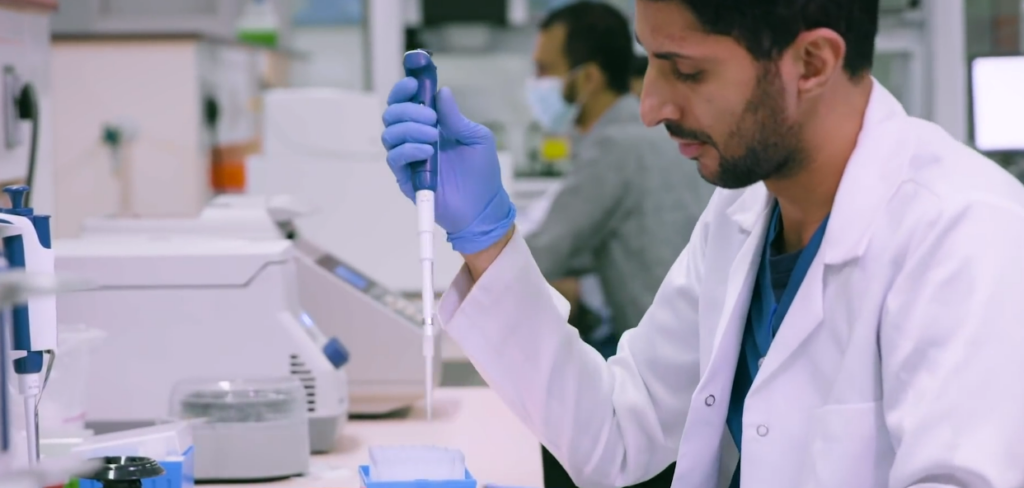
Machines in contemporary sequencing labs operate constantly, scanning genetic code with precision that would have appeared nearly impossible just a generation ago. The resulting data is then interpreted by researchers using sophisticated computer techniques. By using these technologies, researchers are finding genetic variations linked to rare inherited illnesses, diabetes, and cancer, allowing for significantly faster and more reliable preventive measures.
| Key Fact | Details |
|---|---|
| Project Name | Saudi Genome Program |
| Launch | Initiated as part of Saudi Vision 2030 |
| Core Goal | Map genetic variations to improve diagnosis, prevention, and treatment |
| Samples Processed | More than 63,000 samples analyzed |
| Variants Identified | Around 7,500 disease-related genetic variants |
| Main Benefit | Enables personalized medicine tailored to individual genetic profiles |
| Reference | https://www.vision2030.gov.sa |
The distinction can be extremely comforting to patients.
Families can receive early information about inherited risks, allowing for preventive interventions that are especially helpful and frequently far more successful than late intervention, rather than having to endure months of uncertainty. In addition to aiding in the discovery of uncommon diseases, this predictive method gives physicians much greater confidence in their ability to treat common ailments like cardiovascular disease.
Saudi Arabia’s healthcare system has grown significantly over the last 20 years, with significant investments made in research capacity and the construction of hospitals outfitted with cutting-edge diagnostic equipment. Building on that foundation, the genome program turns hospitals into data-driven facilities where treatment choices are informed by both genetic patterns subtly influencing each patient’s health and symptoms.
In addition to tackling regional health problems that have previously received less attention, Saudi scientists are making sure their findings advance global medical knowledge by working with international research organizations. These collaborations have been especially advantageous, speeding up research and enhancing Saudi Arabia’s standing as a global leader in genetic medicine.
I recall being struck by how intently the researchers appeared to be working as I passed by one of these research facilities. I saw screens flashing past with DNA sequences, each line signifying a person’s biological narrative that was still to be deciphered.
By using genomic research, doctors can now determine which cancer treatments have the best chance of working, preventing useless treatments and minimizing dangerous side effects that used to seem inevitable. This development is especially useful in cancer, as genetic profiling has aided in the development of treatments that target tumors much more quickly while protecting healthy tissue.
In the context of chronic diseases, genetic data is also assisting in the prediction of ailments like diabetes well in advance of the onset of symptoms, enabling extremely effective and financially viable preventive interventions. With the use of genetic insights and early detection programs, people are being able to alter their lifestyles or get medicinal interventions that can postpone or even completely avoid disease.
Researchers have discovered hundreds of pathogenic variations since the genome study began, creating a database that is more valuable with each new sample that is examined. This growing resource is incredibly trustworthy, promoting scientific advancements that transcend national boundaries and assisting physicians in interpreting genetic results with ever-increasing accuracy.
In this endeavor, artificial intelligence has emerged as a particularly creative collaborator, examining enormous genetic databases at a rate that is noticeably quicker than conventional techniques and identifying patterns that human researchers might miss on their own. Scientists may decipher intricate genomic interactions by incorporating AI techniques, which expedites research and enhances therapeutic results at the same time.
This change has economic implications as well.
Saudi Arabia is establishing biotechnology as a foundation for future economic growth and generating highly skilled jobs by advancing its knowledge of genetics and bioinformatics. Genetic counselors, data analysts, and researchers are becoming vital contributors, pursuing professions that blend patient care with scientific advancement.
In particular, public involvement has been crucial in facilitating this shift.
Campaigns to educate the public about genetic testing are fostering trust and promoting screening program participation by making genetic testing seem approachable rather than frightening. The public’s perception has progressively changed from one of uncertainty to cautious optimism as a result of this outreach, which has been incredibly successful.
The shift has necessitated a great deal of training for medical personnel, giving physicians the know-how to appropriately and effectively analyze genetic data. In order to ensure that aspiring doctors are equipped to practice medicine that is both highly customized and scientifically sophisticated, medical schools are upgrading their curricula.
Through digital health platforms and telemedicine systems, genomic medicine is anticipated to spread beyond large hospitals in the upcoming years, reaching out to smaller clinics and isolated villages. These technologies, which link patients and professionals over great distances, are especially helpful in guaranteeing that everyone has access to individualized care.