
Listen to the article
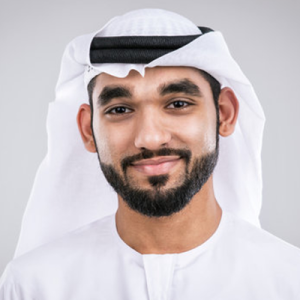
An Emirati musician has transformed his personal journey into learning the oud into a comprehensive cultural and humanitarian project that preserves local heritage while nurturing a new generation of musical talent. Omar Al Hadrami founded Solfege Music Center in Al Ain, establishing it as a social and cultural hub that bridges traditional Arabic music with contemporary education methods.
According to Al Hadrami, the journey began when he traveled to China to purchase musical instruments for his children, then sought specialized music teachers to establish an artistic center with professional standards. The center has since evolved into a platform for discovering and supporting young talents across diverse musical disciplines.
Family Legacy in Arabic Music Education
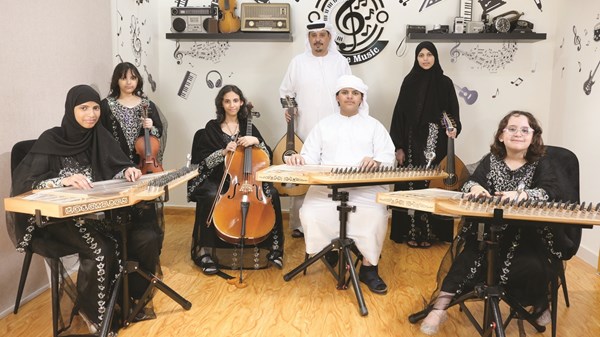
The Al Hadrami family represents an inspiring model in the music education landscape, blending natural talent with a supportive environment. Their grandfather is Dr. Madani Abbadi, one of the most prominent qanun players in the Arab world who accompanied major artists including Sabah, Sayed Mekkawy, Talal Maddah, Abu Bakr Salem, and Mohammed Abdu.
Al Hadrami explained that he supported his children in choosing their instruments, and they have achieved notable presence at national events through participation in Louvre Abu Dhabi performances and National Day celebrations. This family approach to music education demonstrates how heritage can be preserved through generational transmission.
Social Mission and Inclusive Music Programs
The Solfege Music Center extends beyond traditional music instruction to emphasize human connection. Al Hadrami designed the center to support people of determination by providing training, instruments, and charitable courses across multiple countries, according to reports. Additionally, the initiative includes establishing a mobile music school that travels between nations.
Al Hadrami adopts a conservative vision toward authentic music, rejecting complete reliance on artificial intelligence. He emphasizes the necessity for students to understand maqamat and Arabic music fundamentals before incorporating modern technology.
National Heritage Documentation Project
The center is working on a significant national project to document the legacy of artist Jaber Jasem, according to Al Hadrami. This involves converting his songs into musical notation and publishing them in a methodical textbook for future generations to study.
Meanwhile, the center hosts monthly gatherings at Al Hadrami’s home, where he has equipped a complete theater with modern lighting, sound systems, and professional microphones. Students perform their pieces before their families and audiences, breaking performance anxiety barriers and building confidence before advancing to larger stages.
Young Musicians Share Their Experiences
Mahira Al Hadrami, 10, said music is a language through which she expresses herself, and learning the violin taught her patience and sensitivity. Her father’s presence provided the confidence to execute musical pieces, she indicated. However, the family is preparing to implement a joint artistic project after training on notation and composition fundamentals.
Afra Al Hadrami, 12, confirmed that learning to play the cello opened doors to understanding maqamat. She expressed pride in contributing to preserving musical heritage through participation in national forums.
In contrast, Hamad Al Hadrami, 16, stated that music education granted him self-confidence and discipline, while playing the qanun taught him commitment. His father’s support made them feel responsible and motivated them toward greater excellence, he added. Similarly, Sarah Al Hadrami, 13, described the oud as an instrument close to the heart, noting that her father encourages them to feel the music before performing it.
Shamma Al Hadrami, 8, said playing the qanun taught her focus and attention to detail, with each note telling a story from Arab heritage. The continuous support from her father contributed to strengthening her self-confidence and helped develop her performance in musical events with passion and responsibility, she noted.
The center continues to expand its programs and documentation efforts, though specific timelines for the Jaber Jasem heritage project and the mobile music school launch remain unconfirmed. The family’s collaborative artistic project is expected to move forward following completion of technical training phases.