


Listen to the article
More than 10,000 visitors attended the drive-through show over ten days; the virtual edition runs until 18 March
Dubai Culture and Arts Authority (Dubai Culture) has closed ‘Al Marmoom: The Living Wild’, which it organised in collaboration with His Excellency Ali Khalifa bin Thalith, Secretary General of the Hamdan bin Mohammed bin Rashid Al Maktoum International Photography Award. The exhibition set out to draw attention to Al Marmoom Desert Conservation Reserve, its natural environment, and its place within the local cultural landscape.
Dubai Culture has also launched a virtual edition of the exhibition at https://app.almarmoomthelivingwild.ae/, which stays open until 18 March. The online version lets audiences browse the photographs and engage with a set of interactive experiences built using augmented reality. The virtual edition reflects Dubai Culture’s aim to make art widely accessible, support sustainability, protect local cultural heritage, and strengthen its profile on the world stage.
The exhibition, the first of its kind, drew more than 10,000 visitors over ten days. It gave them a chance to learn about the environment and biodiversity of Al Marmoom Desert Conservation Reserve through 24 photographs documenting the animals and birds that live there. Augmented reality experiences, developed by Dubai Culture, let visitors of all ages explore the reserve’s wildlife through a visual format that deepened engagement with the works in their natural setting.
QR codes placed throughout the exhibition gave visitors access to further information about the animals featured, through short interactive videos produced using artificial intelligence.
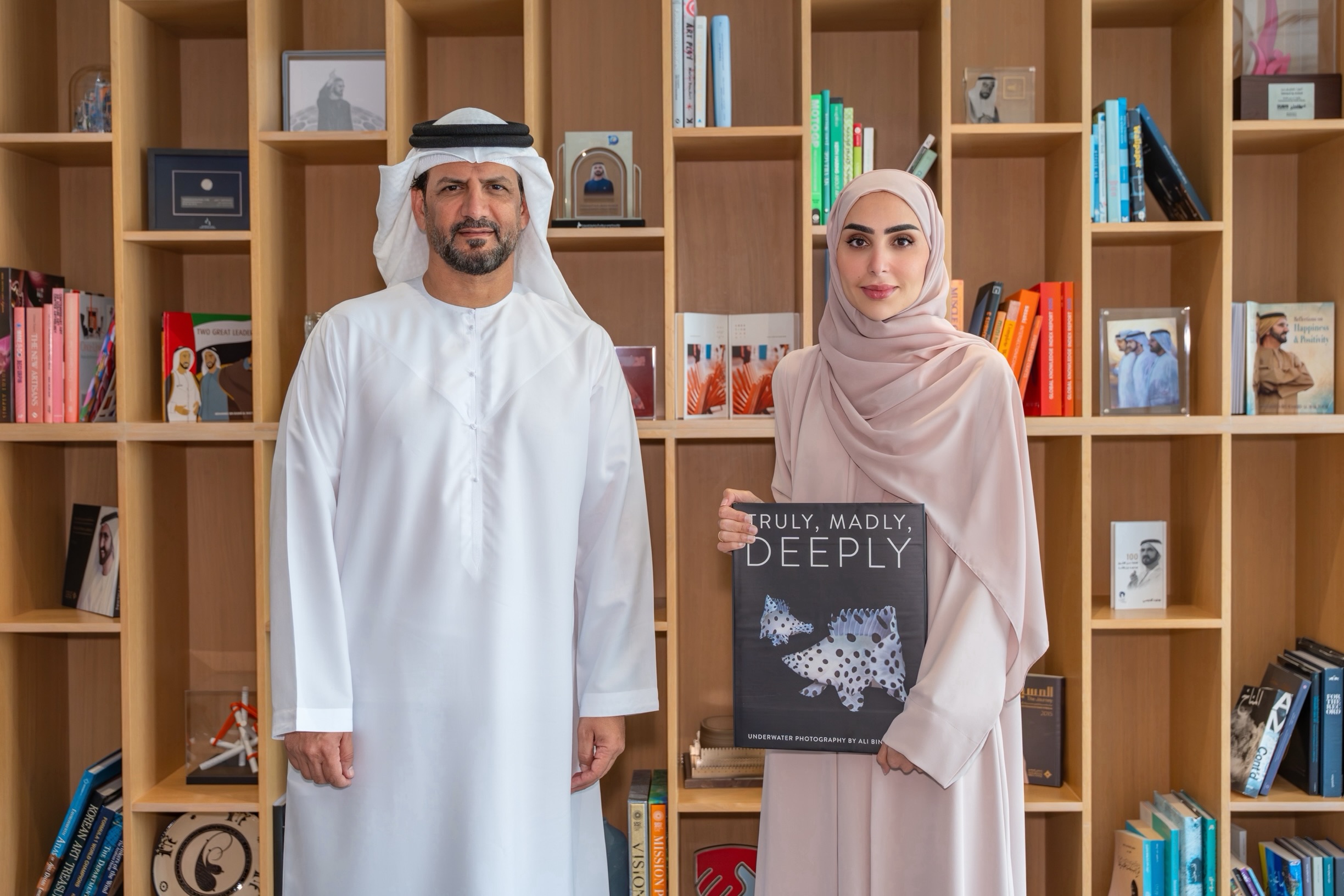
Alongside the close of the exhibition, Dubai Culture recognised the winners of the ‘Al Marmoom: The Living Wild’ competition, which invited community members and visitors to engage with the photographs and videos on show. Hazel Arnold took first place and received a GoPro camera along with a signed special edition of ‘Truly, Madly, Deeply’ by photographer Ali bin Thalith, a book featuring 100 colour images documenting life across some of the world’s most notable marine locations. Nayef Alhosani came second and won a guided tour of Al Marmoom Desert Conservation Reserve with photographer Ali bin Thalith, as well as a signed copy of the book. Yousaf Hussain placed third and received a signed special edition of the same publication.
Shaima Rashed Al Suwaidi, CEO of Arts, Design and Literature Sector at Dubai Culture, said the exhibition’s strong attendance reflects its appeal and its impact on the cultural landscape. She described it as an experience that shines a light on Al Marmoom Desert Conservation Reserve and reshapes how people relate to nature through a contemporary visual lens. She said: “The exhibition presented a unique model that brings together art and the environment, encouraging visitors to explore and reflect on the details of nature while strengthening their sense of responsibility towards protecting ecosystems. It also underscored the importance of photography and its role in preserving wildlife, and documenting the local environment through a powerful visual language that raises awareness of sustainability concepts.”
Al Suwaidi added that Dubai Culture’s work with Emirati photographer Ali Khalifa bin Thalith reflects its commitment to supporting local talent and bringing their work to wider audiences. The collaboration also demonstrates the ability of local creatives to tell stories through images that capture the beauty and cultural value of their environment, and to build a presence beyond the region.
Ali Khalifa bin Thalith said that ‘Al Marmoom: The Living Wild’ marked an important moment in placing Al Marmoom Desert Conservation Reserve on the map as a space where nature and knowledge come together. He said: “Through its diverse collection of images, the exhibition reinforced the reserve’s position as a distinguished tourism destination. The works presented a comprehensive panoramic perspective that reflects the uniqueness of an experience combining environmental exploration with artistic engagement.” He added that the selection of photographs was based on artistic criteria including the quality of visual composition, the ability to convey the character of the reserve, and the depiction of its habitats and wildlife.
The exhibition stood apart through its format, which let visitors explore the show from their own vehicles, turning the drive into a cultural experience in itself. The layout took account of the reserve’s natural character, with display locations chosen to keep traffic moving and ensure a comfortable visit that did not disturb the environment. Structures used in the exhibition drew on desert architecture, were built to handle local weather conditions, and ran on solar power.
The virtual edition of the exhibition is available at: https://app.almarmoomthelivingwild.ae/