




Listen to the article
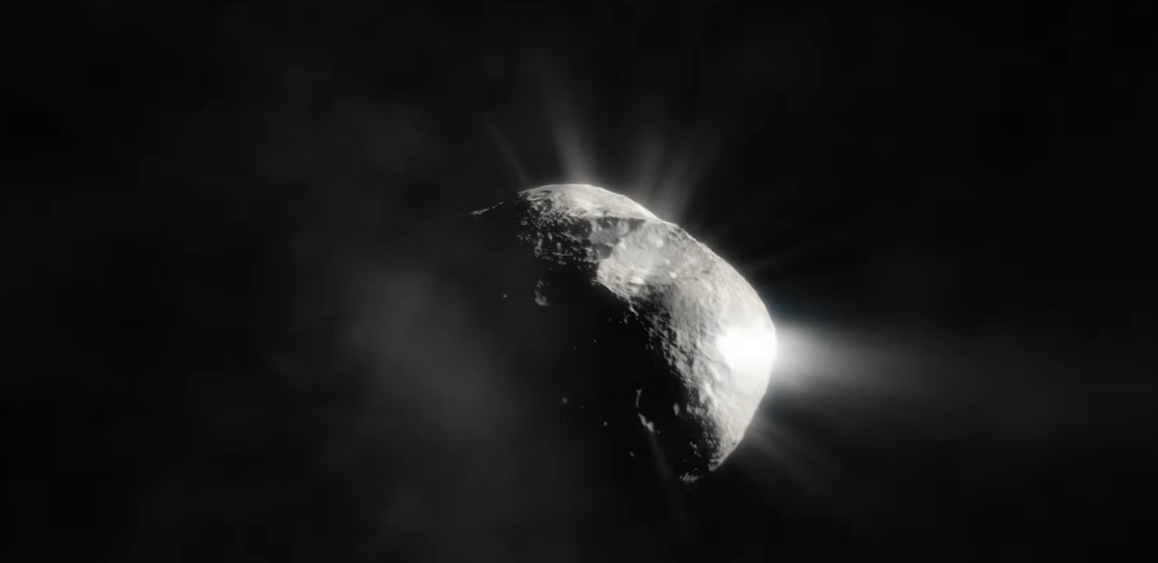
When astronomers first detected 3I/ATLAS in the middle of 2025, they thought it might be icy, faint, and relatively quiet, like other deep-space travelers. Rather, it took them by surprise. This one visitor was spewing water into space with startling strength at a distance of almost three times that of the Earth to the Sun.
Using the Swift telescope, hydroxyl emissions glowed with ultraviolet light, resembling fireworks in slow motion. The presence of these signals, which are indicative of water breakdown, indicated that 3I/ATLAS was actively releasing moisture in amounts that even experienced scientists were surprised by.
Since this action didn’t start close to the Sun, where heat often initiates sublimation, it is very advantageous to investigate such behavior. Instead, the comet was already releasing water into the emptiness, as if it had a built-in thermal trigger.
Missions have been finding more evidence of interstellar objects over the last ten years, but few have been this obviously active. In contrast to Borisov, which seemed like a typical carbon-rich comet, and ‘Oumuamua, which was dry and puzzlingly inert, 3I/ATLAS was surprisingly expressive and clearly dynamic.
| Fact Category | Details |
|---|---|
| Object Name | Interstellar Comet 3I/ATLAS |
| Discovery | First observed July 2025 |
| Origin | Outside the Solar System |
| Activity Observed | Water vapor detected via hydroxyl emissions |
| Water Loss Rate | Roughly 40 kg of water per second |
| Observatory Used | NASA’s Swift Ultraviolet/Optical Telescope |
| Distance from Sun at Detection | About 2.9 AU (nearly three times the distance between Earth and Sun) |
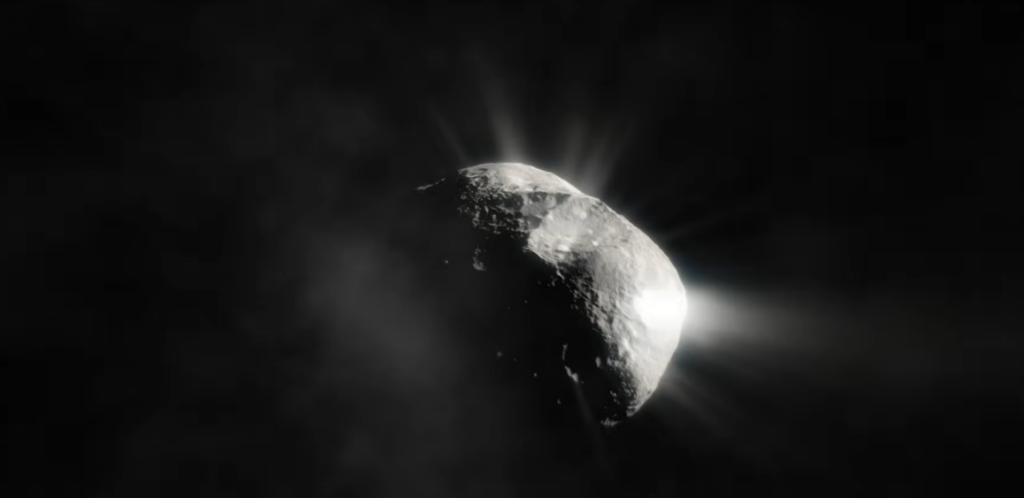
Scientists used Swift’s sensitive optics to track a luminous halo of hydroxyl molecules that was spreading outward from the comet like steam from a speeding train. This was not a trickle; rather, it was a steady flow of water that was coming from frozen granules rather than simply the core. That difference is important.
Based on careful investigation, scientists now think the vapor originated from ice particles that were embedded in the dust around the comet. These tiny frozen particles were heated just enough to release gas. Under UV observation, this dispersed release produced a larger-than-anticipated cloud that shone constantly.
On one of the earliest composite images, I recall stopping and observing the thin strands of blue mist spreading out from a dot that was merely another light source. It had an eerie quality, like a communication from a solar nursery far away that was still reverberating through time.
This is especially novel for planetary scientists. It raises fresh questions about how water, and consequently, elements that are conducive to life, might move between stars if comets carrying water are frequent even in far-off systems. The ramifications extend beyond astronomy to include astrobiology and even strategies for planetary defense.
3I/ATLAS could contribute to improving our understanding of the fundamental components of planetary systems in the context of comparative comet investigations. Comets beyond the orbit of our star may have more chemistry in common with humanity than previously thought, which would make them extremely valuable for upcoming exploration efforts.
Ever since 3I/ATLAS detected water, sensors from all continents have lined up to watch its leisurely arc across space. While some desire better models of its orbital path, others hope to find organics. In any case, the discussion of what’s beyond has been profoundly changed by this one comet.
The simplicity of 3I/ATLAS’s message—that even a tiny, silent, and frigid object may convey layers of cosmic history—is what makes it so powerful. Its actions suggest that chemistry, heat, and light don’t always behave as we once thought they would.