




Listen to the article
In shorthand, the question is typically asked: Is Dubai an ally of the United States? Cities do not, in theory, form alliances. Nations do. In this instance, Dubai is a part of the United Arab Emirates, which has had a close strategic partnership with the United States for many years. However, that answer’s simplicity belies a more nuanced issue.
The alliance appears to be strong on paper. Shortly after the federation’s creation in 1971, the United States and the United Arab Emirates established official diplomatic ties. Today, the Embassy of the United States in Abu Dhabi is home to American diplomats, and the Embassy of the United Arab Emirates in Washington, D.C., is home to prominent Emirati officials. Military collaboration is deeply ingrained. American naval ships frequently dock in ports in the United Arab Emirates. Exercises for the joints are common.
| Category | Details |
|---|---|
| City | Dubai |
| Country | United Arab Emirates |
| Ally Nation | United States |
| U.S. Embassy | Embassy of the United States, Abu Dhabi |
| UAE Embassy | Embassy of the United Arab Emirates, Washington, D.C. |
| Reference | https://2021-2025.state.gov/countries-areas/united-arab-emirates/ |
On a muggy afternoon, you may be able to spot grey-hulled ships in the distance as silhouettes against the Gulf haze if you are standing close to Jebel Ali port. They serve as a reminder that Dubai has a strategic geography hidden beneath its opulent exterior.
According to U.S. officials, the United Arab Emirates is one of Washington’s most capable Arab allies. In coalition operations, American troops have been joined by Emirati forces. American defense equipment worth billions of dollars, including missile systems and fighter jets, has entered the Emirates.
However, there are usually conditions attached to Gulf alliances.
The relationship seems to have been put through a lot of strain in the last few years. The UAE has maintained channels with Russia and increased economic ties with China, even as it continues to support the U.S. security architecture. It is evident that Dubai’s brand is based on adaptability when one week Emirati officials host Western leaders and the next, their Eastern counterparts.
Investors appear to think that prosperity is protected by neutrality, at least in the commercial sense.
That balancing act has come to light during recent regional tensions, such as Iranian strikes against Gulf states that host U.S. assets. Iranian officials have maintained that they are targeting the American presence in their neighbors rather than attacking them directly. It’s a subtle but significant difference. A nation may be both protected and vulnerable when it hosts U.S. forces. The modern alliance may be defined by this dual reality.
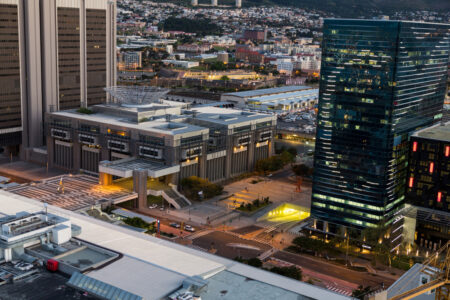
American brands line the skyline on Sheikh Zayed Road. Starbucks beneath glass skyscrapers. showrooms for Tesla. The Dubai International Financial Center will host regional headquarters for U.S. private equity firms. Here, economic integration is not merely theoretical; it is evident in the traffic patterns and storefronts.
The United States and the United Arab Emirates have maintained a robust trade relationship, with the Emirates acting as a significant Middle Eastern export market for American goods. Commercial relationships support strategic ones in everything from airplanes to medical equipment. Political headlines usually don’t last as long as economic cooperation.
Friction beneath the surface was exposed by the F-35 fighter jet deal that stalled a few years ago. Washington was taken aback by U.S. concerns regarding Chinese technology partnerships in the UAE. For their part, Emirati leaders have made it clear that they will not restrict their options in foreign policy to only appease American demands.
It’s difficult to ignore how self-assuredly the UAE now sets its own direction.
The U.S.-UAE partnership is based on common interests rather than legally binding mutual defense clauses, in contrast to formal NATO-style treaties. The UAE’s designation as a “major defense partner” by the US has symbolic significance. However, it differs from an absolute security guarantee.
Is Dubai an ally of the United States? in that its nation has close diplomatic, military, and economic ties to Washington. American troops are based in Emirati facilities. There is a great deal of joint intelligence cooperation. Regular meetings are held by political leaders.
However, Dubai also follows a more comprehensive approach, emphasizing diversified partnerships and economic resilience. Global capital fuels the city’s growth. It welcomes American entrepreneurs starting startups, Chinese tech companies growing westward, and Russian investors escaping sanctions.
As this develops, one gets the impression that stability and expansion are Dubai’s real commitments.
That doesn’t make the alliance any less strong. It puts it in context. The United States and the United Arab Emirates have similar business interests, regional security concerns, and counterterrorism goals. However, Washington’s orbit alone no longer defines the Gulf as a binary space.
How this relationship will change as a result of future geopolitical developments is still unknown. The calculation might change once more if tensions with Iran worsen or if American administrations abandon their Middle East obligations.
As of right now, the response is still nuanced but unwavering: Dubai is closely aligned with the United States as part of the United Arab Emirates. The partnership is genuine and evident in trade flows, airbases, and ports.
However, like the majority of contemporary partnerships, it is practical rather than sentimental; it is based on reciprocal benefits, is always adapting, and is cognizant that geography and economics have their own influence.