

Listen to the article
Antarctica appears to be incredibly silent from the frozen edge of the Amundsen Sea. Flat white ice is swept by the wind. Under a thick layer of sea ice that covers miles, the ocean beneath it is still mostly unseen. This location is both essential and frustrating for scientists attempting to figure out why Antarctica’s glaciers are melting more quickly every year.
In the summer, ships can reach portions of the Southern Ocean. Winter is a whole other story. The ocean becomes almost unreachable, temperatures drop well below zero, and ice thickens. Even contemporary research vessels find it difficult to advance. For decades, much of what happens under Antarctica’s ice has remained a mystery.
| Field | Information |
|---|---|
| Research Focus | Monitoring ocean temperature, salinity, and depth around Antarctic ice sheets |
| Main Study Area | Amundsen Sea, West Antarctica |
| Key Glaciers Studied | Pine Island Glacier and Thwaites Glacier |
| Animal Species Used | Weddell seals and Southern elephant seals |
| Lead Institutions | University of East Anglia & Sea Mammal Research Unit, University of St Andrews |
| First Major Tagging Expedition | 2014 |
| Data Collected | Over 20,000 ocean profiles from thousands of dives |
| Sensor Technology | Satellite-linked conductivity, temperature and depth sensors |
| Climate Relevance | Understanding ice sheet melting and sea-level rise |
| Reference Source | https://www.uea.ac.uk |
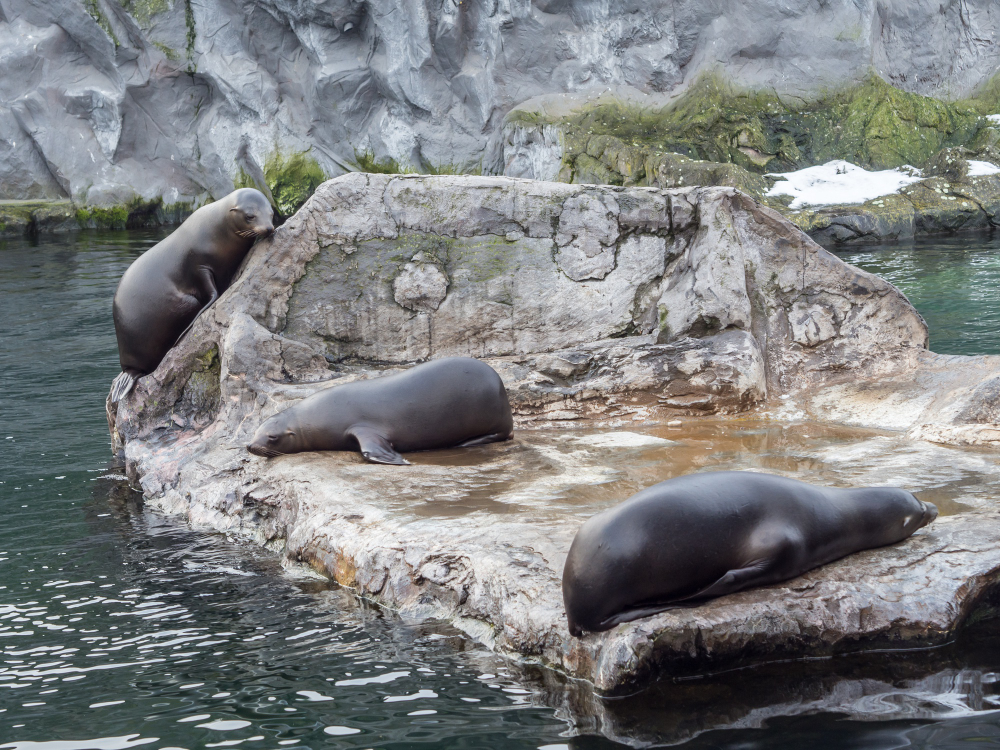
Thus, scientists took an unusual action. They requested assistance from the seals. At first, the concept seems almost fanciful, like a scene from a documentary about nature. However, the reasoning is simple. In order to hunt fish and squid, Weddell seals and southern elephant seals spend their entire lives diving beneath Antarctic ice and swimming thousands of feet down into icy waters—exactly what researchers find difficult.
Researchers saw that these creatures might already be the ideal oceanographers as they glided across the ocean.
A group from the University of East Anglia and the University of St Andrews’ Sea Mammal Research Unit began affixing tiny sensors to seals in the Amundsen Sea in 2014. The gadgets, which are roughly the size of a smartphone, are softly adhered to the fur of the animals’ heads or backs. As the seals dive, they take measurements of the water’s temperature, depth, and salt content.
The sensors send data to satellites in orbit far above the polar sky when the animals come to the surface to breathe.
It must have been a little unsettling during the initial trials. When using wildlife to gather scientific data, there is always a risk. After all, a seal’s primary goals are to find food and stay away from predators like orcas. It cannot be told where to swim.
Nevertheless, researchers were immediately taken aback by the findings. The seals provided thousands of ocean profiles from areas that ships and underwater robots seldom visit over the course of months of diving. Certain animals crossed the Southern Ocean hundreds of miles. In order to collect data from locations where instruments would probably be lost or crushed, others dove far beneath floating ice shelves.
Scientists had gathered more data about some Antarctic waters by the end of the initial projects than they had from decades of conventional surveys put together.
During tagging excursions, researchers sometimes stand on the ice and watch the seals slide back into the water, vanishing in a matter of seconds beneath the dark surface. It’s difficult not to experience a quiet sense of wonder at that precise moment. Humans hardly comprehend the environment in which these animals live.
Additionally, they are mapping it almost by coincidence. The data they gather is more important than it might appear. Roughly 90% of the world’s ice is found in Antarctica. Sea levels rise worldwide when that ice melts. The effects may eventually be felt in cities thousands of miles away, from Miami to Jakarta.
However, it is still difficult to predict precisely how quickly this melting will take place.
One major question involves warm ocean water flowing beneath ice shelves. Pine Island and Thwaites glaciers in the Amundsen Sea are already rapidly melting. Warm, salty water circulating beneath the ice may be subtly speeding up the process, according to some scientists.
It was challenging to verify that theory until recently. These gaps have begun to be filled by the seal data. The animals show how warm water flows through the area and interacts with the base of glaciers by repeatedly diving through various oceanic layers. In certain instances, researchers found that warmer water appears thicker and more pervasive in the winter than previously thought.
Some people were taken aback by that particular detail. Melting may happen even in months when scientists thought conditions were largely stable if warmer water is reaching ice shelves more frequently than anticipated. It’s possible that the process is more complex and persistent than previous climate models indicated.
However, the picture is still very incomplete.In an effort to extend the data over longer time periods, scientists continue to tag new seals during recurring expeditions. Every animal contributes a new moving sensor to an ocean that would otherwise be inaccessible.
Of course, there are restrictions. A seal cannot be trained to explore a particular glacier or make repeated trips to the same location. Instead of following scientific guidelines, the animals obey their prey. Unexpected discoveries can occasionally result from that unpredictability. Other times it leaves gaps. Nevertheless, the alliance between humans and seals seems strangely appropriate.
Antarctica has never been easily explored. Underwater robots struggle beneath the ice, ships patrol the edges, and satellites see the surface. Seals, on the other hand, are year-round residents and are well suited to the bitter cold. They can dive through tiny breathing holes and confidently navigate the murky waters.
Climate models don’t matter to them. They just swim, hunt, and come to the surface to breathe.
Nevertheless, every time they do, they quietly communicate with researchers looking into a warming planet.
As this research progresses, it seems as though the Antarctic ecosystem is gradually—almost reluctantly—revealing its secrets. The seals are doing more than just getting by in that hostile environment. Strangely, they have turned into guides, showing scientists where the ocean flows, where warm water collects, and possibly where the ice sheet will go in the future. Nobody is certain how Antarctica’s ice story will conclude.
However, scientists are now able to see a little bit below the surface because of a few inquisitive seals wearing tiny sensors.