



Listen to the article
I was shocked to learn that Abu Dhabi has subtly outperformed much of Europe in terms of AI-ready computing power. It was not incredulity, but the realization that something subtly ambitious was at last coming into view. A change that has been steadily increasing—not loudly, but with purpose.
Software innovations have traditionally been used to tell the tale of AI infrastructure. Every milestone, however, is accompanied by a lattice of servers, a buzz of electricity, and a country’s determination to give priority to digital competence. Abu Dhabi’s path to leadership in AI isn’t characterized by a single declaration. It is characterized by its structural choices to build locally, quickly, and extensively.
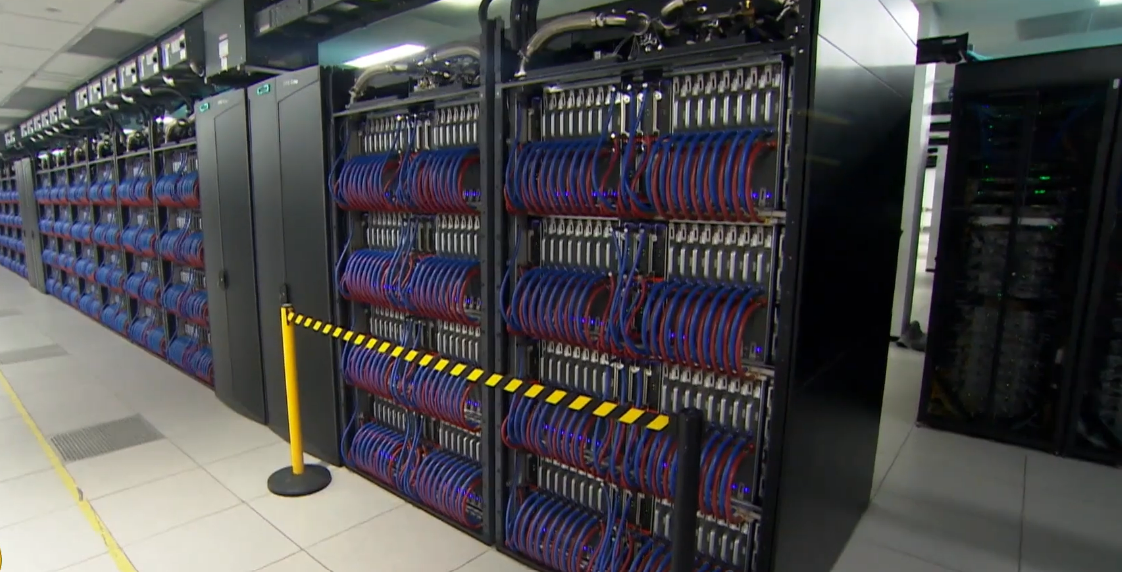
Building energy-intensive data farms, such as those supported by G42, allowed the emirate to accomplish something quite uncommon: gigawatt-scale capacity in a fraction of the time required in most Western countries. For example, Europe has frequently been limited—not by vision, but by a combination of old energy grids, bureaucratic snags, and popular resistance to major projects.
On the other hand, Abu Dhabi has performed exceptionally well at integrating energy abundance, national policy, and tech-sector ambition into a cohesive strategy. While Germany might debate the environmental effects of a hyperscale buildout for five years, the UAE starts construction. While Britain must deal with intricate zoning permits, Abu Dhabi creates a data tunnel across the desert.
| Attribute | Detail |
|---|---|
| Location | Abu Dhabi, United Arab Emirates |
| Supercomputer Initiative | Massive AI‑ready infrastructure expansion led by companies like G42 |
| Power Capacity | Projects totaling multiple gigawatts of data‑center energy use |
| Growth in AI Sector | ~61% growth from mid‑2023 to mid‑2024 |
| Strategic Partnerships | Nvidia, Microsoft, OpenAI, Oracle, SoftBank |
| Indigenous AI Capabilities | Falcon models developed locally |
| Core Advantage | Abundant, stable energy resources for compute |
| Significance | Surpasses much of Europe in AI‑ready infrastructure |
Despite its generally subtle tone, this tactic has drawn renowned partners. Microsoft and G42’s collaboration began with more than just financial incentives. It was influenced by geographic location, latency benefits, and the capacity to access extensive, highly dependable, and effective infrastructure. In the competition for supremacy in generative AI, they are not insignificant conveniences.
Abu Dhabi is becoming a frontier compute hub for the region because to key alliances. These days, Falcon models that were trained on local superclusters are just as capable as LLaMA and Mistral. This is a particularly interesting change for a country that was traditionally thought of as a passive tech consumer.
Last spring, during a quiet panel, a data scientist from the United Arab Emirates mentioned that their most recent language model completed pretraining two months ahead of schedule. This timeline shortening was made possible by the availability of raw computing. I still think about the casual remark. It wasn’t expressed with arrogance. Just plain old facts. When infrastructure is done well, it doesn’t need to yell.
Similar outcomes have been observed in South Korea and Singapore: a feedback loop in which infrastructure and policy support the growth of talent, which in turn attracts additional investment. Here, however, geographic and energy advantages simply magnify the magnitude.
Through the utilization of pre-existing oil and gas earnings, the United Arab Emirates has directed funds towards computation instead of consumption. This represents a substantial shift in governmental priorities from output to optionality. selling inference time, training models, and hosting data. The same barrel that used to power automobiles is now used to power algorithms.
This provides Abu Dhabi with leverage beyond its size in the context of AI geopolitics. Where can a business or researcher find the power, high-end chips, and few bottlenecks needed to train a 70-billion parameter model today? Here, the solution points are growing.
Despite this momentum, there are still obstacles. At scale, AI brings up difficult issues related to data sovereignty, model transparency, and fair access. Abu Dhabi, meanwhile, has made indications that it wishes to engage in moderate rather than aggressive participation. Early indications of a state thinking beyond hardware are found in its collaborations, which frequently include talent exchange programs and governance rules.
A U.S. analyst minimized Abu Dhabi’s AI jump in a Bloomberg segment, referring to it as a regional footnote. But such viewpoint already seems out of date. It is now built with code and computation, when before it was a place defined by steel and oil.
Thus, although headlines may portray this as a race between areas, the underlying narrative is about a shifting innovation axis. A location that formerly sought advancements in digital technology is now attracting its own crowd.