

Listen to the article
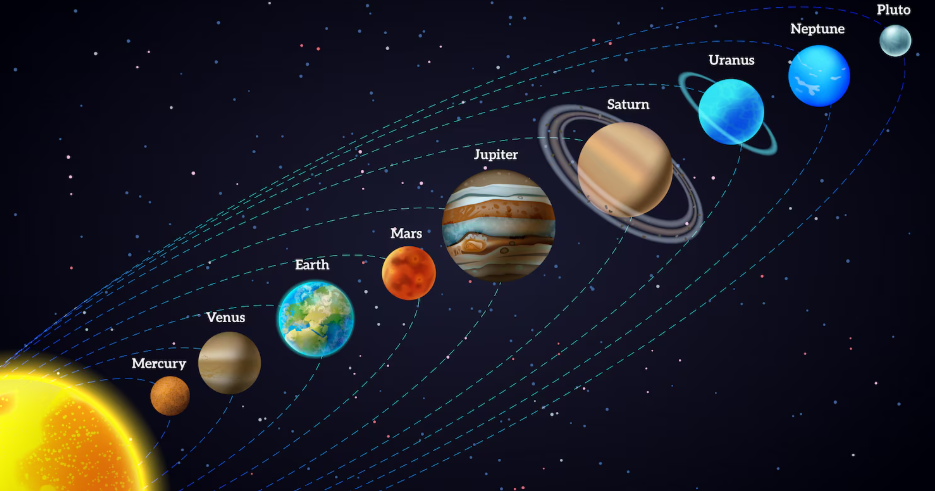
Somewhere above the western horizon, just after sunset, when the sky turns from copper to deep blue and city lights start to flicker awake, something quietly unusual will happen. Along the same arc of the sky, six planets—Mercury, Venus, Saturn, Jupiter, Uranus, and Neptune—will emerge, creating what astronomers jokingly refer to as a “planetary parade.” It’s a neat way of describing something that, in practice, seems a little odd to see: several worlds hanging in the same twilight zone, each traveling in a different direction.
Skywatchers have multiple opportunities to witness the alignment, which peaks around February 28 and is visible for several evenings on either side. About 30 to 60 minutes after sunset is when the best viewing window is available. If you wait too long, Mercury will disappear; if you look too early, the faintest planets will be obscured by the waning sunlight. As is frequently the case with the sky, timing involves a combination of guesswork and patience.
| Event | Six-Planet Alignment (“Planetary Parade”) |
|---|---|
| Date | Around February 28, visible several days before & after |
| Planets Involved | Mercury, Venus, Saturn, Jupiter, Uranus, Neptune |
| Visibility | Venus, Jupiter, Saturn visible to naked eye; Uranus & Neptune need optics |
| Best Viewing Time | 30–60 minutes after sunset |
| Where to Look | Western horizon along the ecliptic |
| Scientific Explanation | Planets orbit in the same plane, appearing aligned from Earth |
| Viewing Tips | Clear horizon, low light pollution, binoculars helpful |
| Reference | https://www.nasa.gov |
Most likely, Venus will draw attention first. Unmistakably, it hangs low and bright, glowing with a constant intensity that is impossible to replicate with aircraft lights. Saturn sits close by with a softer, yellower tone, while Jupiter looks higher and equally assured. An evening stroll can be abruptly ended by these three alone. Mercury may need to be carefully viewed through haze and rooftop silhouettes because it is fainter and closer to the horizon.
Neptune and Uranus are also present, though it might be overly optimistic to describe them as visible. They can be seen as pale points against the darkening sky with the aid of binoculars or a small telescope. The moment of spotting them is often described by amateur astronomers as being quietly satisfying rather than dramatic—more recognition, less fireworks.
The ecliptic, the same celestial path the Sun takes every day, is followed by the planets from west to east. In space, they are not actually aligned. Instead, because their orbits roughly follow the same plane, they only appear aligned from Earth. It is geometry posing as choreography of the cosmos. Understanding that the spectacle is perspective rather than performance is humbling.
Locating a viewing location is important. It matters whether the western horizon is clear over desert, water, or a rooftop above tangled power lines. Mercury can be completely erased by a glowing skyline, and even the smallest details are dulled by light pollution. Standing in a peaceful area away from neon and traffic lets the eyes acclimate and the sky gradually unveil what it has been concealing all along.
Although planetary alignments occur occasionally, seeing six in a single evening is significant enough to attract both experienced observers and inquisitive newcomers to the outdoors. Although apps can assist in locating each planet, there is still a slight thrill in locating them on your own by connecting dim points of light to something vast and far away.
According to astronomers, such alignments have no gravitational implications for Earth. When compared to the Moon and Sun, the combined pull of the planets is insignificant. Nevertheless, there has always been room for interpretation—personal, cultural, and scientific. Even though it is a coincidence, it can still feel symbolic to see multiple worlds share the same twilight arc.
It’s difficult to ignore how uncommon it is to look up with strangers. People stop on sidewalks and balconies, pointing to the same horizon with their phones lowered. Which one is Jupiter? a child asks. The bright one must be a plane, someone insists. The sky briefly arouses a common interest.
The planets will continue to move, reverting to their individual rhythms. By the following week, the plans become less rigid, and the parade fades into a typical evening. However, for a few evenings, the solar system appears momentarily ordered, as though providing a hint of order in a universe that generally defies tidy patterns.
Just after sunset, go outside. Give your eyes time to adjust. At first glance, the alignment might seem subtle, almost unimpressive. The sky then feels more populated than anticipated as one planet turns into two, then three. And for a silent moment, standing in the last of the light, the worlds appear oddly close together.