


Listen to the article
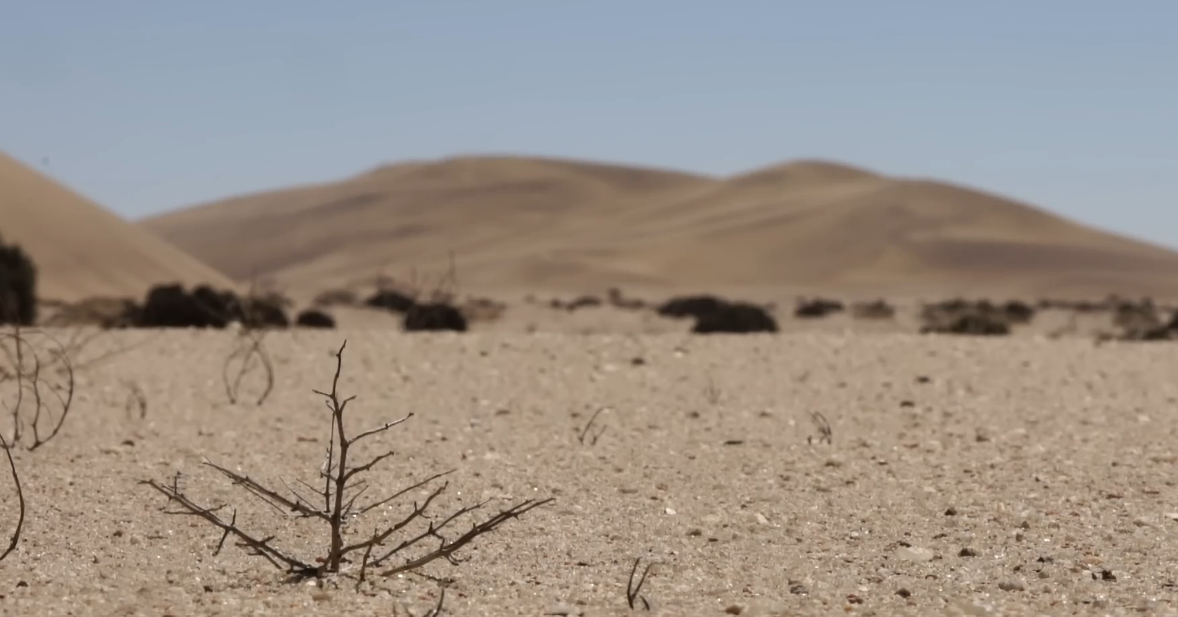
An odd test site for something much more radical than straightforward afforestation has emerged on the outskirts of Dubai’s arid terrain. This area of the desert has discreetly been the site of a series of experiments in recent years that have the potential to literally change the course of climate intervention. What began as a local reaction to severe heat and water scarcity is now developing into a demonstration of methods that, if carefully scaled, may be very helpful across continents with comparable circumstances.
Converting infamously difficult desert sand into sturdy, useable bricks is one of the most fascinating endeavors. Enzymes that initiate a natural cementation process have been the subject of experiments by researchers at the University of Wollongong in Dubai. The sand starts to solidify and form dense blocks when urea-processing bacteria and a calcium supply are added. It’s alchemy in a biological context. The possibility is extremely successful in envisioning how we might construct in severe situations, despite the fact that it is now time-intensive.
Researchers like Dr. Stephen Wilkinson are investigating the possibility of drastically lowering the reaction time using enzyme sources found in watermelon seeds and even jack beans. The method now takes up to 24 hours per block, however preliminary experiments with less expensive biological inputs indicate that this time frame could be reduced by more than half. The project feels both distinctly futuristic and incredibly local because it also considers lunar or Martian applications.
| Aspect | Details |
|---|---|
| Location | Various research zones across UAE desert, centered near Dubai |
| Lead Institutions | University of Wollongong (Dubai), Desert Control, ICBA |
| Core Focus Areas | Sand-to-brick tech, biochar farming, liquid nano-clay applications |
| Climate Innovation Tools | Cloud seeding, soil-binding enzymes, AI weather modeling |
| Primary Objective | Combat desertification and reshape arid land into fertile ecosystems |
| Notable Technologies | Microbial solidification, nanotechnology, solar desalination |
| Broader Implications | Food security, climate adaptation, space colonization research |
| Credible Source | Euronews Feature – “Sand Science: Dubai Researchers Dig Up Secrets” |
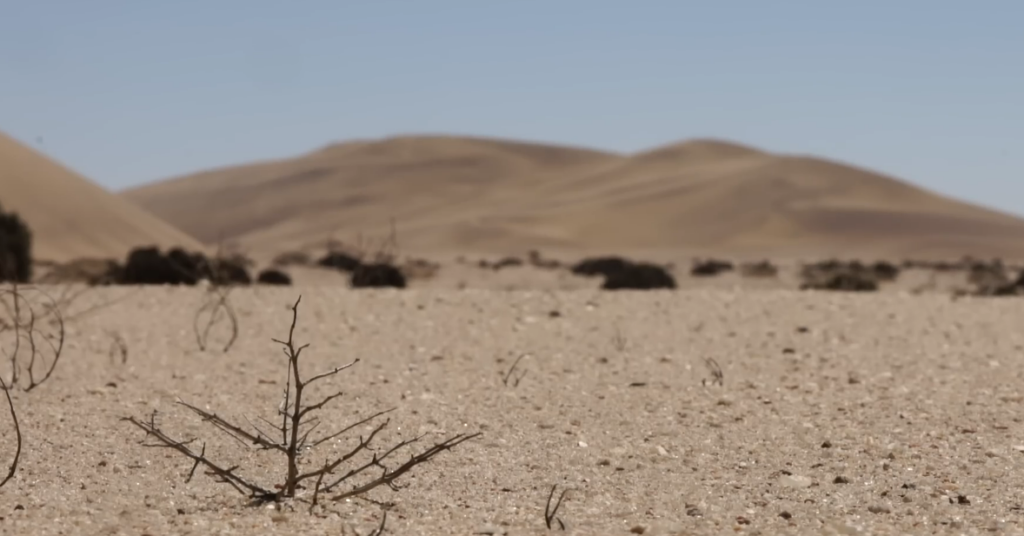
The International Center for Biosaline Agriculture, located nearby, has adopted a soil-first strategy. They are creating a biological web beneath the surface of the sand by enriching arid dirt with advantageous bacteria and fungi. Biochar produced from palm trash is used in conjunction with this tactic to create a carbon-rich boost for arid areas. It is perfect for areas experiencing protracted drought since it is incredibly resilient and retains moisture.
The way these ideas relate to the terrain is quite creative. The researchers are customizing solutions using locally available resources, such as the enzymes in local crops or the trash generated by conventional agriculture, rather than importing foreign technologies in bulk. A feedback loop that feels grounded and sustained is the end result.
A UAE-based climate-tech business called Desert Control has taken things a step further by creating a material called liquid nano-clay. By binding to sand particles, this silty mixture forms micropores that trap nutrients and water near plant roots. An dry area of land can be made suitable for cultivation in about seven hours. 100,000 liters of the material can be produced daily by one LNC unit; this production is currently being scaled across more units for wider use.
The boundary between lush vegetation and pristine desert was so distinct that it appeared to have been digitally created when I was strolling through one of their demonstration plots. With a smile, a technician tossed a seed into the changed sand and said, “Check back in a week.” It was subtly innovative.
Dubai’s covert initiatives reach far above the ground. Although cloud seeding has long been a component of the region’s plan, scientists are also using nanotechnology and artificial intelligence. By pushing hot air upward and causing it to condense into rain, one team is even simulating how an artificial mountain might draw moisture from the atmosphere. Unquestionably ambitious, the idea is based on the urgent reality of water scarcity and combines elements of architectural imagination and meteorology.
By examining patterns of atmospheric convergence, artificial intelligence is being utilized to determine the best times and locations for cloud seeding. Researchers now deploy aircraft with precise timing, enhancing efficiency, rather than depending on chance. It’s a very effective method that increases output from a small number of seedable clouds while reducing the possibility of operations being wasted.
However, the proposal has its detractors. Chemical cloud seeding continues to raise environmental issues, especially in relation to ingredients like silver iodide. Some contend that although these advances are intriguing, they may divert attention away from fundamental conservation techniques. Although those cautions are important, the rate of experimentation has not slowed.
Given the growing threats associated with climate change, Dubai’s strategy goes beyond adaptation. It involves redefining the parameters of what may be achieved through the convergence of applied science, commercial funding, and public policy. Furthermore, although the act of spraying nanoclay on dunes may seem like a lavish display, its applications are really useful.
When compared to conventional infrastructure initiatives, these approaches may be unexpectedly cost-effective for medium-sized countries or those experiencing food insecurity. These interventions may provide answers for communities with limited time and financial resources because many of them deploy more quickly and consume fewer resources.
The United Arab Emirates has subtly emerged as a model region for climate resilience by utilizing both domestic creativity and global cooperation. While it doesn’t address every issue, it does provide the planet with a useful testing ground. Most significantly, it’s doing so in a way that accommodates the location rather than resisting it.
I stopped at a boundary fence that divided two test plots—one barren, one blooming—midway through a site visit last fall and muttered to myself, “This is the closest I’ve seen science and hope become indistinguishable.”
Numerous nations have contacted UAE experts for cooperation since the start of these projects, indicating a rising need for scalable climate solutions. Although the sand beneath Dubai used to represent seclusion, it now represents a hub of long-term planning and global connectivity.