



Listen to the article
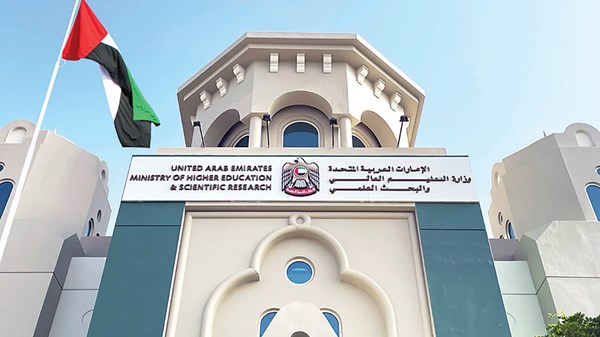
The UAE Ministry of Higher Education and Scientific Research is launching a new round of dialogue sessions on Tuesday to discuss the country’s new higher education law. These introductory sessions, titled “Future of Higher Education Dialogues,” aim to clarify the framework and provisions of the new decree regulating the higher education sector while enhancing institutional readiness for its implementation.
According to the ministry, the sessions will feature His Excellency Dr. Abdulrahman Al Awar, Minister of Human Resources and Emiratization and Acting Minister of Higher Education and Scientific Research. The dialogue will take place at Al Ras Hall, InterContinental Dubai Festival City, from 10:00 to 11:00 AM, providing an opportunity for university representatives and stakeholders to ask questions and discuss practical implementation challenges.
Understanding the New Higher Education Law Framework
The ministry is organizing a series of dialogue sessions to examine and discuss key initiatives, programs, and regulatory frameworks designed to develop the higher education sector. These efforts align with the UAE’s developmental goals and vision for advancing educational outcomes across the nation.
The sessions represent a continuation of the sector’s reorganization under a more flexible and integrated model. This approach seeks to enhance the quality of educational outputs, improve governance and oversight efficiency, and keep pace with rapid transformations in education and scientific research patterns regionally and globally.
Scope and Application of the Decree
The decree law applies to all higher education institutions in the UAE, including technical and vocational education and training institutions. Additionally, it covers institutions offering accredited vocational programs at levels higher than secondary school certificates and their equivalents according to the National Qualifications Framework.
The participatory approach adopted by the ministry emphasizes transparency and stakeholder engagement. Representatives from universities and relevant authorities will have direct access to ministry officials to discuss implementation mechanisms and address practical concerns during the dialogue sessions.
Key Objectives of Higher Education Reform
The new higher education law is built on several fundamental objectives that reshape the sector’s regulatory landscape. According to the ministry, these goals include regulating the licensing, classification, and program accreditation of higher education institutions and technical and vocational training institutions.
Furthermore, the law aims to ensure effective governance and management oversight of educational institutions. The decree emphasizes improving the quality and competitiveness of higher education to align educational system outputs with labor market requirements.
Supporting Lifelong Learning and Research
The legislation supports lifelong learning journeys for all graduates, recognizing the evolving nature of professional development in the modern economy. Meanwhile, the law promotes and encourages scientific research in higher education institutions through funding mechanisms and local and international partnerships.
One of the decree’s primary goals is to supply the labor market with qualified personnel who meet current and future workforce demands. This alignment between education and employment needs reflects the UAE’s broader economic diversification strategy and commitment to developing national talent.
Institutional Readiness and Implementation
The dialogue sessions serve as a critical platform for building institutional capacity ahead of the law’s full implementation. However, the ministry has not confirmed specific timelines for when all provisions will take effect across different types of educational institutions.
In contrast to previous regulatory approaches, the new framework emphasizes flexibility and integration across the higher education ecosystem. This shift enables institutions to adapt more readily to changing educational paradigms while maintaining quality standards and accountability measures.
Further dialogue sessions are expected to continue as the ministry works with stakeholders to ensure smooth implementation of the new higher education law. The timeline for subsequent meetings and specific implementation deadlines has not yet been announced by authorities.