
Listen to the article
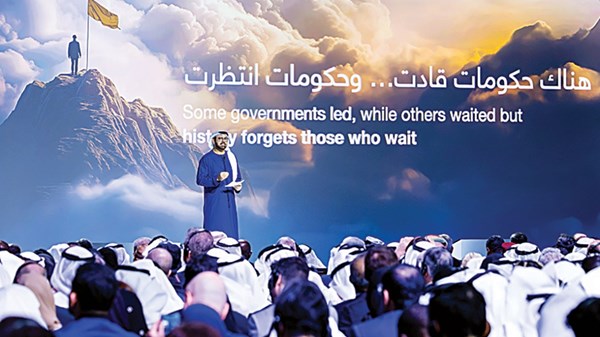
The 2026 World Government Summit opened in Dubai on February 4, with a powerful message from Mohammad Abdullah Al Gergawi, UAE Minister of Cabinet Affairs and Chairman of the Summit. Al Gergawi emphasized that governments must adapt to serve a fundamentally transformed human being, warning that the greatest risk is not falling behind technology but falling behind humanity itself. The World Government Summit continues through February 5, bringing together global leaders to address critical questions shaping the future of governance.
In his keynote address, Al Gergawi welcomed participants to the summit, which operates under the vision of President Sheikh Mohamed bin Zayed Al Nahyan and the patronage of Vice President Sheikh Mohammed bin Rashid Al Maktoum. According to the minister, the event aims to contribute an exceptional message and strategic vision for anticipating the future through international dialogues addressing pivotal questions that will guide human development in coming decades.
Redefining Human Capabilities in the Age of Transformation
Al Gergawi framed the current era as a historic opportunity for governments, asserting that the biggest transformation in human history is occurring within people themselves. He noted that while humanity’s written history represents just the last ten seconds of the universe’s final day, the changes have been profound. However, he stressed that today’s shift goes beyond industrial or technological change to a fundamental redefinition of human capabilities.
The minister drew parallels to historical fears about innovation, citing Socrates’ warnings about writing weakening memory. Al Gergawi explained that history has proven humanity advances not through fear but through boldness and adaptation. Additionally, he characterized the current moment as one where human capacity is measured by what individuals acquire, develop, and enhance.
Four Forces Creating Enhanced Humanity
According to Al Gergawi, four primary forces are transforming human nature. The first force is artificial intelligence that multiplies mental capabilities. The minister explained that AI has evolved from an assistant to a thinking partner, with computational power expected to increase approximately one million times over the next decade. He questioned whether AI will transition from helping to participating and potentially to deciding, fundamentally altering how humans think, learn, and make decisions.
The second force involves advanced medicine extending healthy lifespan. Al Gergawi noted that the cost of sequencing the human genome has dropped from $100 million to less than $600, potentially falling below $100 within ten years. Meanwhile, global life expectancy has more than doubled over the past century, raising questions about impacts on government functions, employment, retirement funds, and public finances.
Brain sciences constitute the third force, promising to redefine learning and perception. The minister observed that humanity knows more about the universe than the human mind, but future discoveries will unlock new mental capabilities. In contrast to AI replacing human thought, enhanced intelligence will work alongside it. Al Gergawi referenced Neuralink’s recent announcement of 21 trial participants, some controlling devices through thought alone, comparing current brain-computer interfaces to email’s early days.
The fourth force comprises digital environments expanding human existence itself. According to the minister, more than 5.5 billion people are connected to the internet, meaning each individual lives amid the world, affecting and being affected by it. He noted that human attention spans have shortened, distraction has increased, and identity has fragmented across multiple digital platforms.
Government Transformation for Future Generations
Al Gergawi posed a critical question about whether governments are designed for yesterday’s human or tomorrow’s. He emphasized that by 2040, some projections indicate Generation Z will comprise approximately 40 percent of the global workforce. This generation expects immediate service delivery, continuous learning, work-life balance, and meaningful purpose beyond employment and salary, the minister explained.
The chairman stressed that government roles have evolved during every pivotal historical moment. With the Industrial Revolution, governments redesigned work structures; with electricity, they redesigned infrastructure. However, with human transformation itself, governments must completely reimagine their fundamental concept, shifting from managing reality to designing the future.
Al Gergawi warned that history remembers governments that led transformations, not those that waited. He concluded that in every major civilizational shift, some governments have led while others disappeared. The summit will continue exploring these themes as participants address how governance can serve an enhanced humanity with unprecedented capabilities in the decades ahead.