Listen to the article
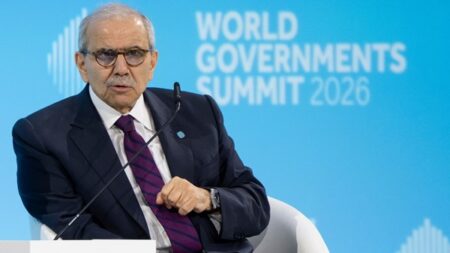
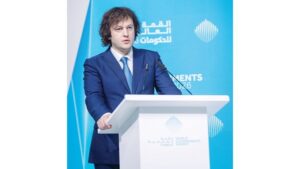
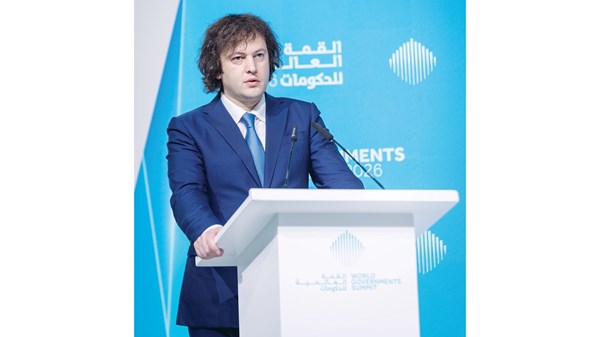
Economic sustainability and predictability are fundamental to attracting investment and driving long-term growth, according to Georgia’s Prime Minister Irakli Kobakhidze. Speaking at the World Government Summit 2025 in Dubai, the premier emphasized that economic policy stability and the ability to forecast market conditions matter most to investors seeking reliable environments for capital deployment.
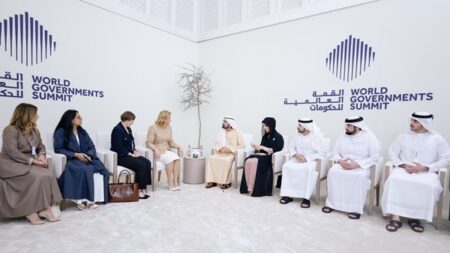
Kobakhidze delivered his keynote address during the first day of the summit, which launched on February 4 under the theme “Foresight for Future Governments” and concludes on February 5. The annual gathering brings together global leaders to discuss governance challenges and strategies for navigating an increasingly uncertain international landscape.
Addressing Global Uncertainty Through Economic Reforms
The Georgian leader highlighted that managing uncertainty imposed by global changes represents a primary challenge not only for governments but equally for businesses and investors. According to Kobakhidze, this dynamic environment requires consistent reforms that deliver measurable impacts in both short and long timeframes.
He noted that current experiences in global trade and logistics demonstrate the urgent need for flexible and integrated systems. Traditional approaches to supply chain management no longer suffice in today’s interconnected economy, the prime minister stated.
Infrastructure and Predictive Capacity
Countries worldwide must enhance their predictive capabilities and invest in modern infrastructure to ensure continued trade flows and effective economic cooperation, Kobakhidze emphasized. These investments form the backbone of resilience against disruptions that increasingly characterize international commerce.
Additionally, the premier stressed the importance of strengthening connections between markets through advanced logistical frameworks. Such integration enables nations to respond more effectively to sudden shifts in trade patterns and supply availability.
Partnership with International Institutions Drives Economic Policy Stability
Kobakhidze affirmed that collaboration with international organizations, particularly the World Bank Group, constitutes an essential element in achieving sustainable economic reforms. This partnership enhances governmental capacity to address structural challenges facing developing economies.
The cooperation extends beyond financing to include technical and analytical support for designing and implementing robust reform policies, according to the prime minister. These comprehensive partnerships prove especially valuable for emerging markets confronting regulatory and economic difficulties.
Georgia’s Development Journey
The Georgian experience reflects a successful model of economic transformation, Kobakhidze explained. Since initiating its partnership with the World Bank in 1992, Georgia evolved from an aid recipient to a contributor in international development programs, demonstrating significant progress along its growth trajectory.
This partnership encompasses financing for strategic projects across infrastructure, agriculture, green economy transition, and support for small and medium enterprises, the prime minister detailed. Such multifaceted cooperation has enabled Georgia to build institutional capacity while modernizing its economic foundations.
Customs and Trade Efficiency
Regarding customs policies, Kobakhidze clarified that these matters ultimately rest with national sovereign decisions. However, he simultaneously emphasized the importance of developing customs and logistics systems that enhance trade movement efficiency while reducing operational costs.
In contrast to protectionist approaches, streamlined customs frameworks facilitate smoother cross-border commerce. Meanwhile, technological advancement in clearance procedures can significantly accelerate shipment processing times.
Attracting Investment Through Predictability
The ability of nations to provide clear and reliable economic forecasts has become a decisive factor in attracting capital, according to the Georgian leader. He pointed out that Georgia succeeded in establishing this approach, enabling the country to achieve economic stability.
This stability positioned Georgia among the nations most capable of adapting to global changes, Kobakhidze concluded. The focus on economic policy stability and transparent governance creates an environment where investors can confidently commit resources for extended periods.
As the World Government Summit continues through February 5, discussions on economic resilience and governance frameworks are expected to yield further insights into strategies nations can employ to navigate ongoing global uncertainties.