
Listen to the article
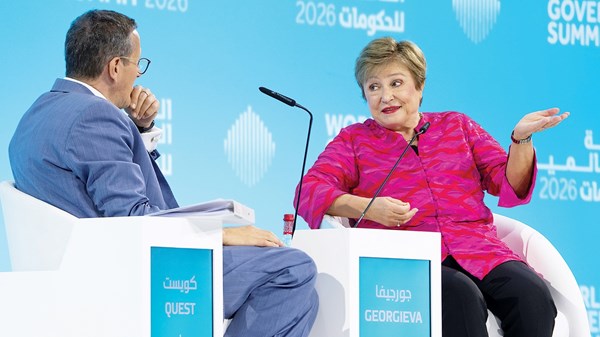
The International Monetary Fund’s Managing Director Kristalina Georgieva has commended the United Arab Emirates for its pivotal role as a global hub for international cooperation during the World Government Summit in Dubai. Georgieva praised the UAE’s early recognition that collaboration is essential for solving complex global challenges and highlighted the country’s effective management of international dialogue platforms.
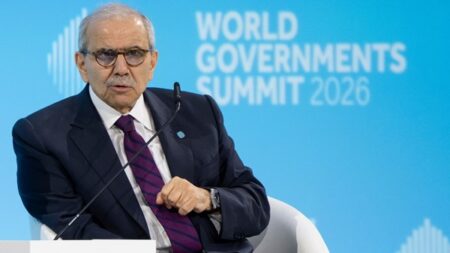
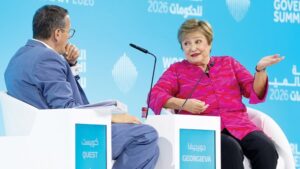
Speaking during a dialogue session moderated by Richard Quest on the first day of the World Government Summit, the IMF chief emphasized the UAE’s unique position in fostering multinational partnerships. She noted that while the world experiences geopolitical uncertainty and ambiguity, the Emirates stands out as a platform that understands the importance of collective action in addressing global challenges.
IMF Raises Growth Forecasts for UAE and Gulf Region
According to Georgieva, the IMF has revised and raised its global growth projections, with specific upward adjustments for the UAE and Gulf Cooperation Council countries. She attributed this optimism to the private sector’s remarkable ability to adapt quickly and demonstrate flexibility when confronting challenges.
The revised forecasts reflect confidence in the region’s economic resilience and strategic positioning. Additionally, Georgieva emphasized that these economies are displaying significant maturity and the capacity to achieve strength through unified objectives.
Proposal for Gulf Technology and Industrial Collaboration
In a notable suggestion, the IMF Managing Director proposed that GCC countries consider launching a joint Gulf project similar to Europe’s Airbus model. She recommended establishing large-scale shared technological or industrial ventures, particularly in artificial intelligence, which would enable the region to compete with major technology companies including the so-called “Magnificent Seven” in the United States and other global giants.
The proposal underscores the potential for regional cooperation to create competitive advantages in strategic sectors. However, Georgieva did not provide specific timelines or implementation details for such collaborative initiatives.
Human Capital Investment as Competitive Advantage
Georgieva highlighted the UAE and Gulf states’ distinction in multiple areas, particularly their investment in human capital development. She noted that the region began investing in citizen skills and training well before artificial intelligence technologies reached their current prominence, granting them a significant competitive edge.
Meanwhile, she emphasized that this forward-thinking approach to workforce development positions these economies favorably for the technological transformation currently reshaping global markets. The early focus on education and skills training has prepared the region’s workforce for emerging opportunities in advanced technologies.
International Cooperation Through Global Platforms
The IMF director praised the UAE’s excellence in international dialogue and cooperation, citing the World Government Summit as a prime example. She indicated that this annual event, alongside other global forums hosted by the Emirates, demonstrates the country’s commitment to building bridges between different economic powers.
In contrast to rising fragmentation in other parts of the world, the UAE’s approach emphasizes connectivity and multilateral engagement. The country’s ability to convene diverse stakeholders for constructive dialogue has established it as a neutral ground for addressing shared challenges.
The IMF has not announced when it will release detailed regional economic forecasts or whether it will issue specific recommendations regarding the proposed Gulf collaboration project. Authorities have not confirmed whether GCC members will formally consider Georgieva’s suggestion for joint industrial ventures at upcoming regional meetings.