

Listen to the article
The Sharjah Environment and Protected Areas Authority concluded the 25th edition of the Sharjah International Forum for Biodiversity Conservation in the Arabian Peninsula, bringing together more than 180 experts, researchers, and veterinarians from Arab countries alongside international scientific institutions. The biodiversity conservation forum addressed critical environmental issues facing the region, including invasive species management, seabird stranding response protocols, and sea snake population assessments.
According to Aisha Rashid Dimas, chairperson of the Sharjah Environment and Protected Areas Authority, the forum has established itself as a specialized scientific platform for knowledge exchange and addressing urgent environmental challenges. The 25th edition produced positive outcomes that reflected in-depth scientific discussions on key topics, particularly invasive alien species management and enhanced response mechanisms for seabird strandings.
Student Participation and Regional Collaboration
The forum placed special emphasis on student engagement, providing opportunities for young researchers to present scientific papers and participate in specialized workshops. Dimas emphasized that involving students in such gatherings contributes to building an environmentally conscious generation committed to biodiversity conservation, reflecting the authority’s dedication to engaging diverse community segments in environmental initiatives.
Additionally, the event focused on strengthening regional and international cooperation while transforming scientific knowledge into actionable field procedures. These efforts aim to protect the region’s unique natural heritage, develop effective response systems, and enhance ecosystem resilience against accelerating environmental and climate challenges.
New Zealand’s Ambitious Predator-Free Initiative
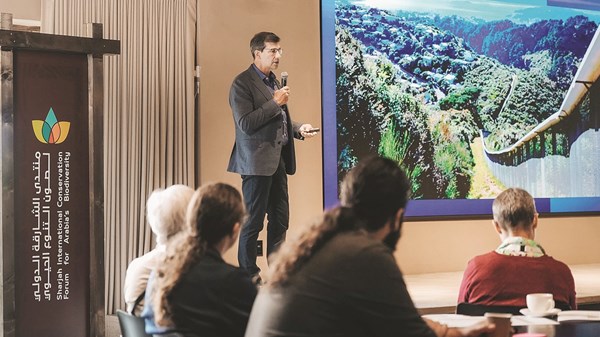
Dr. Philip Seddon delivered a keynote address on New Zealand’s national goal to become predator-free by 2050, highlighting the significant challenge invasive mammals pose to wildlife. According to Seddon, of 144 historically known bird species, only 33 remain today.
However, Seddon described this objective as an ambitious national project uniting communities and institutions through a combination of traditional tools and modern technologies, including genetic fertility control. The initiative provides a practical model for long-term collaboration in invasive species management that could benefit the Arabian Peninsula region.
Scientific Foundations for Biodiversity Protection
Forum sessions continued emphasizing the scientific foundations necessary for effective biodiversity conservation. Dr. Helen Senn presented a comprehensive case study on biobanks, describing them as genetic libraries representing a pivotal element in conservation efforts.
Meanwhile, Dr. Sylvia Perez Espona explored the potential of environmental DNA metabarcoding technology in dietary studies. She explained its role in revealing intricate relationships between species within food webs, providing essential data for evidence-based ecological restoration programs.
Addressing Antibiotic Resistance in Wildlife Rehabilitation
A team of seabird veterinary experts discussed the escalating global challenge of antibiotic resistance in wildlife rehabilitation programs. The experts emphasized that minimizing antibiotic use represents the most effective approach for preventing resistance.
In contrast to conventional practices, they advocated for protocols relying on disinfectants, developing rapid diagnostic testing within facilities, and strengthening animals’ natural immunity through proper nutrition and preventive care. These strategies align with broader biodiversity conservation efforts in the region.
Environmental Monitoring and Field Response Enhancement
James Conder conducted an interactive workshop titled “Identifying Seabirds in the Arab Region,” aimed at developing essential skills for field workers. Participants learned to distinguish between eight major seabird families and utilize digital and field tools supporting monitoring and documentation efforts.
Furthermore, the forum addressed marine ecosystem challenges and seabird rescue protocols. Discussions included invasive species threats, early warning monitoring systems, and rapid response mechanisms to mitigate environmental risks.
Recognition of Young Researchers
The forum concluded with awards recognizing young researchers for outstanding student research. Among the presentations, Ziad Al-Tharro examined the impact of the common myna, an invasive species, on native birds in Saudi Arabia.
Additionally, planning committee members confirmed that the forum has evolved into a pivotal regional platform for coordinating scientific efforts. Professor Kate Sanders noted that the collaborative spirit contributed to completing the first comprehensive global reassessment of all sea snake species for the International Union for Conservation of Nature Red List.
Participants emphasized the importance of establishing effective early detection systems for invasive species and developing coordinated rapid response mechanisms. The authority has not confirmed specific timelines for implementing the forum’s recommendations, though ongoing collaboration among regional institutions remains expected to advance biodiversity conservation strategies throughout the Arabian Peninsula.