


Listen to the article
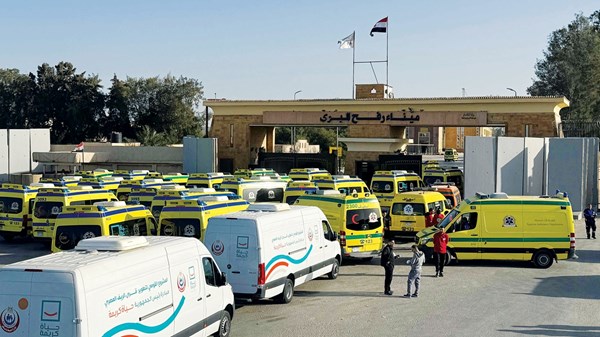
Israel has partially reopened the Rafah border crossing for the first time in over a year and a half, limiting passage to individuals only under strict supervision. The Rafah crossing reopening came after sustained pressure from humanitarian organizations demanding unrestricted access to deliver aid to the besieged and devastated Gaza Strip, according to Palestinian officials.
Israeli authorities announced that the reopening is part of an initial trial phase coordinated with the European Union Border Assistance Mission (EUBAM), Egypt, and other relevant stakeholders. Since May 2024, Israel has maintained control over the Palestinian side of the crossing, and briefly reopened it during a ceasefire in January 2025 to allow patients and wounded individuals to exit for medical treatment abroad before closing it again when hostilities resumed in March.
According to Israeli media reports, the decision to reopen the Rafah border crossing followed American pressure on Israel and occurred shortly after the return of remains of the last Israeli captive from Gaza. The Palestinian news agency WAFA confirmed that the land crossing with Egypt began trial operations after more than eighteen months of near-complete closure.
European Union Confirms Trial Operations
Shadi Othman, media officer at the European Union office in Jerusalem, stated that the crossing witnessed trial operations on Sunday to facilitate Palestinian movement to and from Gaza. The primary objective during this phase is to ensure the crossing operates in both directions, allowing residents to enter and exit smoothly, he explained.
Othman emphasized that the legal framework for the European Union’s work at Rafah crossing remains linked to previous agreements, particularly the 2005 accord. However, Israeli officials noted that all concerned parties are conducting preliminary procedures aimed at increasing readiness for full operation of the crossing.
Medical Crisis Deepens in Gaza
Meanwhile, the humanitarian situation in Gaza continues to deteriorate as medical facilities struggle with severe shortages. Mohammed Abu Afsh, director of the Medical Relief Society in Gaza, confirmed that more than 20,000 Palestinians require travel outside the territory to receive medical treatment.
Additionally, the World Health Organization and the Ministry of Health have registered large numbers of wounded individuals needing urgent travel for specialized care. Abu Afsh indicated that Gaza’s health sector requires urgent medical supplies, as only minimal amounts have entered the territory in recent months.
Critical Shortage of Essential Medicines
There is an acute shortage of medications for chronic diseases, particularly for hypertension, diabetes, and heart conditions, according to Abu Afsh. He noted that hospitals stopped diagnosing diseases in laboratories approximately two weeks ago due to the unavailability of necessary materials for conducting tests that identify patients with cancer or viral infections.
In contrast to the limited reopening for individuals, humanitarian organizations continue demanding full access for aid trucks carrying essential supplies. The winter season has exacerbated the crisis, with diseases spreading rapidly among the population living in damaged infrastructure.
Urgent Cases Require Immediate Evacuation
Abu Afsh stressed that cases requiring urgent transfer outside Gaza for treatment include patients in intensive care units and infants in incubators. The partial reopening of the Rafah crossing for individual passage does not address the broader humanitarian needs of the territory’s medical infrastructure.
Authorities have not confirmed a timeline for expanding operations beyond the current trial phase or when the crossing might permit the passage of humanitarian aid convoys. The success of the initial trial period will likely determine whether Israel proceeds with full reopening of the Rafah border crossing in coordination with international partners.