



Listen to the article
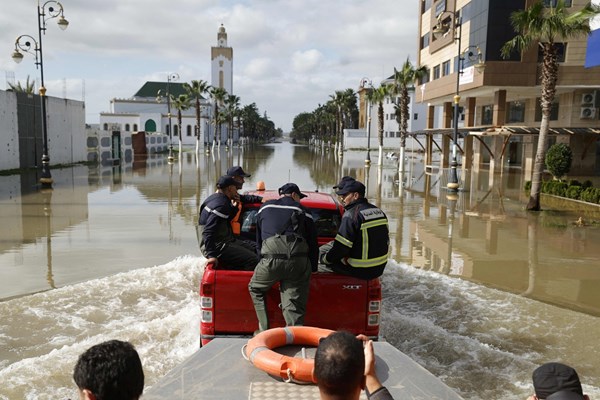
Morocco’s Interior Ministry announced that more than 140,000 people have been evacuated from their homes in the northwestern region of the country due to severe flooding caused by heavy rainfall and water releases from full dams. The mass displacement represents one of the largest emergency evacuations in recent Moroccan history as the Morocco flooding crisis continues to unfold across multiple towns and cities.
According to the ministry’s statement released on Thursday, a total of 143,164 individuals have been moved to safety. The flooding has been particularly severe in areas near rivers such as the Loukkos, where water levels have risen dramatically over recent days due to the combination of torrential rains and controlled releases from capacity-laden dams.
Severe Flooding Impacts Northwestern Morocco
Local residents and media outlets reported that the heavy precipitation and dam overflow have caused water levels in regional rivers to surge in recent days. Several towns have experienced significant flooding, with Ksar El Kebir among the hardest hit communities. Officials stated that up to 85 percent of Ksar El Kebir’s population has been evacuated from the town.
Additionally, authorities have deployed military personnel to assist with the emergency response operations. The army has been tasked with evacuating residents from the most severely affected areas and establishing temporary shelter facilities for displaced families. The rapid military deployment underscores the seriousness of the flooding emergency facing northwestern Morocco.
Transportation and Education Disrupted
The severe weather has extended beyond flooding to disrupt critical transportation links between Morocco and Spain. Maritime transport services operating across the Strait of Gibraltar have been suspended due to stormy conditions, affecting both passenger and commercial shipping routes. This disruption has created additional challenges for residents and businesses in the affected regions.
Meanwhile, educational institutions across the flood-affected areas have been closed as a precautionary measure. Schools and universities remain shuttered to ensure student safety and to allow facilities to potentially serve as emergency shelter locations if needed. The closures affect thousands of students throughout northwestern Morocco.
Emergency Response to Morocco Flooding
Authorities have issued urgent warnings to residents in affected zones, instructing them to evacuate immediately. The directive reflects concerns about continued rainfall and the potential for further flooding as dams remain at or near capacity. Emergency services have been working around the clock to ensure all vulnerable populations are moved to safer locations.
However, the scale of the Morocco flooding has presented significant logistical challenges. With more than 140,000 people displaced, authorities are coordinating shelter, food, and medical services for evacuees. Temporary accommodation centers have been established, though officials have not disclosed specific details about the number of facilities or their locations.
Climate and Infrastructure Concerns
The current flooding crisis highlights ongoing challenges related to water management and infrastructure in Morocco. While dams are essential for water storage in the normally arid country, the sudden need to release large volumes of water when reservoirs reach capacity can overwhelm downstream communities. The situation illustrates the delicate balance between water conservation and flood prevention.
In contrast to previous years marked by drought conditions, the recent heavy rainfall has tested Morocco’s emergency response capabilities. Local authorities continue to monitor river levels and weather forecasts to assess when conditions may improve and evacuees can safely return to their homes. The ministry has not yet provided an estimate for when the flooding situation may stabilize or when residents might be able to return to affected areas.