

Listen to the article
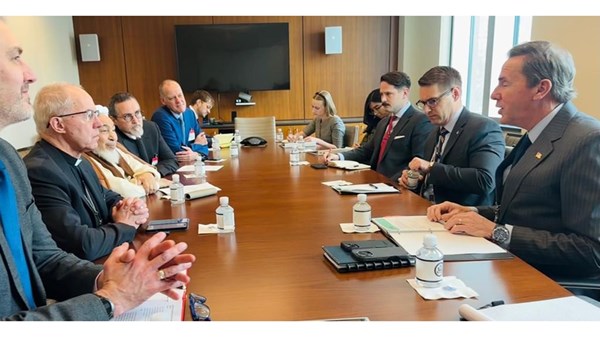
The Abu Dhabi Peace Forum recently held a high-level consultative meeting at the United States Department of State headquarters in Washington, bringing together senior officials from the United States and United Kingdom with prominent international religious and intellectual figures. The forum’s delegation was led by His Eminence Sheikh Abdullah bin Bayyah, who participated in discussions focused on advancing peace and stability initiatives across Africa.
According to official sources, the meeting included key representatives from multiple nations committed to fostering international cooperation. The American delegation featured Riley Barnes, Assistant Secretary of State for Democracy, Human Rights, and Labor, along with Mark Walker, the U.S. President’s Advisor on International Religious Freedom. Meanwhile, the British contingent was represented by David Smith, Special Envoy for Freedom of Religion or Belief, alongside Justin Welby, former Archbishop of Canterbury, and Lord Roack.
Abu Dhabi Peace Forum Advances Regional Stability Goals
The consultative meeting represents part of broader international efforts aimed at supporting stability and building sustainable peace across the African continent. The Abu Dhabi Peace Forum has emerged as a significant platform for interfaith dialogue and conflict resolution, working to address religious tensions that often contribute to regional instability. However, the specific strategies and timelines discussed during this session have not been publicly disclosed.
His Eminence Sheikh Abdullah bin Bayyah expressed gratitude to the U.S. State Department for hosting the gathering, according to statements released following the meeting. He emphasized the depth of friendship and strategic partnership that connects the United Arab Emirates with both the United States and the United Kingdom. Additionally, he highlighted the shared vision among the three nations regarding peace and stability as fundamental ethical and strategic pillars for safeguarding human dignity.
Strategic Partnership for Global Peace Initiatives
The UAE has increasingly positioned itself as a mediator in international peace efforts through its intellectual and diplomatic institutions. The Abu Dhabi Peace Forum serves as one of the primary vehicles for these initiatives, focusing particularly on interfaith dialogue and religious freedom. These efforts align with the Emirates’ broader foreign policy objectives centered on promoting moderate voices and countering extremism.
The meeting underscored the importance of collaborative approaches to addressing complex humanitarian challenges in Africa. Religious leaders and government officials alike recognize that sustainable peace requires addressing both immediate security concerns and underlying social tensions. In contrast to purely political or military interventions, faith-based dialogue offers opportunities to reach communities at grassroots levels.
International Cooperation on Religious Freedom
The participation of officials specifically focused on religious freedom and democracy reflects growing recognition of religion’s role in both conflict and peacebuilding. International religious freedom has become a priority area for U.S. foreign policy, with dedicated advisors working to address persecution and promote tolerance worldwide. Similarly, the UK has expanded its engagement on these issues through special envoy positions dedicated to freedom of religion or belief.
The three nations share common values regarding the protection of religious minorities and the promotion of interfaith understanding, according to the forum. These shared principles provide a foundation for coordinated action on peace initiatives, particularly in regions experiencing sectarian violence or religious persecution. Furthermore, the involvement of former religious leaders like Justin Welby brings moral authority and practical experience to diplomatic efforts.
The forum emphasized that peace and stability serve as both ethical imperatives and strategic necessities for promoting global security and prosperity. This dual framing reflects an understanding that humanitarian concerns and national interests often align, particularly when addressing root causes of conflict and displacement that can have far-reaching consequences.
Authorities have not announced specific follow-up actions or implementation timelines resulting from this consultative meeting. The next steps in these collaborative peace initiatives will likely depend on ongoing assessments of conditions in target regions and the development of coordinated strategies among participating nations and organizations.