


Listen to the article
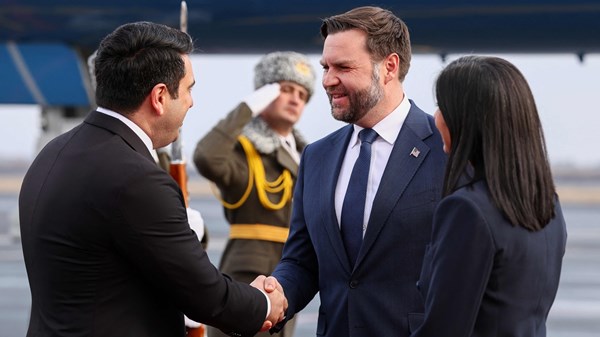
US Vice President J.D. Vance arrived in Armenia on Monday for a high-stakes diplomatic visit that will also include a stop in Azerbaijan, as Washington works to solidify a peace process between the two neighboring nations. The trip marks Vance as the highest-ranking American official ever to visit Armenia, according to US officials, and is expected to advance a major infrastructure development project in the region.
The visit comes months after President Donald Trump brokered a landmark agreement between Armenia and Azerbaijan during a White House summit in August 2025. Under that deal, both countries committed to renouncing territorial claims against each other and pledging not to use force to resolve disputes.
US Vice President Vance Pushes Peace Deal Implementation
According to the Armenian Prime Minister’s office, Vance will hold talks with Prime Minister Nikol Pashinyan in the capital during his Armenia leg. The discussions are expected to focus on implementing the peace agreement and moving forward with ambitious infrastructure plans that could reshape regional connectivity.
The US State Department indicated earlier that the visit aims to advance “President Donald Trump’s efforts for peace and promote the Trump Road to International Peace and Prosperity.” This statement underscores the administration’s commitment to maintaining momentum on the fragile détente between the two former adversaries.
Trump Road Project Central to Regional Strategy
Central to Vance’s mission is promoting the Trump Road to International Peace and Prosperity (TRIPP), a proposed railway and highway corridor designed to connect Azerbaijan with its exclave of Nakhchivan. The enclave is separated from mainland Azerbaijan by Armenian territory, creating a longstanding source of tension between the nations.
The infrastructure project envisions integrating the region into a broader east-west trade route linking Central Asia and the Caspian Basin with Europe. However, the corridor’s path through Armenian territory remains a sensitive issue requiring careful diplomatic navigation and significant investment commitments.
Decades of Conflict Over Nagorno-Karabakh
Armenia and Azerbaijan fought two wars over control of the mountainous Nagorno-Karabakh region, which both nations claim as historically theirs. Azerbaijan ultimately seized control of the disputed territory in a swift military offensive in 2023, displacing tens of thousands of ethnic Armenians who had lived there for generations.
The August 2025 White House agreement represented a significant diplomatic breakthrough after decades of hostility. Nevertheless, implementing the deal’s provisions and building trust between the two countries remains challenging, particularly regarding infrastructure projects that cross sensitive border areas.
Infrastructure Development as Peace Strategy
The Trump administration has positioned major infrastructure development as a key component of its peace strategy for Armenia and Azerbaijan. By creating economic incentives and physical connections between the countries, US officials hope to make renewed conflict less attractive and build interdependence.
Additionally, the proposed corridor would serve American strategic interests by providing alternative trade routes that bypass both Russian and Iranian territory. This aligns with broader US efforts to increase influence in the South Caucasus region and reduce dependence on traditional power brokers.
Meanwhile, the visit also signals American commitment to Armenia at a time when the country has distanced itself from traditional ally Russia following the 2023 Nagorno-Karabakh defeat. Armenia has increasingly sought Western partnerships, including with the United States and European Union, as it recalibrates its foreign policy orientation.
Azerbaijan Stop to Follow Armenia Talks
Following his meetings in Armenia, Vance will travel to Azerbaijan to hold parallel discussions with officials in Baku, according to American officials. The balanced itinerary reflects Washington’s role as mediator and its interest in maintaining productive relationships with both countries despite their historic enmity.
The outcomes of Vance’s discussions in both capitals will likely determine the timeline for advancing the TRIPP infrastructure project and clarifying remaining questions about border demarcation and territorial arrangements. Authorities have not confirmed specific deliverables or agreements expected from the visit, though progress on technical details of the peace implementation appears likely.